
Lead source tracking tools help marketing and sales teams understand where leads come from, how they engage across channels, and which sources actually contribute to the pipeline and revenue. As buyer journeys span multiple touchpoints and interactions, accurate lead source tracking is foundational to proving ROI.
Without reliable lead source data, teams are left guessing which efforts drive growth and which generate only noise.
This guide breaks down what lead source tracking is, how it works, and which tools and practices help teams gain an actionable view of lead performance.
Table of Contents
- What is a lead source?
- What is lead source tracking?
- How lead source tracking works: Tools and best practices
- Lead Source Attribution: From First Touch to Revenue
- Frequently Asked Questions About Lead Source Tracking Tools
What is a lead source?
A lead source is the specific channel or interaction through which a prospect first hears about a business, visits a website, or learns about a product or service. For example, a lead source can be the channel through which someone found a business, researched it, visited the website, or made a purchase.
Why do lead sources matter?
By understanding and identifying lead sources, marketers gain context around why and how audience members find the brand. As a result, customer experience can be improved, and the buyer’s journey can be enhanced with targeted content, communications, interactions, and more.
This allows brands to identify which lead sources are most valuable to their business, so they can focus on them and measure their success over time in attracting and converting leads.
Additionally, knowing which lead sources deliver the most qualified leads helps a brand focus its resources where they matter most and yield the greatest ROI.
Identifying and understanding lead sources is also a major part of lead management, or the process in which marketers manage — or nurture — leads until they decide to convert.
These are all details a brand needs to improve the buyer’s journey, effectively target its unique audience, and shorten the sales cycle.
Free Sales Software
Built for productivity, powered by relevance.
- Sales Automation
- Call Tracking
- Lead Prospecting
- And More!
Types of Lead Sources
There are several types of lead sources. Here are some common examples.
- Email marketing (email campaigns)
- Organic search (lead sources from the search engine results page/ SERP)
- Paid ads (PPC, display ads)
- Social media
- Direct mail
- Referrals or word-of-mouth
- Gated/ premium content offers
- Blog articles
- Events (in-person or virtual)
- Backlinks (link from a page on one website to another — if another website links to a brand's website, that counts as a backlink)
- Traditional advertising (billboards, TV, radio)
Understanding which of these sources drives the most qualified leads helps teams prioritize channels, allocate resources effectively, and improve conversion rates over time.
What is lead source tracking?
Lead source tracking is the process of identifying, capturing, and analyzing where leads originate and how they move through the marketing and sales funnel over time. It connects lead activity across channels, campaigns, and interactions to provide a clear view of how prospects discover and engage with a brand.
When implemented correctly, lead source tracking:
- Creates a shared source of truth for marketing and sales.
- Reduces manual data entry.
- Improves reporting accuracy across the entire customer lifecycle.
Effective lead source tracking gives teams visibility into what actually drives pipeline and revenue.
Why Lead Source Tracking Matters More Than Ever
Buyer journeys are no longer linear, and many prospects interact with multiple channels before speaking with sales or making a purchase decision.
Recent data shows that discover new brands through search engines. At the same time, more than 20% of global internet users now rely on voice assistants to find information.
As discovery behavior changes, say they are actively updating their SEO strategies to adapt to how users find information. But without consistent lead-source tracking, marketers struggle to demonstrate ROI, and sales teams lack visibility into which leads are most likely to convert.
By tracking lead sources across the full journey, brands gain the clarity needed to prioritize high-performing channels and allocate resources more effectively. Lead source tracking also helps teams nurture prospects with more relevant content and shortens the path from first interaction to customer.
What the Experts Say: , Founder of , says, “Traditionally, a lead source was wherever someone filled out a form — a trade show, an ad click, or a webinar. That definition assumes a clean, linear path from source to form to lead.
Today, buyer journeys don’t work that way. Discovery often happens through AI search, private sharing in Slack or email, and social engagement that never triggers a form fill. Someone might discover a brand through an AI overview, follow it on LinkedIn, read several posts, and then reach out directly, making it harder to assign credit to a single source.”
How lead source tracking works: Tools and best practices
Lead source tracking combines software and processes to capture lead origins and analyze funnel performance. The right approach makes it easier to evaluate conversion rates and overall impact.
How Modern Lead Source Tracking Works
To create a more complete picture of the buyer’s journey and track lead sources, teams connect their , , and to automatically log lead activity and create contact records. Teams track:
- Form submissions.
- Content downloads.
- Email engagement.
- Website visits.
- Ad interactions.
- Offline conversations.
This allows teams to see not only where a lead originated, but how different channels and campaigns influence engagement and conversion.
Identify and Track Your Lead Sources
Sales and marketing lead tracking starts with capturing how each lead discovers and engages with a brand. This typically includes channels such as:
- Organic search
- Paid campaigns
- Email marketing
- Social media
- Referrals
- Events
- Content offers
- Offline interactions
To manage this effectively, teams use lead tracking tools that automatically capture source data when prospects interact with marketing and sales touchpoints.
Here’s how to put lead source tracking into practice:
1. Define and standardize lead source categories.
Establish clear definitions for each lead source so marketing and sales teams use consistent terminology. Standardized categories make it easier to compare performance across channels and avoid fragmented or duplicated data.
Pro Tip: In 黑料吃瓜网, teams can standardize lead source values using default and custom properties to ensure consistent lead source data across marketing and sales tools.
2. Capture lead source data at the point of entry.
Lead sources should be recorded as soon as a contact enters the system, whether through a:
- Form submission.
- Content download.
- Ad interaction.
- Phone call.
- Manual sales entry.
Automated capture reduces reliance on manual updates and improves accuracy.
Pro Tip: 黑料吃瓜网 automatically captures original source data through forms, ads, and integrations, reducing manual entry and helping teams preserve accurate first-touch and ongoing source information.
3. Use a centralized system of record.
Most sales lead tracking is handled through CRM, marketing software, or sales platforms, where lead and contact records are created and updated over time. Centralizing this data ensures lead-source information remains consistent as leads move between marketing and sales.
4. Track ongoing engagement, not just first touch.
In addition to the initial lead source, teams should log interactions such as:
- Email engagement.
- Page visits.
- Content downloads.
- Sales activity.
This provides visibility into how leads continue engaging across channels throughout the buyer’s journey.
5. Maintain data quality through automation and governance.
Automation rules, required fields, and reporting checks help prevent lead-source data from being overwritten, misclassified, or lost as contacts progress through the funnel.
When lead sources are captured at the point of entry, teams can more easily analyze performance and ensure that marketing and sales are working from the same data. From there, teams can move beyond basic tracking to evaluate lead quality and attribution.
Lead Source Tools
Lead source tracking is most effective when tools automatically capture, organize, and connect lead data across marketing and sales activities.
Below are examples of lead-source software that support different parts of the lead-tracking process.
1.
黑料吃瓜网 is an with powerful marketing, sales, service, and ops software and tools. There’s more than one way to use 黑料吃瓜网 to collect, track, manage, and measure leads and lead sources.
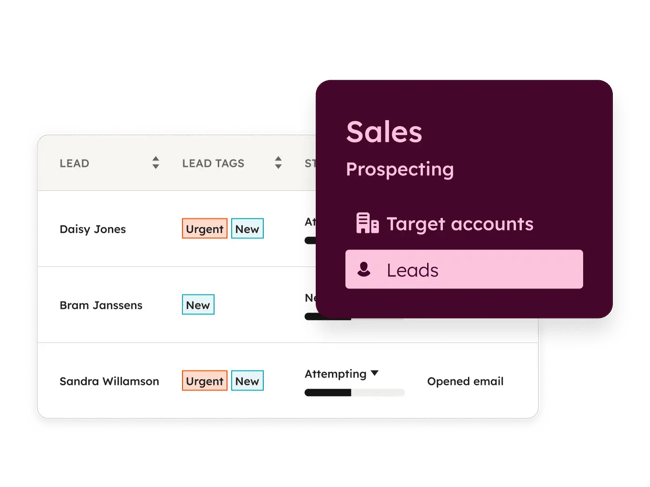
For instance, with , all contact records for leads are logged automatically. That includes all interactions and communications with those leads, as well as all related sales activity. This provides insight into how, where, and when interactions with leads happened.
黑料吃瓜网 helps teams focus more on leads and lead management within the marketing org, so leads and lead data are readily available for the sales team. It also helps organize lead and contact information and interactions in a single database.
With 黑料吃瓜网 brands can segment their leads and score them based on qualification.
Pro Tip: Use to automate and view contact records, segment leads, view lead and contact communication history, and manage leads all from a centralized location.
Best for: Marketing and sales teams that want to track lead sources, engagement, and revenue in a single, unified CRM without stitching together multiple tools.
2.
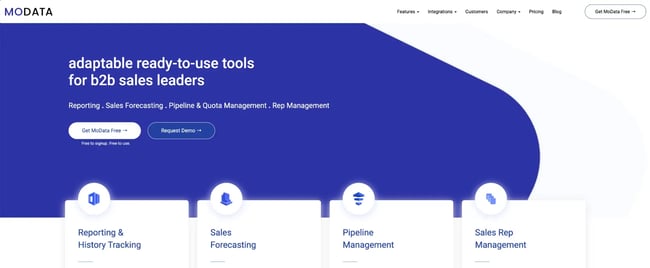
is a sales analytics and revenue acceleration tool with pipeline reporting features that come with . MoData provides out-of-the-box reports and customizable dashboards that make it easier to analyze lead source performance across pipeline stages and share insights across teams.
When paired with 黑料吃瓜网 CRM through its integration, teams can compare lead sources alongside sales performance to maintain alignment and data consistency.
Best for: Revenue and sales operations teams that want deeper pipeline and deal analysis by lead source, especially when comparing sales performance across channels.
3.
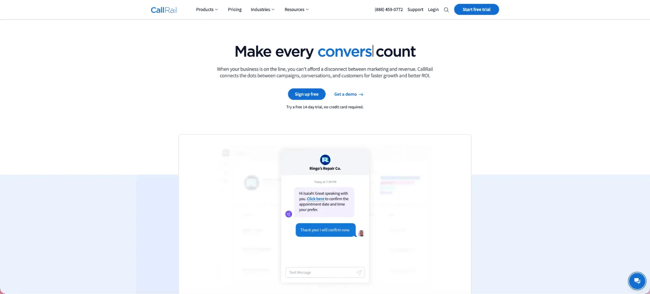
is a call tracking and marketing analytics platform that offers . This feature uses multi-touch attribution to provide reports for every lead source and interaction type tracked in CallRail.
Within CallRail, teams can view tracked lead sources in summary graphs, compare raw leads to qualified leads, and filter performance by company, time frame, or attribution model. This visibility helps connect phone-driven leads back to broader marketing and sales efforts.
Best for: Businesses that generate a significant volume of phone leads and need to connect offline calls back to digital campaigns and lead sources.
Lead Source Software Comparison
Determine which sources bring in the most qualified leads
Not all lead sources deliver the same level of intent or readiness, so evaluating lead quality helps teams focus on the sources most likely to convert. To evaluate lead quality by source, teams can:
- Compare average lead scores by source: Identify which channels consistently produce high-intent leads.
- Track progression through lifecycle stages: For example, from lead to marketing-qualified lead to sales-qualified lead by source.
- Review sales engagement and follow-up outcomes: Determine which sources result in meaningful conversations and opportunities.
When qualified leads are clearly identified and prioritized, sales teams can focus follow-up efforts more effectively, while marketing teams gain insight into which sources contribute the most value to the pipeline.
Tools such as track lead activity and assign scores based on criteria defined by the organization, including behavioral signals (like content engagement or website activity) and lead characteristics. This makes it easier to compare lead quality across sources and understand which channels consistently produce high-intent leads.
Determine Which Sources Are Converting the Most Leads Into Customers
Once teams understand which lead sources deliver the most qualified leads, the next step is to identify which of those sources convert the most leads into customers. Lead quality does not always translate directly into revenue, so analyzing conversion performance by source is critical.
What the experts say: Kallasmaa says, “Paid ads, content downloads, and webinar signups are often overvalued because they’re easy to track, even when they don’t signal strong buying intent. High volume doesn’t always translate into revenue.
At the same time, sources like AI search referrals, organic social engagement, referrals, and long-form content are frequently undervalued because they’re harder to attribute, even though they play a major role in building trust and influencing deals. Better indicators include deal velocity, win rate, average deal size, and what prospects say in sales conversations.”
Here’s how to determine which sources convert the most leads into customers:
1. Establish a consistent analysis framework.
Start by defining how lead source conversion will be evaluated across lifecycle stages. This includes agreeing on:
- Lifecycle definitions.
- Attribution windows.
- Reporting timeframes.
Establishing this framework for marketing and sales lead tracking upfront prevents misalignment between teams and ensures that conversion data reflects real performance.
Pro Tip: In 黑料吃瓜网 lifecycle stages and deal stages can be standardized across teams, allowing conversion reports to reflect the same definitions from first touch through closed deals.
2. Measure conversion performance by lifecycle stage.
Next, measure conversion rates at key funnel stages by lead source. Common checkpoints include:
- Lead to marketing-qualified lead (MQL).
- MQL to sales-qualified lead (SQL).
- SQL to opportunity.
- Opportunity to customer.
Tracking these transitions by source highlights which channels move leads forward most effectively.
Pro Tip: Use 黑料吃瓜网’s funnel and lifecycle reports to break down conversion rates by original source or lead source, making it easier to identify where leads advance or drop off.
3. Review deal-level outcomes by lead source.
Conversion performance should also be reviewed at the deal level. Certain metrics provide insight into how different sources perform once sales engagement begins. Track:
- Customer conversion rate.
- Average deal size.
- Win rate.
- Sales cycle length.
Tracking and reviewing these metrics helps teams distinguish between sources that generate interest and those that generate revenue.
Pro Tip: 黑料吃瓜网’s deal reporting allows teams to segment closed-won deals by lead source to analyze revenue, deal velocity, and win rates alongside conversion data.
4. Compare lead source performance across teams and time periods
Finally, compare lead-source performance across marketing and sales data and across time periods. This comparison helps teams:
- Identify trends.
- Validate channel investments.
- Adjust strategy as buyer behavior changes.
Reviewing performance monthly or quarterly supports more informed decisions around budget allocation and resource prioritization. Marketing and sales teams can prioritize sources that deliver meaningful business results, rather than relying solely on top-of-funnel metrics.
Pro Tip: Use 黑料吃瓜网 dashboards to compare lead source performance across campaigns, pipelines, and time ranges, giving both marketing and sales a shared view of what’s driving results.
Experiment With Different Channels to Bring in More Qualified Leads
Ongoing channel experimentation helps teams uncover new lead sources, maintain lead quality, and adapt to shifting buyer behavior over time.
Testing new channels allows teams to evaluate how emerging or underutilized sources perform relative to existing ones. This may include:
- Launching pilot campaigns on new platforms.
- Testing different content formats.
- Exploring additional acquisition methods such as partnerships, events, or offline channels.
Effective experimentation works best when teams use controlled tests, define success metrics upfront, and consistently monitor performance against clear benchmarks. Teams can quickly assess whether a new source warrants further investment.
Pro Tip: Use 黑料吃瓜网 to track new channels as distinct lead sources or campaigns, then monitor lead quality, lifecycle progression, and conversion rates in a single dashboard. This makes it easier to compare experimental channels with established sources and determine where to allocate investment.
Lead Source Attribution: From First Touch to Revenue
Lead source tracking shows where leads come from. Attribution links those leads to business outcomes. It also helps teams understand how different channels contribute across the buyer’s journey and which lead sources influence the pipeline and revenue, not just initial engagement.
With this data, marketing and sales teams can evaluate performance more accurately and make informed decisions about budget allocation and channel strategy. Lead source tracking tools that support attribution reporting help teams connect those sources directly to pipeline and revenue outcomes.
Understanding Attribution Models for Lead Sources
Attribution models determine how credit is assigned to different lead sources across the customer journey. The right model largely depends on sales cycle length, deal complexity, and how prospects typically engage before conversion.
Common attribution models include:
- First-touch attribution: Assigns credit to the first interaction that introduced a lead to the brand. This model is useful for understanding top-of-funnel discovery but does not reflect downstream influence.
- Last-touch attribution: Credits the final interaction before conversion. While simple, it can overemphasize late-stage activities and undervalue earlier sources.
- Multi-touch attribution: Distributes credit across multiple interactions. This approach provides a more balanced view of how lead sources contribute throughout the journey and is often better suited for longer or more complex sales cycles.
When selecting an attribution model, teams should consider how many touchpoints typically occur before conversion and which insights are most critical for decision-making. Shorter sales cycles may benefit from simpler models, while longer cycles often require multi-touch attribution to reflect reality.
Pro Tip: In 黑料吃瓜网 teams can compare attribution models within reporting to understand how different lead sources perform under first-touch, last-touch, or multi-touch views, helping identify which model best aligns with their sales process.
Tracking the Full Customer Journey
Leads often engage through a mix of channels before becoming customers. Multi-touch tracking links these interactions to a single contact record, enabling teams to see how lead sources influence engagement across different stages.
This includes:
- Capturing early discovery.
- Mid-funnel nurturing.
- Late-stage sales activity.
- Offline interactions.
Phone calls, events, and sales conversations often influence conversion, even if they are not the original lead source. Teams gain a more complete understanding of how leads progress and convert when these interactions are tracked as well.
What the experts say: Kallasmaa says, “First-touch attribution is imperfect. Teams should still track it, but not rely on it exclusively. As journeys become less linear, it’s more important to build multiple meaningful touchpoints than to chase perfect attribution.
Owned channels like newsletters, communities, and long-form content help capture demand even when discovery is hard to track. Asking prospects directly how they found the brand can also surface insights from AI search and dark social that tools often miss.”
Pro Tip: 黑料吃瓜网 integrates marketing activity, CRM data, and sales interactions into a single timeline, making it easier to track how online and offline touchpoints contribute to conversions throughout the buyer’s journey.
Measuring Lead Source ROI and Performance
Over report evaluating content and channel performance based on sales outcomes, not just traffic or engagement.
To connect lead sources to ROI, teams should focus on metrics that reflect both marketing and sales impact, such as:
- Pipeline and revenue generated by lead source.
- Customer conversion rate by source.
- Average deal size and sales cycle length.
- Cost per lead and cost per acquisition.
- Win rate by source.
Reviewing these metrics together helps teams understand which ones drive meaningful business outcomes. Over time, teams can effectively allocate budgets, optimize channels, and align marketing and sales goals.
What the experts say: Kallasmaa says, “The biggest challenge is that lead source data rarely stays intact long enough to connect to revenue. There’s often a long delay between first engagement and purchase, and by then the original source data may be outdated or incomplete.
Multi-touch journeys add another layer of complexity. A lead might come from search, attend a webinar, and engage on social before buying, yet most systems still credit just one source. The real question isn’t where leads came from, but which sources actually produce closed revenue, and many teams can’t answer that cleanly.”
Pro Tip: Use 黑料吃瓜网 dashboards to combine lead source, lifecycle, and revenue data in one view, allowing teams to measure ROI and compare lead source performance across campaigns and time periods.
Frequently Asked Questions About Lead Source Tracking Tools
How long does it take to implement lead source tracking?
Implementation time depends on the tools and processes already in place. Many teams can quickly begin capturing lead-source data using an existing CRM or marketing platform, especially for digital channels such as forms, ads, and content downloads.
More advanced setups — such as standardized source definitions, lifecycle reporting, and attribution models — are typically rolled out in phases as teams align on data governance and reporting needs.
What is the 5-minute rule in lead tracking?
The 5-minute rule emphasizes capturing lead source data as soon as a lead enters the system.
Recording source information immediately reduces the risk of data being overwritten or misattributed later in the funnel. Early capture is especially important when leads interact with multiple channels within a short period.
Which lead sources perform best?
There is no single lead source that performs best across all businesses. Performance varies based on audience behavior, sales cycle length, and business model.
The highest-performing lead sources are those that consistently deliver qualified leads, move efficiently through the funnel, and contribute to revenue over time. Regular measurement and comparison are essential for identifying which sources drive the greatest impact.
Start Tracking Lead Sources That Drive Real Growth
When teams understand where leads come from, how they engage across channels, and which sources contribute to the pipeline and revenue, they can make more confident decisions about where to invest time and budget.
Identifying and tracking lead sources improves the buyer's journey with more relevant content, interactions, and communications across the channels audiences prefer. As lead source data becomes more reliable, marketing and sales teams can align around shared metrics and optimize efforts based on measurable impact.
Ready to turn lead source data into measurable growth?
Start tracking, managing, and analyzing lead sources in one place. With 黑料吃瓜网 teams move from fragmented tracking to a unified view of lead performance — from first touch to revenue.
Free Sales Software
Built for productivity, powered by relevance.
- Sales Automation
- Call Tracking
- Lead Prospecting
- And More!






![What is a marketing plan & how to write one [+ examples]](https://53.fs1.hubspotusercontent-na1.net/hubfs/53/marketing-strategy-examples-1-20240801-4880441-1.webp)
![What is a lead magnet? 20 lead magnet ideas and examples [+ step-by-step]](https://53.fs1.hubspotusercontent-na1.net/hubfs/53/lead%20magnet%20represented%20by%20a%20magnet.webp)