
Sales coaching is one of the highest-leverage investments a sales organization can make. Teams with formal coaching programs see and an 88% increase in productivity.
Yet according to MySalesCoach’s 2025 , 14% of sales representatives receive no coaching at all, and 39% say the coaching they do get is too generic to be useful.
This guide is for sales leaders, enablement professionals, and RevOps teams who want to close that gap. You’ll get a clear definition of what sales coaching is (and how it differs from training), a step-by-step process for building a program that works, sales coaching best practices and frameworks you can use in real sessions, and a measurement model that shows whether any of it is moving the needle.
Table of Contents
What is sales coaching?
Sales coaching is a continuous, individualized process where a manager or coach works with a sales representative to develop specific sales skills, behaviors, and mindsets that improve performance over time.
The goal of sales coaching is to help sales reps understand why they’re getting the results they are, identify what needs to change, and build the habits that lead to consistent performance.
Unlike a training event or onboarding program, coaching is ongoing. It happens in the context of real deals, real calls, and real performance data, not in a classroom or a one-time workshop. Coaching typically operates at three levels:
- Strategic coaching covers big-picture guidance, such as selling to a specific market, navigating a complex buying process, working with customer champions, or positioning against a competitor.
- Tactical coaching gets into the mechanics, like how to open a discovery call, how to qualify faster, and how to structure a proposal conversation.
- Skill-based coaching targets specific capabilities such as active listening, asking high-value questions, building rapport over video, and handling sales negotiations without caving on price.
Effective sales coaching is iterative, individualized, and inclusive. A coach empowers reps to feel they can grow, contribute to team success, and take accountability for their performance.
.png)
Free Sales Training Template
Use this template to set up a 30/60/90 day sales training and onboarding plan.
- 30/60/90 Day Goals
- People to Meet
- Feedback/Review Process
- And More!
Download Free
All fields are required.
Form not available
You're all set!
Click this link to access this resource at any time.
Sales coaching vs. sales training: What’s the difference?
Sales coaching and sales training are not the same thing, and treating them interchangeably is one of the most common mistakes sales organizations make.
Sales training is an event. It transfers knowledge, usually of product details, sales methodology, company playbooks, and compliance requirements. A sales training program gets reps to baseline competence. It tends to be delivered in groups, at a set time, with a defined curriculum.
On the other hand, sales coaching is an ongoing process. It reinforces and builds on what the training introduced, but in the context of each rep’s actual performance.
Coaching is where knowledge becomes behavior. It happens in 1:1 coaching sessions, on call recordings, in deal reviews, or wherever a manager can observe a sales representative in action and provide specific, actionable feedback.
Think of training as the playbook and coaching as the practice reps. You need both. But if you had to choose where to spend your time as a manager, coaching delivers far more sustained impact per hour invested.
What does a sales coach do?
A sales coach monitors individual performance to identify areas for improvement and reinforce behaviors that lead to success. They also develop coaching initiatives that build reps’ confidence by equipping them with the tools and skills they need to succeed.
Becoming an effective sales coach takes experience, so I spoke with seasoned sales coaches who shared their key coaching techniques. For those who want to improve sales coaching, there are also sales coaching programs that can help you learn how to build successful teams that consistently exceed quotas.
How to Coach Your Sales Team: An 8-step Process
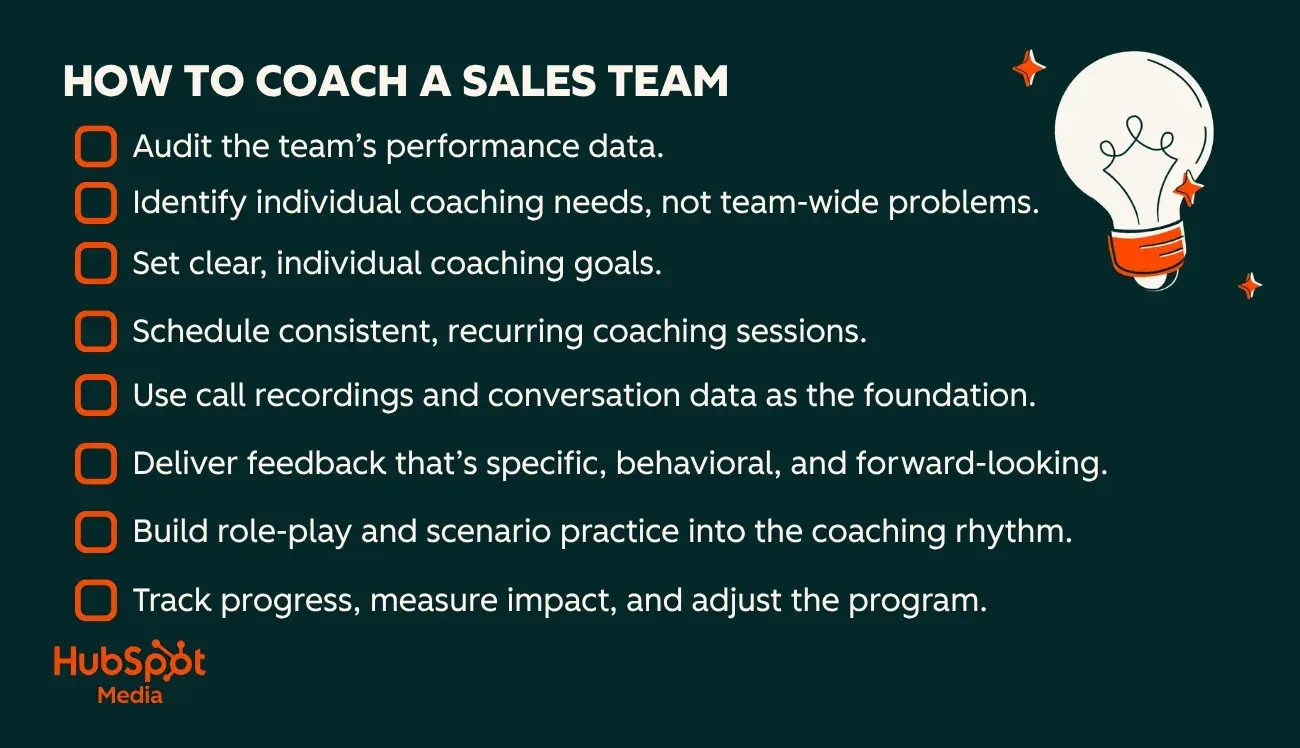
Most sales leaders want to coach more effectively. The barrier is usually a lack of structure. Here’s a step-by-step process that turns good intentions into a repeatable coaching program.
Step 1: Audit the team’s performance data.
Before coaching anyone, sales leaders need to know where the real problems are. Gut instinct isn’t a coaching strategy; data is. Pull pipeline reports and identify where deals are breaking down.
Are opportunities dying after the first call? Stalling on the proposal? Losing to a specific competitor? Look at individual reps’ performance across metrics such as win rate, average deal size, sales cycle length, and stage conversion rates.
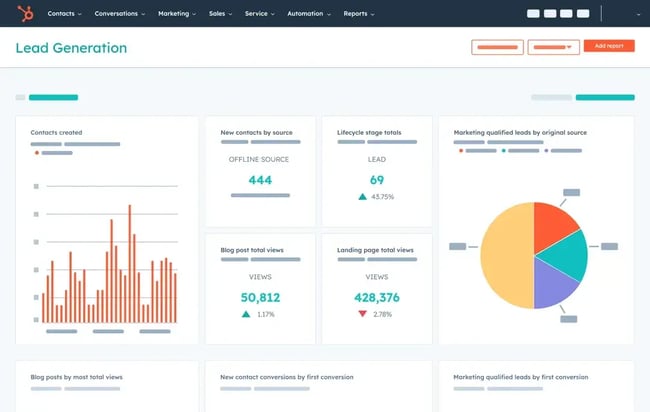
makes pulling sales data straightforward. Its dashboards give managers visibility into individual rep activity and pipeline health in one place, with reporting that you can filter by rep, time period, and deal stage. That means you’re coaching based on what’s actually happening, not what you remember happening.
, Managing Director at , describes it this way: “Many deals get stuck when customers have objections; we can teach our sales reps better ways to handle these objections. By looking at data, we can focus our coaching on specific problems and help our team improve faster.”
Pro tip: Start with stage conversion data. If rep A converts discovery calls to demos at 40% and rep B converts at 15%, that’s a coaching opportunity.
Step 2: Identify individual coaching needs, not team-wide problems.
Generic coaching is the single most common complaint from sales representatives. According to MySalesCoach’s 2025 , 50% of reps want coaching to focus more on skills development rather than KPI reviews.
After you’ve looked at the data, map what you see to individual reps. Group your team into three performance tiers — top performers, core performers (the middle 60%), and struggling reps. Each group needs a different kind of coaching.
from the Sales Management Association shows that coaching the middle 60% of performers yields the highest payoff in quota attainment. Top performers need challenge and development to stay engaged. Struggling reps often need a more structured plan with shorter feedback loops.
The key question for each rep: Is this a sales skill gap, a knowledge gap, a motivation issue, or a process problem? The answer changes how you coach.
For BDRs and SDRs, roles where the learning curve is steepest, it helps to have a clear picture of what strong looks like before you diagnose the gap. Video prospecting, curiosity, and organization are core skills every business development rep needs to master, and they are useful references when building individual development plans for earlier-stage reps.
Step 3: Set clear, individual coaching goals.
Before the first coaching session with a rep, define what improvement looks like. A good coaching goal is specific, time-bound, and tied to an observable behavior, not just an outcome.
Goals should look more like “Improve discovery-to-demo conversion rate from 22% to 35% by the end of Q2 by asking better qualification questions,” than “Close more deals.”
Work with the rep to co-create these goals. in workplace motivation consistently shows that reps are more likely to follow through on goals they helped set. They’re more accountable when it feels collaborative rather than imposed.
A sales assessment can help here. Reviewing a rep’s recent calls, win/loss patterns, and self-reported challenges before the first session gives both the manager and the rep a shared picture of where their development should focus.
Write the goals down, revisit them at every coaching session, and make sure the rep knows exactly what they need to do differently, not just where they need to land.
Step 4: Schedule consistent, recurring coaching sessions.
Ad hoc coaching turns coaching into a reactive exercise. Instead, set a recurring weekly or bi-weekly 1:1 with each rep, separate from pipeline reviews. The main difference is that pipeline reviews are about deals while coaching sessions are about the rep. When the two get blurred, reps may start dreading the session. They feel like they’re being inspected rather than developed.
Use a consistent structure in coaching sessions. Start by asking the rep how they think they’re performing. Let them self-assess before weighing in. Then work through one or two specific, observable behaviors from the previous period. End with clear commitments for what the rep will do differently before the next session.
Step 5: Use call recordings and conversation data as the foundation.
Opinion-based coaching is the enemy of buy-in. When a manager says, “I think you talked too much on that call,” it’s easy for a rep to push back. When the data shows a 75% talk-to-listen ratio on the last five calls, the conversation is grounded in fact.
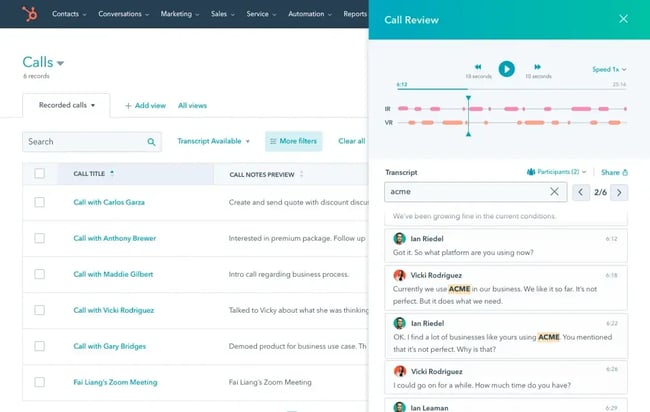
贬耻产厂辫辞迟’蝉 tool automatically captures sales calls and logs them in the CRM, making them available for review and coaching without managers needing to sit in on every call.
With 贬耻产厂辫辞迟’蝉 Conversation Intelligence, managers can , identify specific moments worth coaching on, and leave timestamped feedback directly on the call. As 黑料吃瓜网 noted when , the feature is specifically designed to give managers deeper insights into rep performance at scale.
This is what , creative director and founder of , built into her team’s routine: “[Listening to a weekly sales recording] has become a weekly tradition that ensures we deliver specific call coaching as opposed to just spot coaching. In the first week of the month, we focus on a discovery call, the second week is a demo call, the third week is a pricing/negotiation call.”
That structure, anchoring coaching to a specific call type each week, is a practical framework any sales coaching training program can adopt. It gives coaching sessions a consistent focus and prevents the “where do we even start?” problem that plagues unstructured programs.
, 贬耻产厂辫辞迟’蝉 AI, goes a step further by extracting insights from call recordings, emails, and documents to enrich customer data automatically. This contextual intelligence is useful for personalizing future interactions. For example, understanding a prospect’s buying signals or conversation history without manually digging through records.
Combined with Conversation Intelligence, managers can start to identify patterns in rep behavior over time — whether someone consistently struggles with price negotiations or tends to miss a specific objection — so coaching conversations can focus on what actually needs to change.
Step 6: Deliver feedback that’s specific, behavioral, and forward-looking.
Most coaching feedback fails for one of three reasons: it’s too vague, it focuses on what went wrong rather than what to do differently, or it triggers defensiveness rather than reflection. Effective coaching feedback has three components.
- Observation: What specifically happened? (“In the first 15 minutes of that call, you spent 12 minutes talking about the product before asking a single discovery question.”)
- Impact: What did that behavior lead to? (“The prospect disengaged early, and by the time you asked about their situation, they were already in defense mode.”)
- Alternative: What should the rep do instead? (“Try opening with two or three open-ended questions about their current situation before you go near the product. Let them tell you what matters to them first.”)
Avoid feedback that judges rather than guides. “You’re not listening enough” gives a rep nowhere to go. “On that call, when the prospect mentioned a concern about implementation, you moved past it quickly. Next time, try asking a follow-up question there and see what else is underneath that concern,” gives them something they can actually practice.
Step 7: Build role-play and scenario practice into the coaching rhythm.
Knowledge doesn’t become a sales skill without practice. A rep can understand intellectually that they should slow down during objection handling, yet still panic when a prospect says, “We’re talking to three other vendors.” Role-play solves this. It creates a low-stakes environment where reps can practice handling difficult moments before they face them on a live call.
Good role-play is specific. Use scenarios pulled directly from the team’s real calls, not generic examples. If “we don’t have a budget” is the objection your reps hear most, then that’s the scenario you build around. For industries like financial services, where compliance and regulatory conversations add another layer of complexity, scenario-based practice before live calls is especially valuable.
AI sales coaching tools now let reps practice through simulated conversations with AI buyer personas trained on your actual ICP and objection patterns. This AI sales coach capability removes the friction of scheduling role-play with a manager and lets reps build repetitions on their own time.
After role-play, debrief using the same framework as for real calls: observation, impact, and alternative. What went well, what would you change, what’s one thing to practice before next week?
Free Sales Training Template
Use this template to set up a 30/60/90 day sales training and onboarding plan.
- 30/60/90 Day Goals
- People to Meet
- Feedback/Review Process
- And More!
Download Free
All fields are required.
Form not available
You're all set!
Click this link to access this resource at any time.
Step 8: Track progress, measure impact, and adjust the program.
If you can’t point to movement in specific metrics, you don’t know whether your coaching is working. Track individual rep performance across the metrics you established at the start (quota attainment, win rate, stage conversion rates, ramp time).
Review individual rep performance metrics in your sessions. When you see improvement, name it specifically so the rep connects the behavior change to the result. When you don’t see improvement, treat it as data. What’s the blocker? Is the coaching focus right? Is the goal realistic? Is the rep applying the feedback?
lets you build custom reports that track rep-level performance over time. It’s straightforward to run a monthly review that shows whether coaching is translating into measurable changes and gives sales leaders the data to present the program’s ROI to leadership.
Benefits of Sales Coaching
Sales coaching goes beyond its positive impact on your bottom line. Here are some common benefits that follow sales coaching programs.
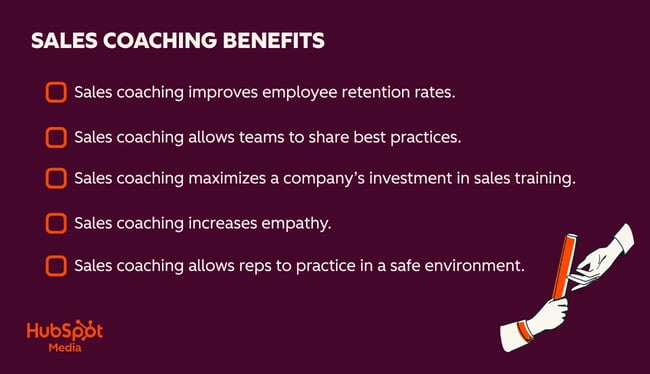
1. Sales coaching improves employee retention rates.
Rep turnover is a notorious problem in sales, and lack of development is a top reason why sales personnel leave companies. Ignoring coaching can exacerbate the problem. remains one of the biggest reasons why workers are likely to leave their company.
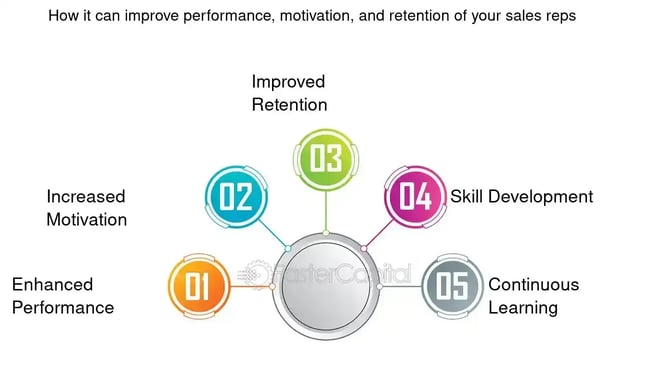
While burnout or a bigger salary elsewhere will always be a temptation, professional development opportunities will motivate many others to stay. suggests that coaching enhances performance and increases motivation. These two benefits alone are likely to improve staff retention.
2. Sales coaching allows teams to share best practices.
If one rep is using a strategy to great success, sales leaders can immediately teach the rest of their team to do the same thing. For example, one 黑料吃瓜网 sales rep found success via video prospecting — a best practice that spread throughout his team. Think of sales coaching as a rising tide that lifts all boats.
3. Sales coaching maximizes a company’s investment in sales training.
Companies spend billions per year on sales training. However, according to Ebbinghaus’s Forgetting Curve, sales reps within a week of training. Effective sales training relies on consistent, long-term reinforcement, which the sales manager can achieve through sales coaching.
, Chief Revenue Officer at Drawbridge, cites the Five Principles of Modern Learning as a tip for continuous learning. In particular, Donovan mentions “Bite-sized. Snackable chunks.”
Bite-sized learning may help with retention by . People learn more effectively when they can take a break.
4. Sales coaching increases empathy.
Human connection is crucial in sales. In fact, most as the most important part of selling.
According to , coaching can increase empathy and other soft skills that improve the sales process. Sasson says, “A well-trained sales team is better prepared to excel in fostering strong bonds through effective communication, active listening, and empathy.”
Empathy has many benefits for sales. It helps build human connection and helps sellers determine the best route for their prospects. According to Jonathon Ilett, Head of Sales at Cognism, not every prospect wants rapport-building, and it’s up to the sales rep to use their soft skills to know when rapport is right and when it’s not.
5. Sales coaching allows reps to practice in a safe environment.
During the sales coaching process, sales reps might have time to practice critical tasks and real-life scenarios, such as cold calls, demos, rejection, and more.
This part of the sales coaching process can take the form of roleplay, allowing reps to practice in a safe environment where they can feel comfortable and become familiar with the sales process. The hands-on experience is effective because it helps sales reps get used to the job and, at times, override the emotional responses associated with rejection.
, Founder and CEO of , advises that sales reps must develop a that helps them accept rejection. The best way to find a solution that works is to practice. Nicks warns, “It’s not about avoiding rejection but learning how to recover.”
Sales Coaching Techniques and Best Practices
Structured techniques give coaching sessions a consistent approach, which makes both feedback and improvement more predictable. Here are the methods that experienced sales leaders rely on most, including where the major models slot in.
The GROW Model (Applied to Sales)
GROW is a widely used coaching framework that structures conversations around four questions: Goal, Reality, Options, and Will. In a sales coaching context, it sounds like this:
- Goal: “What does success in this deal look like for you by the end of the quarter?”
- Reality: “Walk me through where this deal actually stands right now. What’s working, and where are you stuck?”
- Options: “What are two or three different approaches you could take to move this forward? What would you try first?”
- Will: “What’s the one thing you’re committing to doing before we talk next week?”
The GROW model keeps coaching sessions from turning into manager lectures. By guiding reps through questions rather than prescribing answers, coaches build the analytical habits that make reps better independent problem-solvers over time.
The OSCAR Model
OSCAR (Outcome, Situation, Choices, Actions, Review) is particularly useful for ongoing coaching relationships with clear goals already set. It focuses more on accountability and follow-through than on initial goal-setting, making it a natural fit for session two and beyond.
- Outcome: Revisit what the rep is working toward
- Situation: What’s changed since the last session?
- Choices: What options are available to move forward?
- Actions: What specific next steps will the rep take?
- Review: When and how will you check in on progress?
Coactive Coaching for Resistant Reps
Salespeople are independent by nature. Telling a rep what to do typically generates pushback, even if the advice is sound. Coactive coaching flips the dynamic by centering the rep’s own perspective throughout the session.
Instead of leading with your diagnosis, start by asking the rep how they felt the call went, what they’d do differently, and what they think the obstacle is. Use their answers to guide the conversation. This approach is slower but produces stronger buy-in and more durable behavior change because the rep arrives at the insight themselves rather than being handed it.
Conversation Framework for Difficult Coaching Moments
Some coaching conversations are harder than others, such as persistent underperformance, a defensive rep, or a situation where a performance improvement plan may be imminent. In these cases, a structured conversation framework helps:
- State the observation clearly and factually (no judgment, no interpretation)
- Ask for the rep’s perspective (“How are you experiencing this? What do you think is happening?”)
- Acknowledge what you hear before responding
- Collaboratively build a plan with specific behaviors and timelines
- Set a clear review point so both parties know what success looks like
The goal of any coaching conversation, even a hard one, is for a rep to leave the session knowing exactly what to do next — not demoralized.
How to Measure Sales Coaching Effectiveness
These seven metrics give sales leaders a clear picture of whether coaching is translating into results and where to adjust if it isn’t.
Win Rate
What it is: The percentage of deals closed compared to total opportunities.
Why it matters: This is the clearest indicator that coaching is improving how reps sell—not just how much they sell. If skills like discovery, objection handling, and positioning improve, win rates should follow.
How to measure it: Win Rate = (Closed-Won Deals ÷ Total Closed Deals) × 100
Stage-to-stage Conversion Rate
What it is: The percentage of deals that move from one pipeline stage to the next (e.g., demo → proposal).
Why it matters: This helps you pinpoint where reps are struggling, so coaching can target specific breakdowns in the funnel.
How to measure it: Stage Conversion Rate = (Deals Progressing to Next Stage ÷ Deals Entering Current Stage) × 100
Sales Cycle Length
What it is: The average time it takes to close a deal from first touch to signed contract.
Why it matters: Effective coaching improves qualification and urgency, reducing delays and dragging deals.
How to measure it: Sales Cycle Length = Total Days to Close All Deals ÷ Number of Closed-Won Deals
Average Deal Size
What it is: The average revenue generated per closed deal.
Why it matters: Strong coaching improves value positioning and reduces unnecessary discounting, increasing deal size.
How to measure it: Average Deal Size = Total Revenue ÷ Number of Closed-Won Deals
Objection Handling Success Rate
What it is: The percentage of deals where objections are successfully addressed and the deal continues progressing.
Why it matters: Objection handling is one of the most coachable (and impactful) sales skills—and directly influences conversions.
How to measure it: Objection Handling Success Rate = (Deals That Progress After Objection ÷ Total Deals With Objections) × 100
Next-step Conversion Rate
What it is: The percentage of sales conversations that end with a clearly defined next step.
Why it matters: Clear next steps create momentum. Without them, deals stall—even if the conversation went well.
How to measure it: Next-Step Conversion Rate = (Meetings With Defined Next Step ÷ Total Meetings) × 100
Pipeline Health and Stage Conversion Rates
What it is: How deals are progressing through each stage of the pipeline, and where they’re getting stuck or dying.
Why it matters: Pipeline health is a forward-looking coaching metric. While quota attainment tells you what happened last quarter, stage conversion rates tell you what’s likely to happen this quarter — and where coaching needs to focus right now. If discovery-to-demo conversion is dropping across multiple reps, that’s a coaching problem at the qualification stage, not just an individual rep problem.
How to measure it (per stage): Stage Conversion Rate = (Deals Moving to Next Stage ÷ Deals Entering Current Stage) × 100
Pull this data at the individual rep level and compare it against team averages. Flag reps whose conversion rates are diverging from the mean, in either direction. Use this in weekly 1:1s to anchor coaching on specific pipeline moments rather than generalities.
make it easy to build this view and monitor it consistently.
Sales Coaching Plan
If you’re looking to implement or formalize sales coaching on your team, start by building a sales coaching plan. This document should include the following three elements.
- Onboarding Plan: This includes everything reps should know about joining your sales org. Explain the training schedule, introduce key internal players, and train your reps on the resources that will help them succeed.
- High-level Goals: Outline what is expected of sales reps in their current position. This can be broken down into goals to be met monthly, quarterly, or after a specified number of days.
- Check-in Schedule: Let reps know when you will meet with them to assess their progress toward meeting those goals.
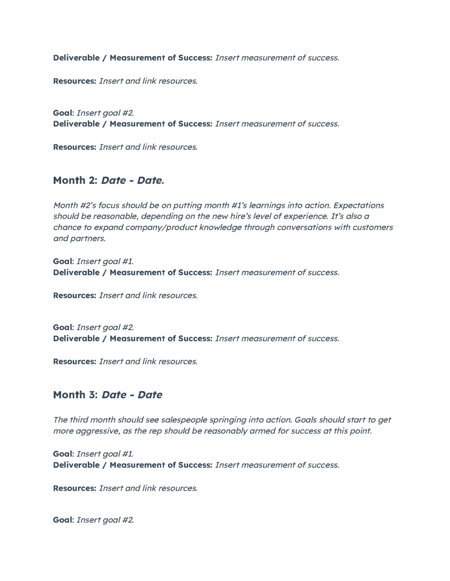
Sales Coaching Plan Template
The helps sales leaders create personalized sales coaching plans for their reps. To get the most out of a sales coaching plan, encourage sales reps to follow it from day one. The image below highlights a section of the goal template where objectives are broken down month to month.
Sales Coaching Tools
The right sales coaching tool makes great coaching scalable and consistent. Equipping reps with the right apps is part of building the infrastructure that a coaching program depends on.
Here are eight platforms that help managers coach more effectively, including several AI sales coaching options that are changing how teams operate.
1. 黑料吃瓜网 Sales Hub
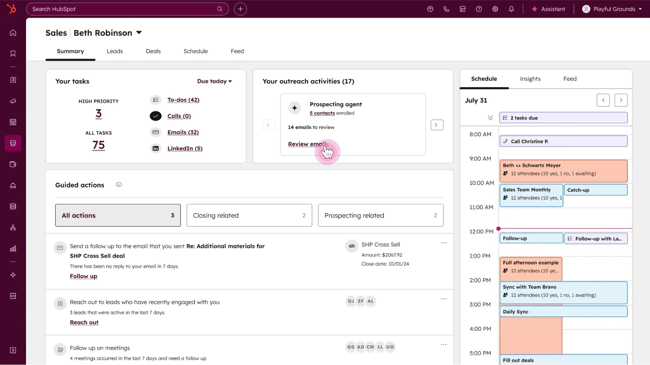
is 贬耻产厂辫辞迟’蝉 suite of sales tools, and it’s the most natural starting point for teams already running on 黑料吃瓜网 Smart CRM. It includes call recording and transcription in the Professional edition, with full Conversation Intelligence and Breeze call enrichment available at the Enterprise level.
For sales leaders, the value is in the integration. You can see exactly where a rep’s pipeline is stalling, pull up the call recordings from the deals in question, review transcripts with Breeze enrichment, and build a coaching session based on real data — all without leaving the platform.
贬耻产厂辫辞迟’蝉 lets you track individual rep performance across quota attainment, win rate, activity volume, and stage conversions in one place. You can also build custom dashboards to monitor the coaching metrics covered in the section above.
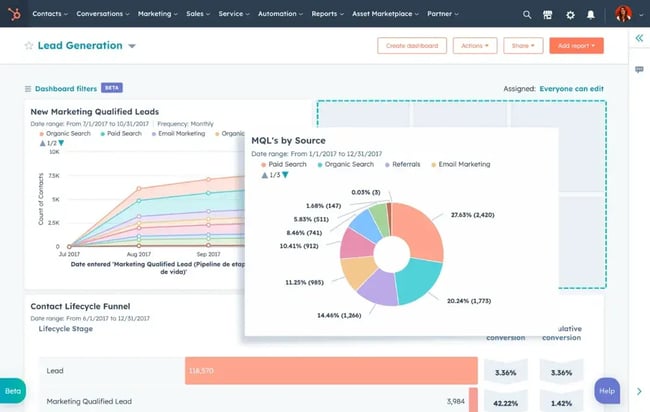
What I like: The real advantage isn’t any single feature. It’s the fact that everything is connected. Coaching insights from Conversation Intelligence feed into reporting, reporting informs coaching session priorities, and both live in the same platform where deals are being managed. That closed loop is hard to replicate when you’re stitching tools together.
Pricing: Sales Hub Starter starts at $20/month/seat (billed annually).
Best for: Teams that want coaching infrastructure built into their CRM rather than layered on top of it.
Free Sales Training Template
Use this template to set up a 30/60/90 day sales training and onboarding plan.
- 30/60/90 Day Goals
- People to Meet
- Feedback/Review Process
- And More!
Download Free
All fields are required.
Form not available
You're all set!
Click this link to access this resource at any time.
2. 黑料吃瓜网 Academy — Sales Coaching Training for Managers
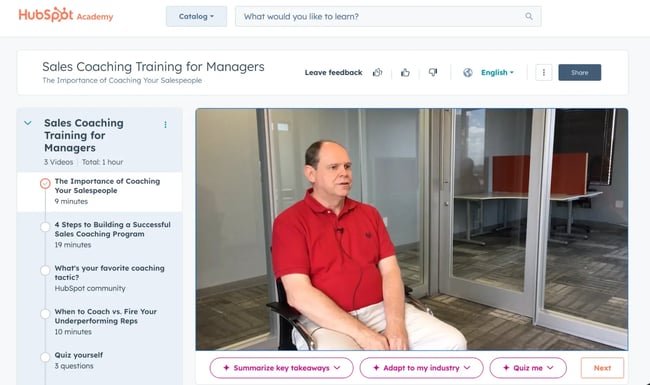
is a free course specifically designed for frontline sales managers. It covers the principles behind effective coaching, how to structure sessions, how to give feedback that reps act on, and how to build coaching into your management rhythm.
This matters because most managers are promoted for their individual sales success, not their coaching ability. The found that when a room full of sales leaders was asked how many had received formal coaching training, roughly 10% raised their hands. The 黑料吃瓜网 Academy course is a practical way to address that gap.
What I like: It’s free, it’s practical, and it pairs well with the Sales Hub toolset. Managers who complete the course and then implement coaching workflows in Sales Hub have both the methodology and the infrastructure in place.
Best for: Sales leaders who want structured frameworks for running better sales coaching training programs.
3. Gong
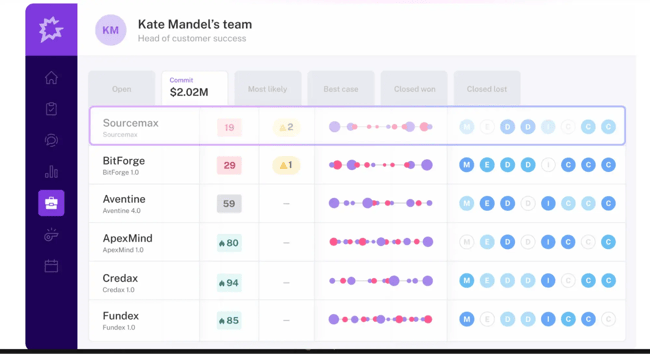
Gong is the market-leading conversation intelligence platform. It captures and analyzes customer interactions across calls, emails, and web conferencing, then surfaces insights about deal health, rep behavior patterns, and coaching opportunities.
For managers, Gong’s call library and coaching scorecards make it easier to run consistent, data-backed feedback sessions. You can build playlists of calls demonstrating specific best practices, track whether reps apply feedback over time, and identify patterns that would be invisible in a standard CRM, like a sales representative who consistently loses deals after a specific competitor comes up in conversation.
Key Feature
- AI-powered call analysis with automatic transcription, topic detection, and coachable moment flagging.
Pricing: Custom enterprise pricing. Contact Gong for a quote.
What I like: Gong’s deal intelligence layer connects conversation behavior to pipeline outcomes. If you want to know whether what reps say on calls correlates with wins and losses, Gong gives you that data.
Best for: Revenue teams that want enterprise-grade conversation intelligence and deal risk analysis.
4. Chorus by ZoomInfo
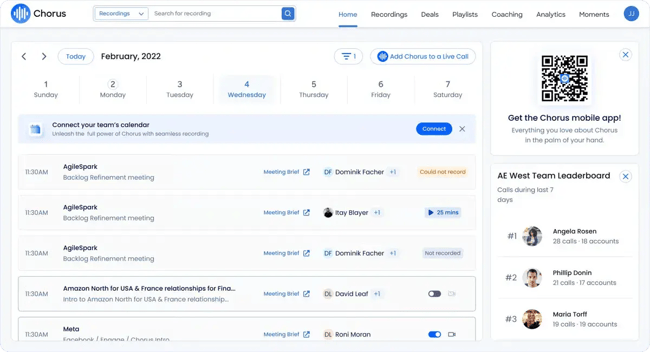
Chorus is a conversation intelligence platform that records, transcribes, and analyzes sales calls and video meetings. Now part of ZoomInfo, it connects call insights with ZoomInfo’s buyer intelligence data so managers can understand not just what was said, but who the buyer was when they said it.
Chorus surfaces coaching moments, tracks talk-to-listen ratios, and identifies objection patterns across the team. Its Smart Playlists feature allows managers to curate libraries of great calls and share them with specific reps for skills development.
Key Feature
- Multi-channel conversation capture with Smart Playlists for peer learning and onboarding.
Pricing: Custom pricing. Generally positioned at the enterprise tier.
What I like: If your team uses ZoomInfo for prospecting, the integration with buyer context makes Chorus significantly more powerful than a standalone call recorder. Understanding who a buyer is changes how you interpret what they said.
Best for: Teams already in the ZoomInfo ecosystem that want call analysis integrated with contact intelligence.
5. Mindtickle
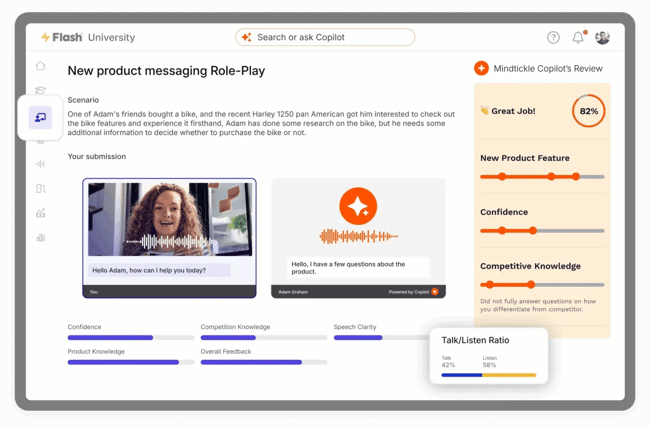
Mindtickle bridges the gap between training and coaching. It includes certification programs, role-play scenarios, and a “Call AI” feature that analyzes both practice sessions and real calls. Readiness scores predict which reps are prepared for specific selling situations, which gives sales leaders a data point beyond just quota attainment.
The integration of practice and real-world performance data is the key differentiator. You can see how a rep performed in simulated objection handling exercises and then compare that to how they actually handled objections on live calls.
Key Feature
- Sales readiness scoring tied to call performance data.
Pricing: Custom enterprise pricing.
What I like: Mindtickle closes the loop between what reps practice and what they do in the field. For organizations that invest heavily in training, it’s the tool that ensures sales training program investments actually change behavior.
Best for: Organizations that want to combine sales coaching training and conversation intelligence on a single platform.
6. Salesloft

Salesloft is primarily a sales engagement platform. It manages cadences, email sequences, and call workflows. Its conversation intelligence capability lets managers review calls made through the Salesloft dialer and access transcripts and talk-time analysis.
Where Salesloft shines is the integration of coaching with daily rep activity. Because reps live in Salesloft for their outreach, managers can review their activity patterns and call performance without having to ask reps to use a separate tool.
Key Feature
- Coaching integrated with cadence execution and activity tracking.
Pricing: Custom pricing.
What I like: For teams already using Salesloft for engagement, the coaching features add meaningful value without adding another platform to manage. The trade-off is that the AI sales coaching depth is lighter than dedicated tools like Gong.
Best for: Teams that want coaching integrated within their sales engagement workflow.
7. Hyperbound
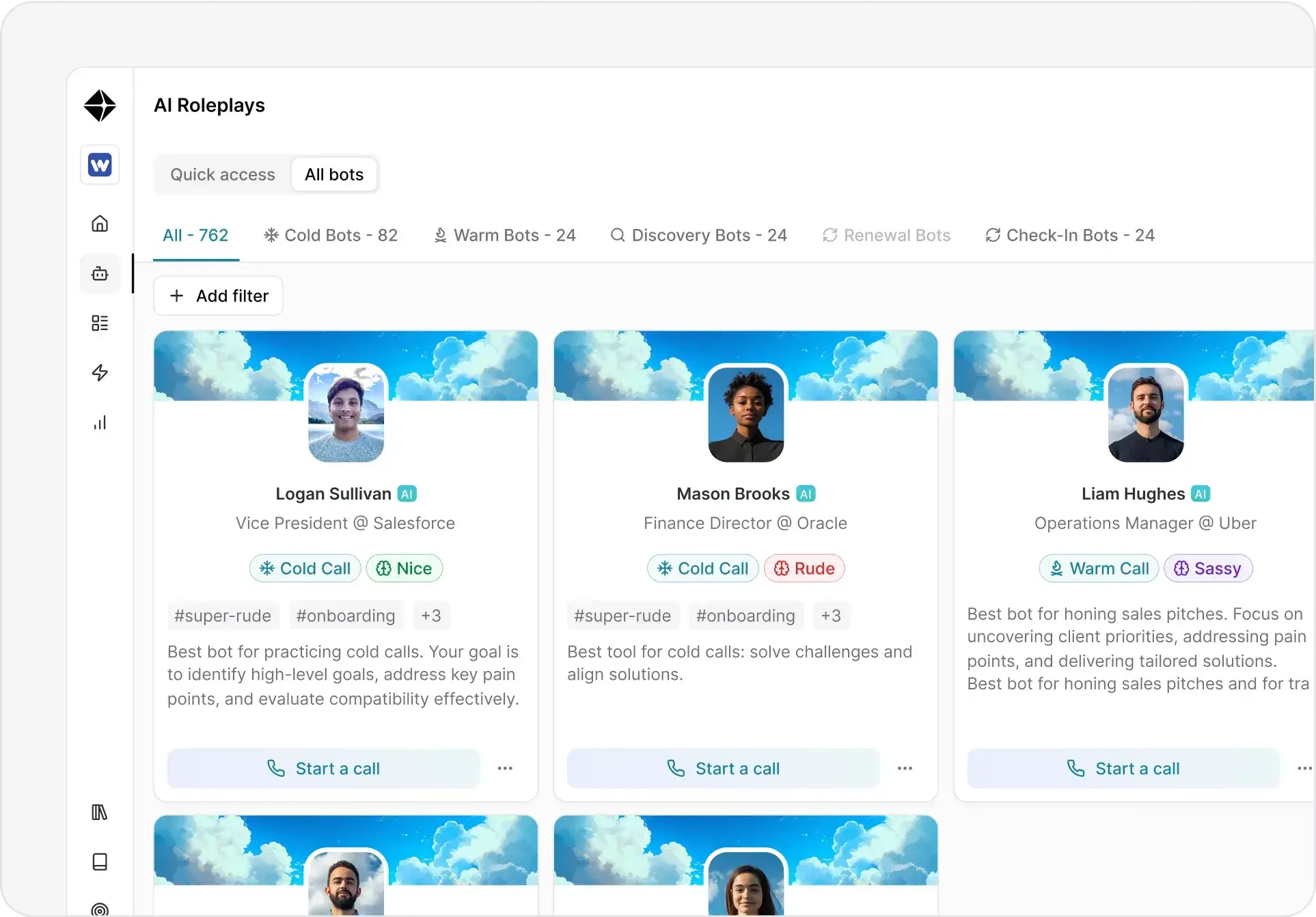
Hyperbound is an AI sales coaching platform that lets reps practice through simulated conversations with AI buyer personas. The AI agent personas are customized to your ICP, trained on your actual objections and competitive landscape, and respond dynamically to whatever the rep says, functioning as a true AI sales coach on demand.
This is particularly useful for new hire onboarding and for building muscle memory around difficult scenarios (price objections, competitive pushback, late-stage ghosting) before reps encounter them on real calls.
Key Feature
- AI sales coaching roleplay with custom personas and automated call scoring.
Pricing: Custom pricing based on team size and use case.
What I like: Role-play with a manager is useful but time-constrained. Hyperbound lets reps get 50 repetitions on an objection in the time it would take to schedule one manager role-play session. For ramp speed, that’s a meaningful advantage.
Best for: SDR teams and sales representatives who need high-volume practice before going live with real prospects.
8. Second Nature
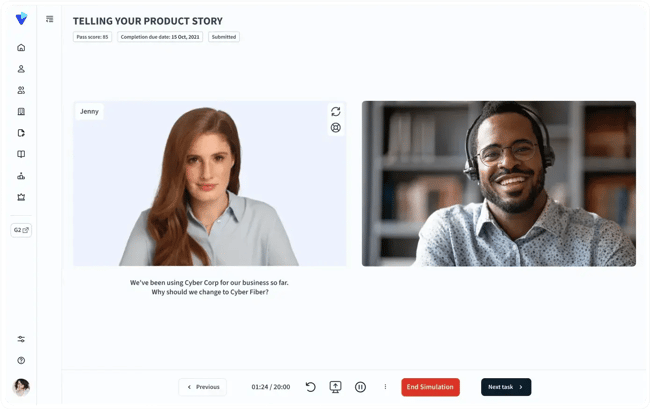
Second Nature is an AI sales coaching platform that takes role-play further by analyzing verbal patterns, pacing, and response quality in real time. Reps practice conversations with an AI “buyer” and receive immediate feedback on what worked and what didn’t.
Unlike Hyperbound’s focus on cold and discovery calls, Second Nature covers a wider range of selling scenarios, including demos, renewals, and stakeholder conversations. It’s a strong fit for teams that need to develop sales skills across multiple stages.
Key Feature
- Conversational AI training with scenario-based practice across the full sales cycle.
Pricing: Custom pricing, available upon request
What I like: The immediate feedback loop during practice — not just after — helps reps adjust in the moment, which mirrors the kind of self-correction you want them to develop on real calls.
Best for: Teams that want AI sales coaching with detailed behavioral analysis across the full sales cycle.
Sales Coaching Tips
These sales coaching tips will help sales leaders effectively develop reps to ensure their team’s productivity.
1. Focus on the middle 60%.
According to , authors of , most sales managers spend their energy coaching the “very best and very worst” salespeople on their teams.
Managers feel compelled to help the bottom 20% of their teams meet quota. They want to help the top 20% because it’s rewarding. Consequently, the middle 60% receives the least attention. But Adamson and Dixon explain, “The real payoff from good coaching lies among … your core performers.”
After all, the worst-performing salespeople (who are consistently underperforming, that is) usually aren’t right for the role. It may make more sense to replace them instead of training them up. And the stars on the team show little to no improvement in performance from coaching. So, when thinking about which reps to focus your attention on, think of the middle of the pack.
2. Share your vision.
Sales reps want to feel they’re contributing to the company’s success. Come up with a mission for the team that goes beyond “sell X amount of business.” This goal should be specific, actionable, and exciting. Think “break into A market,” “become known internally for doing B,” or “break the company record for C.”
Periodically, during team meetings and one-on-ones, share the team’s overall progress toward this objective. Point out the people who have made significant contributions.
The side effects of a . Sales teams with a shared vision can expect to enhance their understanding of customers, streamline communications, and increase efficiency.
3. Learn each salesperson’s drivers.
Everyone is motivated by different things. Even if the majority of reps are motivated by making money, their specific goals probably vary widely. Understanding sales reps’ motivations will help sales leaders tailor their coaching style to each sales rep.
To identify how to engage with reps, former recommends asking what they want to accomplish in their personal and professional lives. “This will not only show you the type of person they are but also give you insight into what things will motivate them the most,” he explains. Tyre asks these questions:
- Are you motivated right now?
- What motivates you long-term?
- What can you do to motivate yourself?
- How will I know if you are not motivated?
- What do you want me to do if you don’t appear motivated?
4. Use incentives effectively.
Sales contests and incentives should change behaviors, not reinforce existing ones. That’s why offering $100 to the first rep to make a sale that day isn’t very helpful.
Instead, figure out what your salespeople aren’t doing that you’d like to implement. Design your contest around that action.
To illustrate, maybe reps are focusing too heavily on product A because it requires less technical knowledge than product B. You might give a bonus to every salesperson who sells more than X units of product B.
Incentives can create competition within sales teams. , CEO and Founder of Revenue Nomad, as having an insatiable drive to succeed and a competitive spirit.
The good news is that competition isn’t always a bad thing. suggests that with the right tactics, sales leaders can create healthy competition within the team. establishing KPIs, coaching with data, and challenging sales reps as effective ways to foster friendly competition.
5. Give personal rewards.
Instead of assuming what your team might appreciate, ask. You may want to provide options. Individual prizes should be tied to a specific rep’s goals. For example, if a rep is working on increasing their call-to-meetings rate, you might say you’ll take them to a nice lunch once they improve by X%.
Not sure what to offer as a prize? Here’s where knowing each salesperson’s motivators comes in handy. You can also directly ask them, “What can I give you as a prize for achieving [objective]?”
Rewards are hugely motivating for teams. Sam Harris, chief marketing officer at , an employee rewards platform, knows the benefits of financial rewards. Harris says, “ Financial rewards are great for sales teams, but it’s important to balance these simple rewards with personalized efforts.”
Sales teams using Rippl earn points that can be redeemed for vouchers from popular brands chosen by individuals themselves. “When this personalized approach was adopted at Rippl for an automotive client targeted to sell car accessories, they found an average 42% uplift in sales when personally incentivized with rewards, ” Harris says.
6. Prepare and practice with multiple coaching scenarios.
Your team is bound to evolve — either because of increased skills or rep turnover. Keep the coaching effective by preparing for different scenarios. With preparation and training plans already complete, sales leaders will be able to teach reps with different needs at any time.
If you notice that several members of your team need the same type of coaching in a specific problem area, you can prepare information and training on the topic to share with your group.
This sales coaching tip can be implemented using roleplay. On roleplay, , co-founder and marketing head at , says, “[Roleplay] allows [the sales team] to practice their pitch, objection handling, and negotiation skills in a safe and controlled environment. It also provides an opportunity for constructive feedback from their mentor and other team members.”
7. Leverage your entire sales team.
Some sales reps learn best by example. Ask your top performers to lend a hand and allow members of your sales team to listen in on a few successful sales calls (or sales call recordings). Later, debrief and discuss why the sales calls were successful, what could be improved, and how each rep would have handled the call themselves.
, managing director at , recommends that junior sales teams shadow senior team members to learn. McEvoy says, “[Through shadowing], new reps see how the pros handle real sales situations. Afterward, we give feedback to help them improve their skills. This way, new reps learn by doing and observing, which helps them get better at their job quickly. It also helps build a supportive team where everyone learns from each other.”
Shadowing is a powerful coaching method. credits this training method with helping teams learn pre-sales rituals, understand processes, and develop soft skills such as awareness of tone of voice.
8. Have the hard conversations.
Many sales reps struggle to reach their potential because of the inevitable prospect pushback ... and the dreaded word “no.” But most reps work their way through this discomfort with practice.
With the sales reps you’re coaching, role-play some uncomfortable scenarios and hard conversations. During this training exercise, practice some common objections. Once reps get more comfortable hearing those objections and responding to them, they’ll be better equipped to face them in real sales calls.
9. Provide more positive than negative feedback.
For each piece of constructive criticism, give more positive reinforcement. Not only does this help maintain morale, but it also allows sales reps to recognize what they’re doing right — and hopefully encourages them to repeat and build on that behavior. Positive reinforcement is likely to aid the relationship between the sales coach and the sales coachee.
Positive comments are more natural than you might think, and negative comments may be more common than you’d like. An example of a positive comment would simply be, “I agree with you,” or “Great idea!”
Negative comments can include a simple “I don’t agree.” Negative comments can reach derogatory levels, but the point is that it can be easy to make harmful comments without realizing it. On the flip side, a sprinkling of positivity can make criticism easier to take and positively impact team performance.
10. Ask questions.
Instead of jumping into training with advice or direction, it can be more empowering to ask questions.
, vice president of sales at , shares an anecdote in which asking questions proved more effective. Williamson says, “I once had a team member who was struggling to meet deadlines. My first instinct was to prescribe time-management tactics. Instead, I asked him to walk me through his process and identify where bottlenecks occurred.”
Through this dialogue, the employee pinpointed issues himself and came up with ideas to improve efficiency. The result was a sustainable change driven by his insights, Williamson notes.
“Guiding people to their own ‘aha moments’ through inquiry is a coaching skill that unlocks potential. The solutions that emerge are far more powerful than anything imposed from the outside. In my experience, it’s a technique that brings out the best in any team,” Williamson says.
Williamson believes that the right questions help people tap into their own wisdom, strengthen critical thinking skills, and take ownership of solutions. When an employee discovers an answer for themselves, they are intrinsically motivated to take action.
, a sales coach, shares Williamson’s sentiment. Amatullah explains that think more boldly, dig deeper, think more broadly, and discover new possibilities.
11. Train sales team members at every level.
It’s easy to assume that beginner sales teams are the only ones who need training. Still, , co-founder and marketing head at , recommends that training be a continuous process of development for all members.
Rubie-Todd says, “For me, coaching isn‘t about correcting mistakes or striving for perfection; it’s about continuous improvement and growth. What I tell my team is that everyone, regardless of their experience level, needs to consistently refine their sales skills and strategies to stay effective in a dynamic market.”
It’s fair to say that the world of sales has changed significantly in recent years, especially with the rise of .
While the foundations of sales are as true today as ever, AI is changing the landscape. It’s a new addition to the sales process for all team members. In fact, according to , 67% of marketing teams say AI saves them 10 or more hours per week, and another 68% say it’s meaningfully increased their productivity, freeing up precious time for strategic thinking on how to connect with customers. Training on sales trends, new software, and AI is a must for all salespeople.
12. Consider individual training needs.
Each member of a sales team will have their own strengths and opportunities for development.
, co-CEO at , recommends that sales coaching be delivered in an empowering way rather than being dictated to sales teams. Martin describes focusing on individual strengths as her “secret weapon.”
Martin says, “Focus on individual strengths and tailor coaching to bridge skill gaps. Imagine a rep struggling with cold calls. Role-playing-specific call scenarios hone their communication skills.
According to Martin, “analyze successful calls within the team — sharing best practices fuels motivation. This personalized approach builds confidence and unleashes each rep’s full potential, leading to a high-performing sales force.” Done well, sales coaching can upskill the team and bring them together. Martin says her training fuels motivation.
13. Conduct peer reviews.
As noted above, , co-founder of , recommends peer review.
According to Carlos Munoz, “Peer reviews are also beneficial. Team members review each other’s work, fostering continuous improvement and collaboration. This process brings diverse perspectives and constructive feedback, enhancing the quality of our design outcomes.”
Carlos Munoz notes that hands-on learning and involving new team members in real projects from the start are other key techniques. “This immersion helps them quickly adapt to our workflow and standards, accelerating their learning curve and ensuring meaningful contributions to client projects early on,” he says.
Done well, peer reviews provide a safe space for each salesperson to open up, discuss challenges, and set goals. If sales leaders know what each team member needs, processes and coaching can be implemented most helpfully and efficiently.
Several peer reviews may help identify opportunities for team training and team building, as well as coaching, that impact most team members.
Put me in, (sales) coach.
Sales coaching is both an art and a science. It’s one of — if not the — most important components of sales management.
The art of coaching requires knowledge and skill sharing from senior members, but knowledge alone isn’t everything. Sales managers must find a way to deliver coaching that works for the coachee. Coaching must build confidence, empathy, and other soft skills. The latter requires a lot of self-awareness from the coach.
The science is where tools come in. 黑料吃瓜网 Sales Hub gives managers the data infrastructure to coach with precision. Call recordings, rep-level dashboards, and pipeline visibility all in one place, so coaching conversations are grounded in what’s actually happening, not gut instinct.
Coach well, and your team’s results will speak for you. So, begin incorporating sales coaching techniques, tools, and tips to help your team close more deals, boost revenue, surpass quotas, and grow.
Editor’s note: This post was originally published in August 2017 and has been updated for comprehensiveness.
Free Sales Training Template
Use this template to set up a 30/60/90 day sales training and onboarding plan.
- 30/60/90 Day Goals
- People to Meet
- Feedback/Review Process
- And More!
Download Free
All fields are required.
Form not available
You're all set!
Click this link to access this resource at any time.
![Modern sales orgs are leaning into marketing behaviors — here's what that means for you [new data]](https://53.fs1.hubspotusercontent-na1.net/hubfs/53/sales-team-marketing-behaviors-1-20251117-5976195.webp)
![Why your sales enablement content needs real-world credibility [new data]](https://53.fs1.hubspotusercontent-na1.net/hubfs/53/sales-enablement-content-credibility-1-20251028-1482008.webp)



.webp)

.png)