
.png?width=112&height=112&name=Image%20Hackathon%20%E2%80%93%20Vertical%20(61).png)

Many businesses have identified that leveraging social media direct messaging platforms for both marketing and service is a top strategic priority for 2023.

But are consumers active in the DMs when it comes to customer support?
I conducted a survey of 100 consumers across the United States to learn more about consumer contact preferences on social media.
Let's explore the findings.
What are social media messaging apps?
Social media messaging apps are touchpoints that allow marketers and customer service teams to make personalized connections with consumers.
They create one-on-one communication opportunities through social media channels (e.g., ) and independent messaging apps (e.g., ).
Other popular social media messaging apps include:
- : Facebook's messaging platform with over 1.3 billion monthly active users.
- : Private messaging platform with over 2 billion global users.
- : Instagram's messaging platform with over 1 billion monthly users.
Consumer Use of Social Media Messaging Platforms
Based on the survey, 65% of consumers use social media messaging apps to contact customer service.
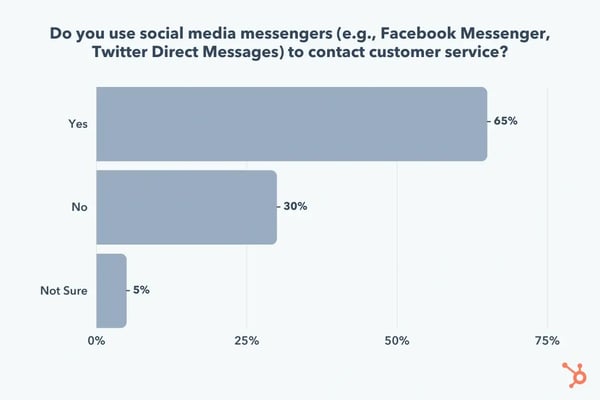
What this means for service teams: The majority of consumers are using social media for customer service. This may include sending messages to request support, flag product issues, submit feedback, or share new ideas.
Pro tip: Many social messaging apps and help desk systems. Find out what your capabilities are, and create a cohesive ecosystem for customer communications that includes social media.
Frequency of Social Media Messaging
In terms of social media messaging frequency, 61% of consumers have contacted a company's customer service team on social media within the last year.
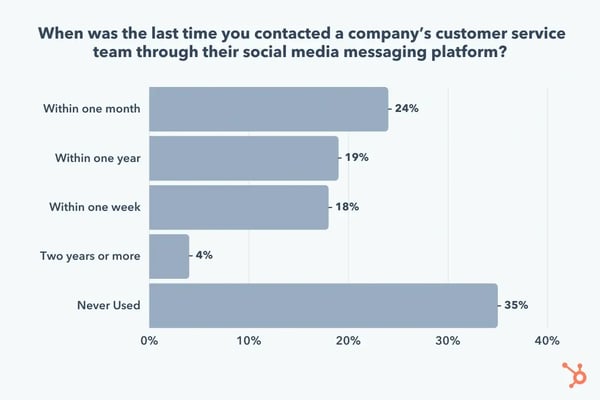
More specifically:
- 24% of consumers have made contact within the last month.
- 19% of consumers have made contact within the last year.
- 18% of consumers have made contact within the last week.
What this means for service teams: Consumers are reaching out to brands via social media at least monthly (and as frequently as weekly) for support. It's important to have an omnichannel support strategy in place to make sure requests from all channels are being addressed.
Pro tip: Set up automation to help you respond to social media messages immediately or to redirect customers to your other service channels.
Most Popular Social Media Messaging Apps
Facebook Messenger, Instagram Direct, and Twitter Direct Messages are the top three most popular social media messaging platforms that consumers reported using in the past year.
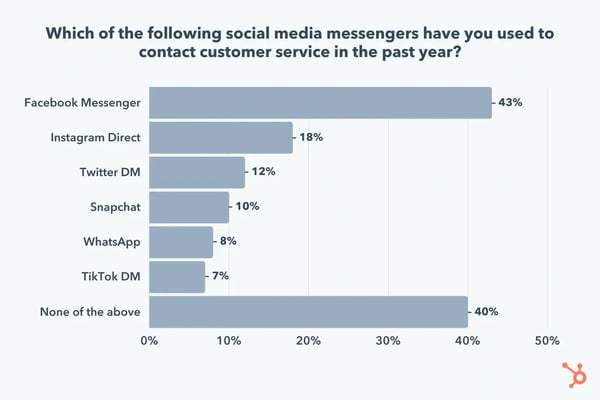
More specifically:
- 43% of consumers have used Facebook Messenger.
- 18% of consumers have used Instagram Direct.
- 12% of consumers have used Twitter Direct Messages.
What this means for service teams: With billions of active users, Facebook Messenger remains the #1 platform for customer support. If you're not already using Facebook, or if it's not currently a priority, it's worth revisiting this year.
Pro tip: You don't necessarily need to be present on every single social media messaging app. Do some research on where your audience is, and tailor your efforts accordingly.
The Results Are In
We can confirm that consumers are pretty active in using social media messages to communicate with customer support. It's time to consider investing resources in this area as part of your 2023 marketing and service strategy.