.png?width=112&height=112&name=Image%20Hackathon%20%E2%80%93%20Vertical%20(50).png)
Whenever I check a coffee shop‘s website, I’m trying to decide whether to visit — and I need answers fast. How‘s the atmosphere? Is the menu easy to find? Can I locate the address and place an order without digging around? A coffee shop website should help customers find those answers and act within seconds. Design trends don’t matter if the essentials are buried or difficult to access.
The strongest coffee shop websites are direct, engage the customer, remove uncertainty, and make the next step obvious. Small structural decisions shape user behavior more than visual effects. Navigation labels, hierarchy, image clarity, and CTA placements all influence whether someone stays or leaves.
In this guide, I’m sharing the 30 coffee shop website designs I love after reviewing hundreds of elegant and aesthetic examples, highlighting how each one handles the basics of design.
Table of Contents

Best Coffee Shop Websites
- Avenue Cafe
- PJ’s Coffee
- Caffe Borbone America
- Backatown Coffee Parlour
- True Baristas
- Treme Coffeehouse
- Stumptown Coffee Roasters
- Interlude
- Black Fox Coffee Co.
- Oliver’s Coffee
- KAFFE
- % Arabica
- Skittle Lane
- Bonnie & Clyde Coffee
- Truth Coffee Roasting
- Brothers Coffee
- Merkava Coffee
- Starbucks
- Compass Coffee
- The Wydown
- DUA DC Coffee
- Cafe Unido
- EMISSARY
- KINGSWOOD COFFEE
- Rival Bros.
- Rachel’s Coffee House
- Manic Coffee
- JAVA HOUSE
- Vida e Caffe
- Coffee Bean
1.
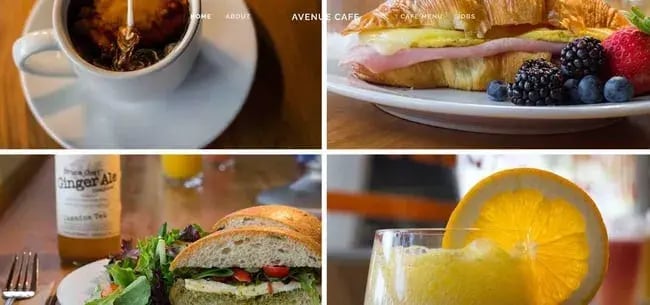
Avenue Cafe shows why coffee shop websites don’t need advanced tech stacks to feel polished and functional. The homepage instantly presents food and beverage offerings in a clean grid layout without clutter or heavy animation.
Instead, the layout prioritizes what they serve and where to find them. For a local cafe, that clarity helps mobile visitors who are deciding where to grab coffee at the moment with a short brand story, operating hours, delivery information, and an embedded Google Map.
What I like: I like how straightforward the website is, with only coffee, food, and location. Simple, no overthinking required.
2.
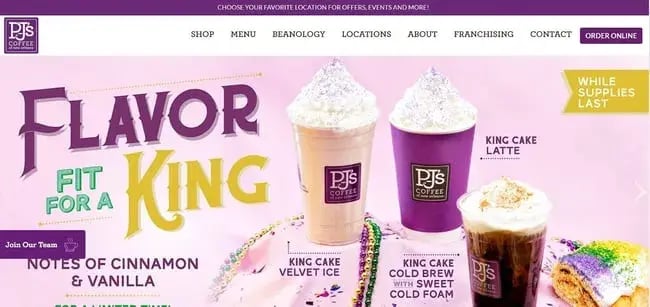
PJ‘s Coffee Shop website shows how to balance branding, local discovery, and ecommerce in a single experience for coffee shop chains. The website’s hero section features a rotating carousel with menu, beverages, hiring, and online ordering (coffee, beans, and accessories).
I’m generally cautious about carousels, as they can dilute attention, but PJ uses them strategically to surface high-priority actions. The efficient location search is also critical for any coffee shop chain.
What I like: It functions as a mature coffee shop website, keeping a balanced branding and operational efficiency.
3.
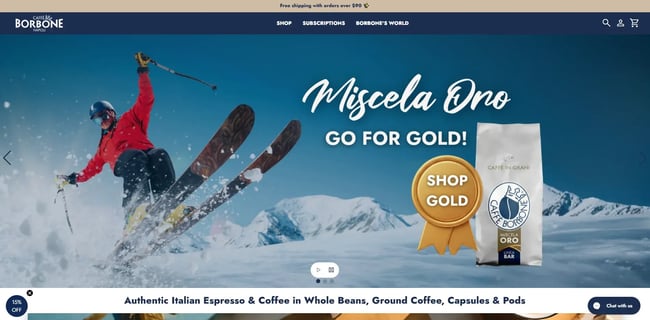
The Caffe Borbone website is designed around the authenticity of its brand offerings, including authentic Italian espresso, whole beans, capsules, and accessories.
The website navigation is comprehensive, but it felt slightly heavy, probably due to the depth of categories. The shop button opens the mega menu, which lists different product categories. So that's a 2-3 click journey to the cart.
Visual hierarchy is decent, with large product cards, clear CTAs, and crisp product images. It's a great design for their product range, but I think a bit more white space would add some breathing room.
What I like: The compactness and consistent website design with clear product presentation, detailed prices, sizes, options, and product types.
4.
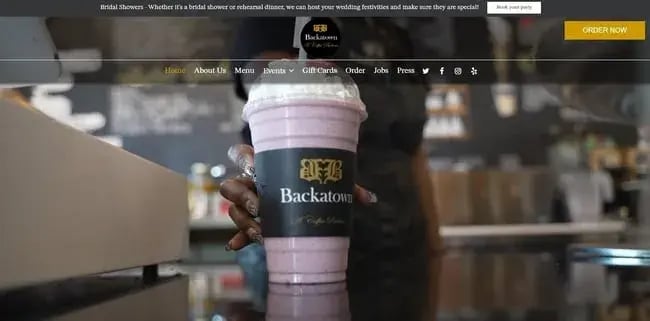
Backatown Coffee Parlour opens with a storytelling video at the top of their website. It showcases the cafe's personality, baristas, customers, and warm interior shots.
It hits the emotional side of coffee folks with a reminder that cafes are communal spaces, too. Besides, the website delivers on functionality, with an accessible menu, catering details, online ordering, and a short brand history.
What I like: The coffee shop website balances brand narrative with clear storytelling.
5.
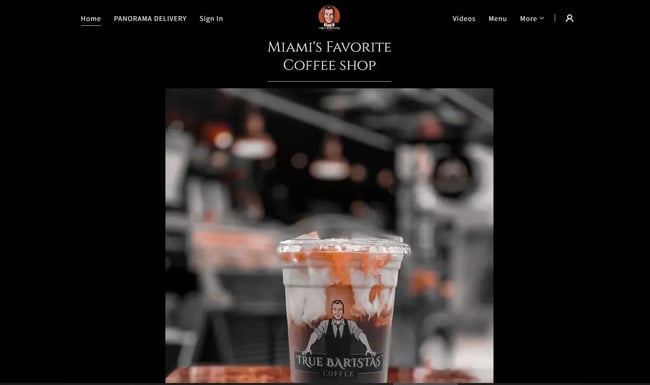
A simple coffee cup on a dark, simple website, with a simple hero copy, “Miami's Favorite Coffee Shop,” reflects a brand that cares about vibe just as much as it does about coffee.
Well-placed menu, locations, delivery, and contact information are easy to access, exactly what a coffee shop customer needs. You can also order the coffee of the week on True Baristas' website and pick it up in 15 minutes.
What I like: They feature their Spotify playlist directly on their website, playable anytime with a Spotify account — I had it on while writing this, and it‘s a genuinely great listen. It’s a small touch that gives visitors a real feel for the café's atmosphere before they even walk through the door
6.
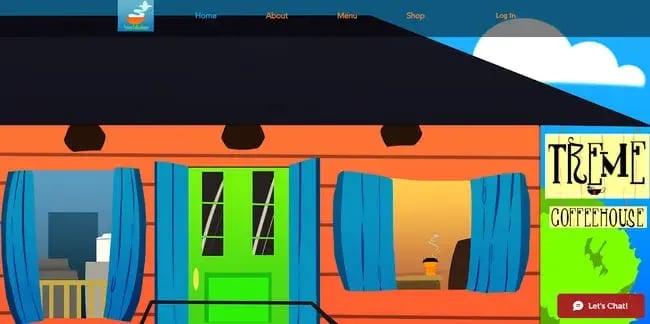
Extravagant, crazy, or bizarre? How would you describe this coffee shop website design that is unlike any other? And its deviation is what keeps you hanging out on the site a bit longer.
Does personality compromise usability? In this case, it doesn't. Despite its artistic direction, essential features such as menu, hours, location, map, and shop are easily accessible.
What I like: Its unique, colorful animation visual identity makes an interesting impression, though you get all the website features right and with clarity.
7.
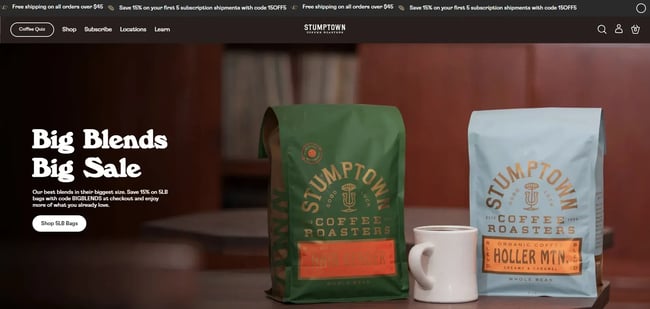
If you want proof that an ecommerce coffee shop website doesn’t need complex navigation to deliver a great user experience, look at Stumptown Coffee Roasters.
It’s impressive that they include a Brew Guides section with detailed brewing instructions for different coffee types, along with professional video tutorials.
What I like: The clear separation between the store locator and the shop. You can quickly find a nearby cafe, buy beans, or learn to brew different types of coffee.
8.
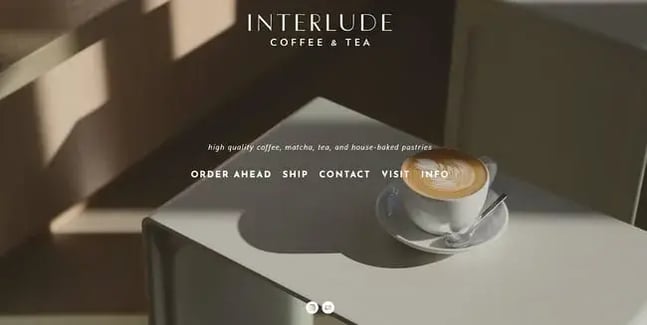
If you want to make a minimalist coffee shop website design feel premium, Interlude is the design you should study. The site's branding centres around an aesthetic hero image of a cup of coffee.
The site includes online ordering, bean purchases, location details, shipping info, and essentials. In the order section, you can browse their full menu, including the most popular items with prices, in a clean, clear interface, and order online as well.
What I like: Minimalistic websites can feel plain or unfinished, but the Interlude website achieves a modern, elegant feel throughout.
9.
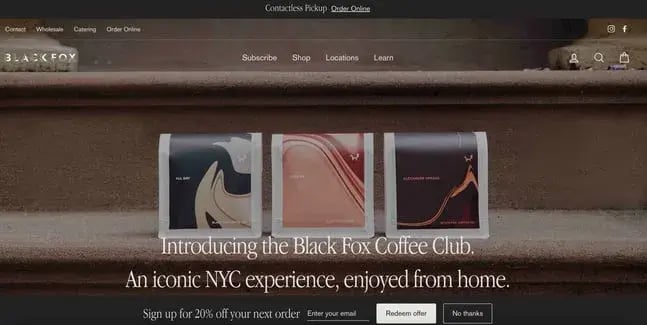
Black Fox Coffee Co.’s website feels more like a dedicated eCommerce platform than a traditional coffee shop site. The brand focuses on wholesale partnerships, specialty coffee sourced from sustainable farms, and a range of brewing gear.
The product positioning is well reflected in the website structure, with detailed listings and rich product descriptions that do the selling before a customer ever reaches checkout.
What I like: Blackfox offers subscription ordering with recurring coffee delivery, which is great for estimating revenue and long-term customer loyalty.
10.
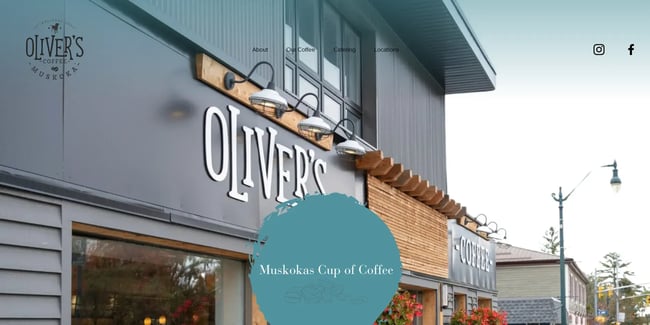
Oliver’s Coffee keeps things simple with clear navigation, avoiding clutter that competes for attention. Visitors can quickly find the core pages, like the Coffees, Catering, and Locations, without confusion. From a UX standpoint, the site does its job efficiently.
Visually, the design is minimalistic with a simple but heartfelt approach. The typography is clean, with little contrast, warmth, or depth, creating a memorable impression.
What I like: The clean navigation and straightforward structure make the site effortless to use with zero confusion.
11.
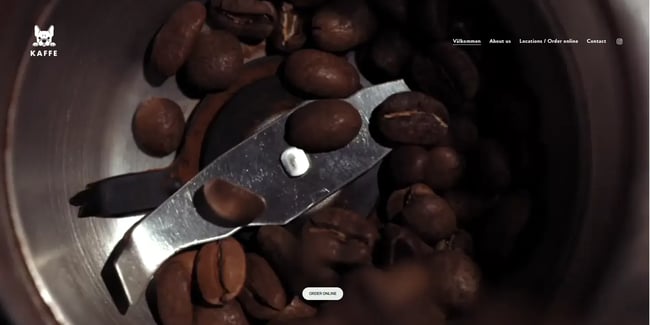
KAFFE‘s coffee shop website opens with one of the strongest elements for a website, a hero video. It shows everything from the brewing process to the coffee shop’s environment, making the brand feel alive and welcoming.
Elsewhere, the site stays clean and purposeful with clear navigation to Locations, Order Online, and Contact details, and the structure keeps users focused on taking action rather than getting lost.
What I like: The entire website is built around the hero video, and it connects you with the brand and ambience immediately.
12.
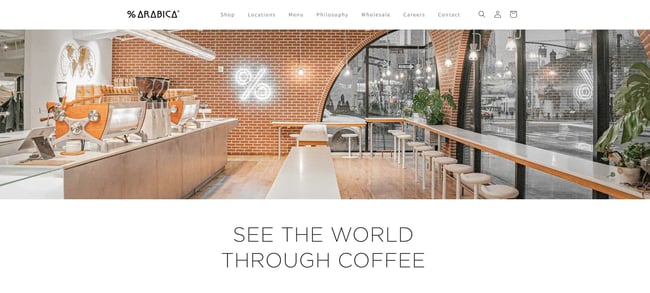
If you want an example of how artistic photographs can influence a coffee shop website brand, %Arabica is the perfect case study. Paired with the slogan, “See the world through coffee,” the brand feels modern and elegant.
Aside from the strong visuals and presentation, it has a well-developed ecommerce and wholesale section. For a modern urban coffee shop, an online ordering option for coffee would feel like a natural addition.
What I Like: It's impressive that they went for a photography-focused website with incredible copy: “See the world through coffee.” As a coffee addict, I would love to be there more often.
13.
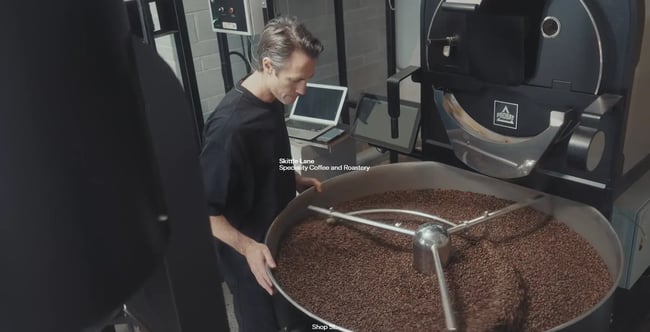
I always like to see websites taking a video-first approach with a cohesive aesthetic. Skittle Lane coffee shop’s website takes a similar approach, featuring a hero video on the landing page and only one button to get directly to the shop.
The shop page is effortless to use, with simple typography and a personality that doesn't complicate things for visitors. Get in, select your coffee, and purchase it. Easy peasy, lemon squeezy!
What I Like: The coffee shop website feels both brave and simple at once. Hits with a bold impression, then makes it super simple to use.
14.
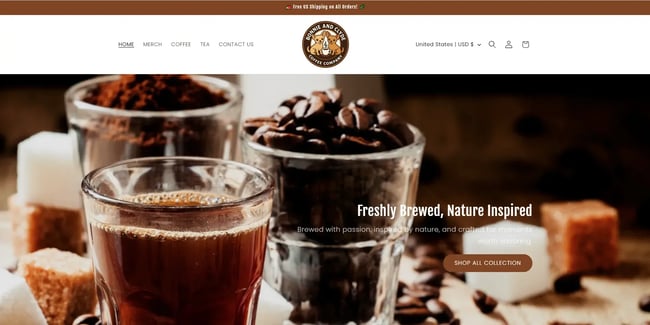
Bonnie & Clyde Coffee functions as a small, curated specialty brand rather than a large-scale commercial roaster. They have a focused product range of coffee beans, pods, and teas, along with a small selection of merchandise.
From a design perspective, the site balances these categories well, keeping coffee the visual priority with some supporting lifestyle merch around the brand.
The coffee shop website layout distributes products evenly across clean grids, giving each item equal visibility without highlighting signature blends or premium offerings. It seems intentional.
What I like: The product section on the website nicely balances coffee and merch together.
15.
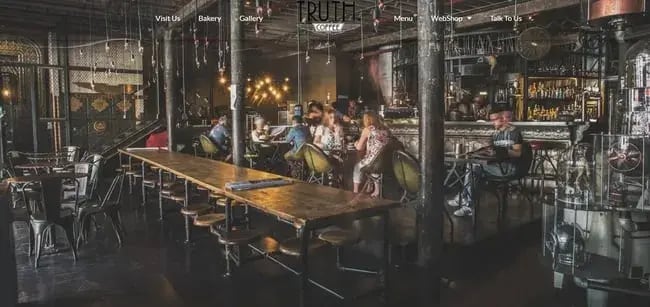
Truth Coffee Roasting is a classic, modern, and stylish website that emphasizes imagery and serves one up right from the start. Thus, you can get a sense of its interior and ambiance right upon landing on the home page and decide whether it’s your must-visit place.
As you scroll, you’ll find product imagery paired with descriptive copy, customer reviews, and clear navigation to the menu and shop. I like it when cafes include reviews directly on their website, which reinforces credibility. Only a few do, though.
What I like: The visuals and design of the site immediately create an atmosphere that makes me crave being there.
18.
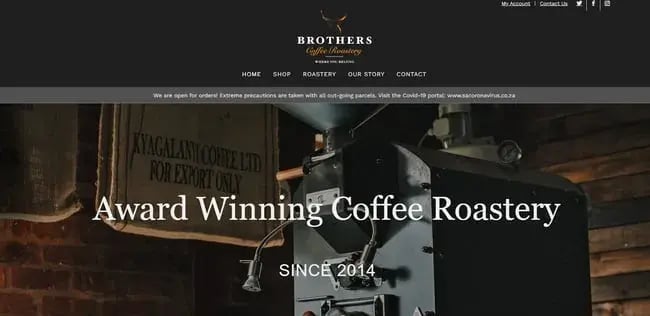
Brothers Coffee Shop's website tells its brand story through a hero video and an aesthetic homepage, creating a coffee culture atmosphere. I like the idea of not using any copy, instead visualizing their tale with videos and images, with a completely detailed story section.
What I like: I strongly appreciate their approach to creating a culture-driven coffee shop website with visuals and a catchy backstory.
17.
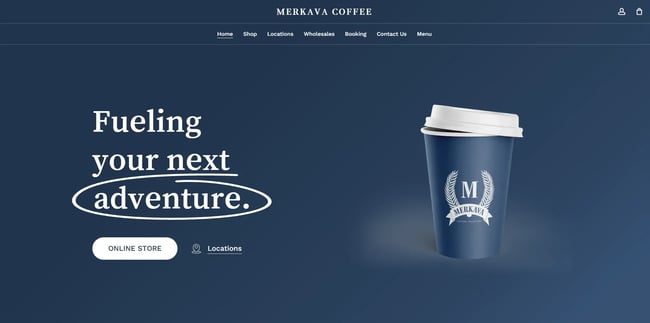
Most coffee shop websites lean into warm browns and earthy tones, but Merkava Coffee takes a different route with a blue-and-white color palette, and guess what? It works!
The unexpected color choice makes the brand instantly memorable. The layout is clean and product-focused. Blends and drinks are positioned front and center, with clear spacing and minimal distraction.
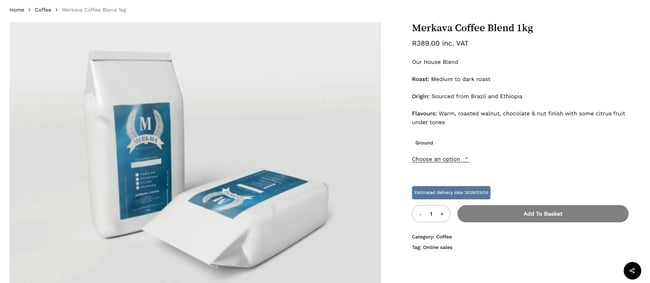
I like the detailed descriptions of blend profiles, including flavor notes, origin, and roast level, to support informed purchasing decisions. For coffee enthusiasts, that information isn‘t optional. It’s part of the buying experience.
What I like: I'm impressed by the distinct colour palette, which immediately establishes strong branding, increases memorability, and keeps the focus on the products.
18.
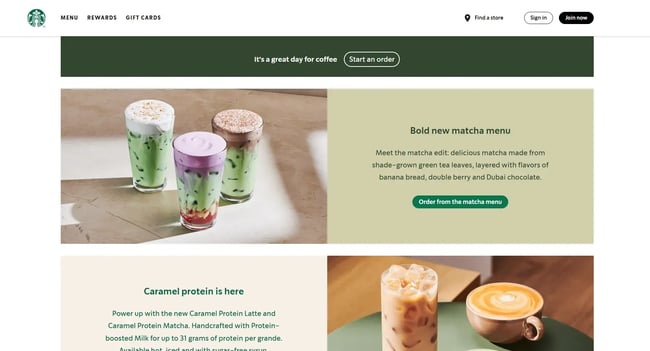
Starbucks is arguably the largest coffee shop chain in the world, and the website design is optimized for retention and repeat purchases rather than branding. The first thing I read on the website is the CTA to order a coffee.
The navigation focuses on three core drivers: Menu, Rewards, and Gift Cards. Loyalty programs increase repeat visits, and Starbucks prominently features its rewards system. It's a seamless, retention-focused system.
The homepage highlights updates and new products, and each featured item has a clear next step. This reduces browsing friction and moves visitors toward action quickly.
What I like: Starbucks understands its market position. Instead of focusing on brand storytelling, the website is designed for retention, loyalty, and scale. Exactly what a global brand of this size requires.
19.
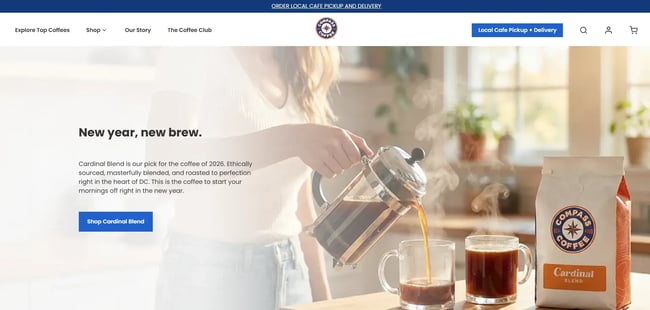
Compass Coffee made a product-first eCommerce website. The homepage particularly focuses on coffee blends and merchandise. This structure makes it clear that ecommerce is a big part of their business.
When a brand operates both retail locations and online sales, the website needs to serve both audiences without confusion. They implemented the “Find a Cafe” feature, which helps customers find their shops.
What I like: Compass Coffee cleanly separates intent across dual services, like in-store and online sales.
20.
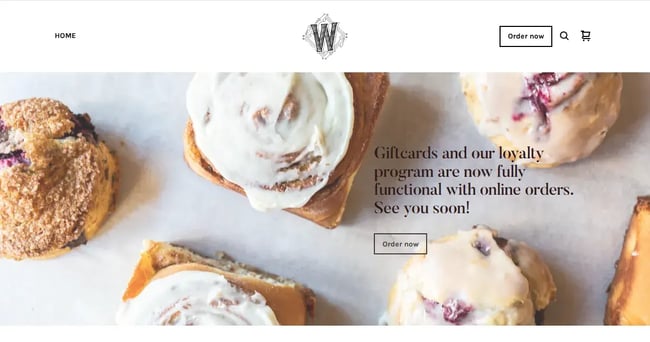
The Wydown coffee shop website is arguably one of the most minimal I’ve encountered. It immediately pushes you to fall in love with their bruschettas and cookies, with a clear call to action right in the centre.
The site is designed to be simple, with a focus on usability and user experience over flashy design. When you click the Order now button, you are taken directly to the menu to pick and customize your order.
What I like: I'm kind of sold on their minimalist design. Well, I could get minimalistic, but this is the pinnacle of minimalist website design.
21.
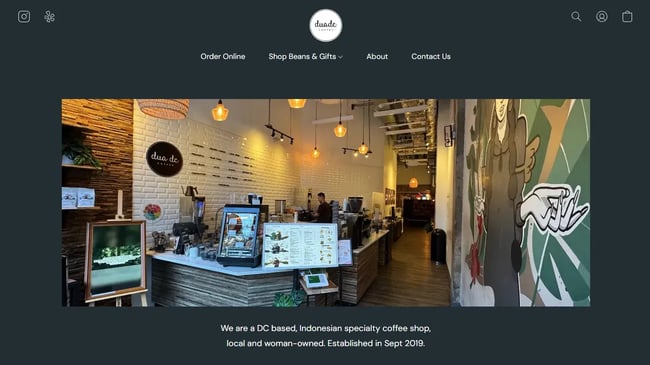
DUA DC Coffee designed a simple and polished coffee shop website. It has a minimal, straightforward layout so visitors can access menus, gift options, and beans for purchase. This structure works well for small cafes using platforms like WordPress or website builders. It focuses on needs without overcomplicating the design.
What I like: The prioritization works nicely to create an aesthetic experiment with a suitable user experience.
22.
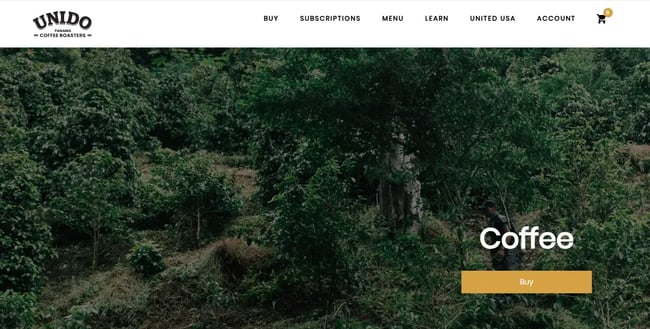
Cafe Unido takes a product-first approach with a clear focus on Panamanian coffee blends. Its design includes signature or premium blends, which should increase average order value when combined with clear tasting notes. At the same time, Unido doesn’t neglect in-store customers. It provides easy access to menus and location information.
What I like: The clear product hierarchy supports ecommerce goals and keeps the menu and location visible to casual visitors.
23.
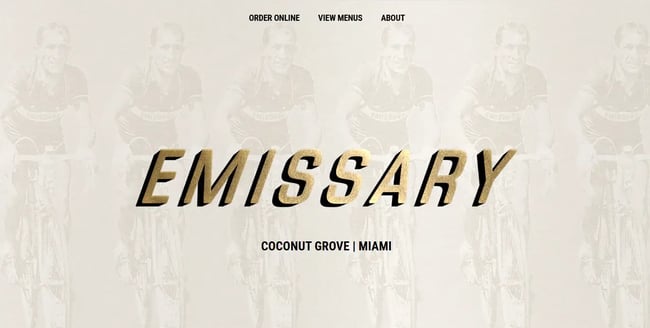
EMISSARY is essentially a counter-cultural, aesthetically driven cafe design with strong storytelling about a European cafe in Miami. The About section features high-quality photography of the cafe's architecture, interior design, customers, drinks, food, and interior shots.
This approach scales up the cafe brand because it creates an atmosphere immediately. I liked the alignment between the visuals and the design's positioning, and it clearly communicates quality and experience.
What I like: As someone with a strong interest in different cultures, I am drawn to the cafe, as are people with similar interests.
24.
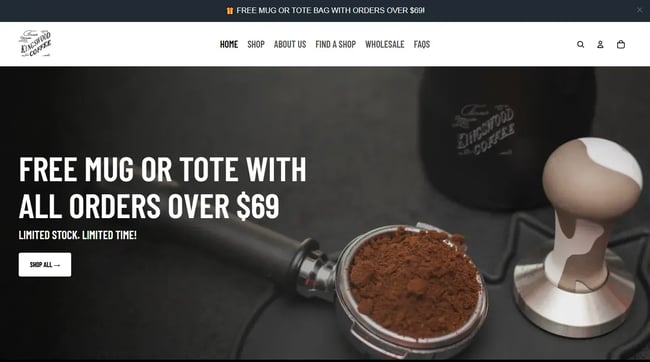
The KINGSWOOD COFFEE shop website features a classic espresso machine hero image, signaling to traditional coffee enthusiasts. The design leans into a modern aesthetic, with a dark, black-forward color palette and well-chosen typography that adds sophistication.
For a small business, this level of simplicity and refinement is effective. Visitors can quickly find the cafe location and shop for beans without unnecessary distractions.
What I like: It’s impressive how the site blends a traditional coffee identity with a modern design approach.
25.
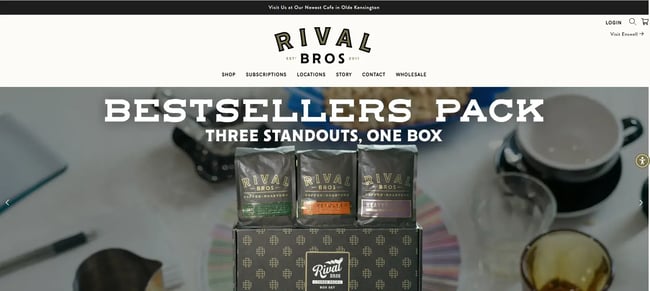
Rival Bros. is a sleek coffee shop website design example of serving both wholesale clients and cafe customers equally. The homepage clearly communicates its unique selling proposition early, and that's critical. It also includes an Accessibility Menu that helps visitors with diverse needs and supports an inclusive UX.
What I like: The brand leads with design — and does it exceptionally well — without losing sight of the food itself, which comes through clearly in the photography and menu presentation
26.
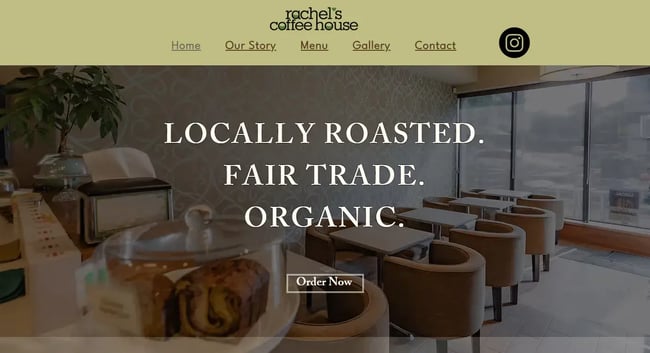
Rachel's Coffee House website design is all about comfort and welcome. The beige, brown, and white color palette creates a cozy, home-like atmosphere. The hero section reflects the cafe environment immediately on the site.
The site shares Rachel's story and mission, including a founder narrative that adds authenticity and taps into the growing desire to support local over chains. For visitors who value community, that story becomes as compelling as the coffee itself.
What I like: This is a great example of how to use a brand story alongside useful and aesthetic design.
27.
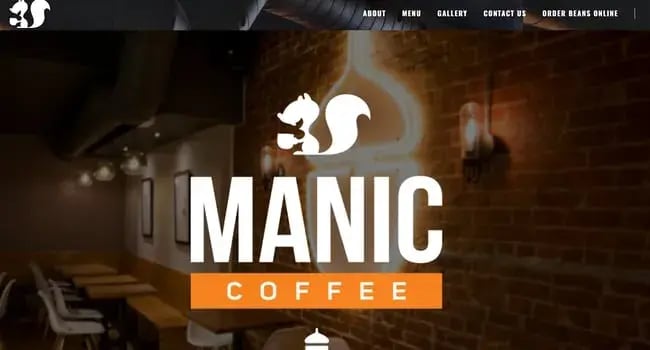
Manic Coffee Shop designed a personality-based website for a cafe that features an orange-and-white color scheme, a playful logo, and parallax scrolling to create a lively, energetic feel. This works well for cafes targeting younger or creative audiences.
The coffee shop website organizes its services visually around a coffee mug graphic. I find this to be a unique layout choice that makes the page memorable. At the same time, the menu's usability remains intact and keeps the brand alive.
What I like: Creating a strong brand personality often contradicts navigation and usability, but Manic coffee shop executed it precisely.
28.
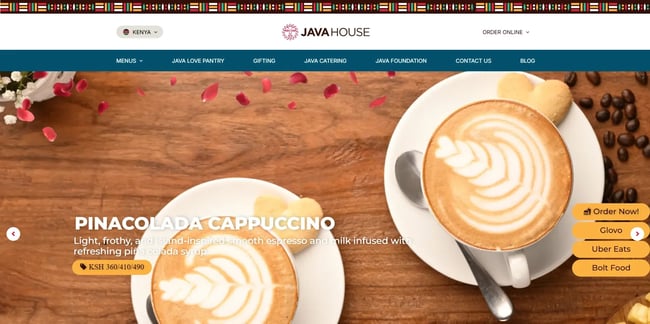
JAVA HOUSE uses full-width image sliders to promote seasonal food and drink combinations, with each slide showcasing a menu item alongside a clear call to action. Menus are prominently positioned throughout, and the hamburger navigation in the top corner remains accessible and functional — keeping the experience clean without sacrificing usability.
What I like: JAVA HOUSE is showcasing promotions with strong CTAs and making sure the path to purchase is clear.
29.
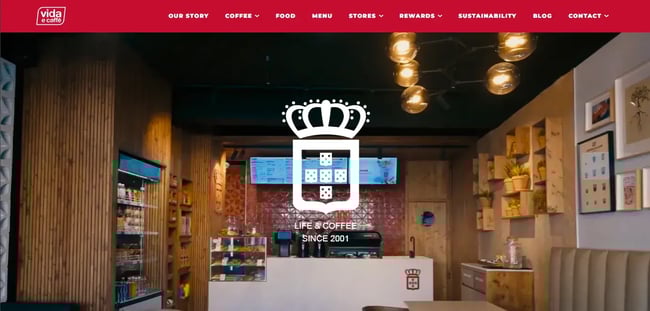
Vida e Caffe operates more like a corporate brand site than a local coffee shop website. The website branding emphasizes the company's values, history, and positioning in ecommerce.
For coffee brands expanding into retail or franchising, this type of site structure makes sense. It's a great example of how to use storytelling alongside useful design.
What I like: If your brand operates beyond a single location, your coffee shop website should reflect that broader identity. Vida e Caffe is walking the same walk with their branding.
30.
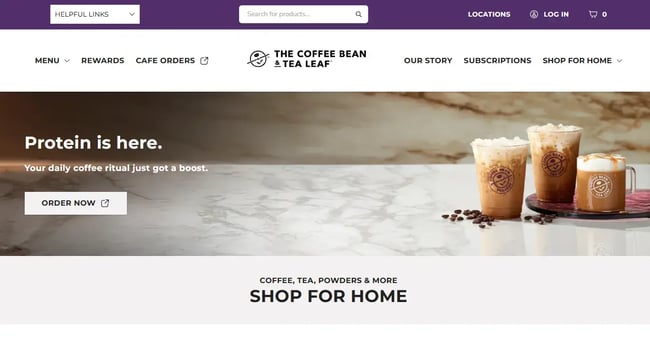
Coffee Bean leans into dynamic design elements, a storytelling approach, and full-width imagery to build its brand. These techniques create a sense of movement and visual depth throughout the site.
This kind of design can make navigation more complex, but the site handles it well. Menus, ordering options, and store information remain easy to find despite the visual density.
What I like: Coffee Bean manages to keep its usability smooth while maintaining a sophisticated visual impact.
How to Design a Coffee Shop Website
Designing a coffee shop website that converts requires more than good visuals — it needs clear navigation, fast load times, and a seamless path to ordering. Here are the key steps to follow.
1. Choose the right platform.
If I were building a coffee shop website, then I wouldn't be much bothered about the tech stack. I would try to build it with a well-structured and smooth WordPress, Shopify, or Squarespace setup and platforms that offer and templates.
However, for roasters, multi-location brands, or café chains that plan to grow, I would think about deeper functionality from the beginning. This includes POS integration, subscriptions, and inventory syncing, so the system can handle a larger customer base as the business scales.
2. Develop a clear brand identity.
A modern coffee shop website is a brand experience. It needs to be clearer than ‘modern’. This includes your logo, color scheme, typography, and overall aesthetic, to be precise.
Large hero videos or bold visuals can work well, but only if they don't bury essential actions. Design should guide people, not distract them. Consistent brand identity can increase revenue by up to 20%, according to a .
For example, Merkava Coffee has a simple and elegant website that reflects the company's focus on quality and craftsmanship.
3. Highlight your menu offerings.
One of the main reasons people visit coffee shop websites is to check out the menu offerings. That‘s why it’s so important to offer the to attract new customers.
Showcase your drinks and food items with high-quality photos and detailed descriptions. I prefer modular card layouts that work cleanly on mobile. Large text, strong contrast, and minimal clutter perform better than dense PDF-style menus.
4. Make it easy to order online.
Online ordering is no longer optional even for a coffee shop. Now it has changed to the central tool for revenue.
Starbucks reports that roughly percent of its revenue comes from mobile and digital orders. That number alone reshaped how coffee businesses think about digital.
You could add a third-party ordering platform, like Square or Toast, that lets customers order and pay online on your site. Interlude does this well with a user-friendly website that lets customers order coffee and food for pickup.
5. Prioritize mobile optimization.
Most coffee website visits happen on mobile devices. That means I design for mobile first, then scale up. Google reports that of mobile visitors leave if a site takes longer than three seconds to load. That number should be enough to make design decisions.
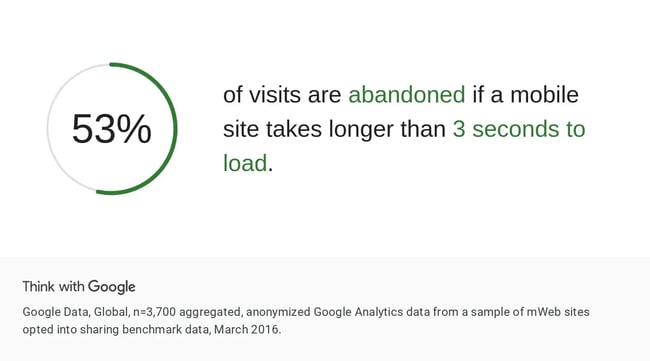
If you are building a mobile-first coffee shop design, then you should maintain the design principles. This includes designing a responsive website that looks great on all devices and optimizing page load times on smartphones.
The Best Coffee Shop Website Designs to Inspire Yours
The website is often the first thing people see when they hear about a brand and what makes them walk in or keep scrolling. A strong coffee shop website clearly reflects the brand, loads quickly, makes ordering simple, works seamlessly on mobile, and supports long-term growth. So before adding another animation or aesthetic detail, it‘s worth stepping back and asking one question: Does this help someone get coffee faster? If the answer is yes, it belongs. If not, it’s a distraction.
.png)
Free Website Design Inspiration Guide
77 Brilliant Examples of Homepages, 黑料吃瓜网 & Landing Pages to Inspire You
- Agency Pages
- Ecommerce Pages
- Tech Company Pages
- And More!
Download Free
All fields are required.
Form not available
You're all set!
Click this link to access this resource at any time.
Website Design Examples


![15 black and white website designs to inspire your own [+ pro tips]](https://53.fs1.hubspotusercontent-na1.net/hubfs/53/black-and-white-website-design-1-20250520-1336267.webp)
![Gradient Website Design Examples That Prove This Trend Is Far From Over [+Tutorials]](https://lh7-us.googleusercontent.com/htOWIbyCIoCMxSjC4gJunkGnhCzXpccjTrL8NwoGdRdCsSiEmEAxe_qBFkMrzy2Y8d3cwEr_DMzSGHq9Xi-hQFnMJCo8HDQJ1yQGigcSfFxI2QKXo0s7xXSB2sY-eALG1iUqnHXgomcDsnp7AHRSH1s)
![15 Brochure Website Examples to Inspire You [+ How to Make One]](https://53.fs1.hubspotusercontent-na1.net/hubfs/53/brochure-website-examples-1-20250319-362228.webp)
![28 Types of Websites to Inspire You [+ Real-Life Examples]](https://53.fs1.hubspotusercontent-na1.net/hubfs/53/types-of-websites.png)