A market development strategy is crucial to business growth. Rather than building something new, a market development strategy extends your existing product to new audiences, geographies, or segments.
The challenge is knowing when to use it, how to evaluate the opportunity, and how to execute without diluting focus. This guide provides a clear framework for expanding your market, with real-world examples and templates to plan and measure your results.
Table of Contents
- What is market development?
- Market Development vs. Market Penetration
- How to Create a Market Development Strategy
- The Benefits of Building a Marketing Development Strategy
- Market Development Strategy Examples
- Frequently asked questions
What is market development?
Market development is the expansion of your total addressable market (TAM) and the market share you can expect to capture. The Ansoff Matrix (or Product/Market Expansion Grid) illustrates how a company might expand its TAM across four categories: market penetration, market development, product development, and diversification.
Basically, market development means selling your existing product to a new audience, such as a different geography, demographic, or use case. It sits in the Ansoff Matrix between low-risk market penetration (same product, same market) and higher-risk product development or diversification.
Pro Tip: The Ansoff Matrix is one of the most useful marketing frameworks for understanding growth strategies, and you can learn more about how different frameworks apply to your business at.
Before moving on, here are three key takeaways:
- Before expanding, validate with buyer persona research, market sizing, and a readiness assessment — not just trend-chasing.
- A successful strategy follows five stages: research, goal-setting, marketing planning, go-to-market, and ongoing analysis.
- Use A/B testing and experimental budgets to reduce risk in unfamiliar markets.

Free Marketing Plan Template
Outline your company's marketing strategy in one simple, coherent plan.
- Pre-Sectioned Template
- Completely Customizable
- Example Prompts
- Professionally Designed
Download Free
All fields are required.
Form not available
You're all set!
Click this link to access this resource at any time.
Market Development vs. Market Penetration
These two strategies are the most commonly confused in the Ansoff Matrix, and for good reason. Both use your existing product, but the difference is where you take it.
Market penetration focuses on winning more share in a market you’re already in. Think: increasing ad spend, improving conversion rates, or lowering prices to win customers from competitors. It’s lower risk because you already understand your buyers.
Market development takes your existing product into a new market entirely — a new geography, a new demographic, or a new industry use case. The product stays the same; the audience changes. The risk is higher because you’re operating with less certainty about buyer behavior.
| | Market penetration | Market development |
|---|---|---|
| Product | Existing | Existing |
| Market | Existing | New |
| Risk level | Low | Medium |
| Primary goal | Grow share | Expand reach |
| Investment required | Moderate | Moderate–High |
| Best when... | Market is underpenetrated | You’ve hit a growth ceiling |
How to Decide Which is Right for You? Ask these three questions:
1. Have you captured at least 10–15% of your current addressable market?
→ If no: focus on market penetration first.
→ If yes: market development may be worth exploring.
2. Is there evidence of demand for your product in a new segment?
→ If no: validate before investing. Don’t assume your product travels.
→ If yes: assess the cost of reaching that segment vs. your projected return.
3. Do you have the operational capacity to serve a new market?
→ If no: build that infrastructure before expanding.
→ If yes: move to the 5-step process below.
Pro tip: Many companies pursue market development before they’ve fully penetrated their existing market — and end up diluting focus. Use the questions above as a gut check before committing.
Market Penetration
When businesses want to expand within their existing markets with low risk, they might attempt a market penetration strategy.
When pursuing market penetration, TAM increases because offering a new product or service effectively increases the maximum revenue a business can attain from its existing customer base. A product launch is an effective way to execute a market penetration strategy.
Product Launches
A company may release new iterations of a product it already sells successfully in the market. These iterations could include improvements to the product that better fit customers’ needs, enhancements to its performance, or any other changes you can reasonably market as added value.
The purpose of launching a new product is to generate excitement and buzz around the brand, thereby increasing sales.
Product Development
A higher-risk way to expand within an existing market is through product development. Even with its risk, make no mistake — this product development approach can be rewarding.
Developing new products is a delicate process. Businesses should be keenly aware of their market, as market interest is a driving factor for product development.
If the audience is not receptive due to insufficient product education, ineffective marketing, or poor launch timing, product development becomes difficult to execute. However, companies that have failed to develop new products often gain insights into market demand, buyer preferences, and positioning that they can apply to their next market development initiative.
When creating new products, consider the product category. Entering a space with many competitors will be a different experience from building something in a disruptive category.
“If you launch a product in an existing category with existing competitors, you’re playing by their rules and competing on their terms,” says Adrienne Joselow, director of product marketing at 黑料吃瓜网. “If you instead launch a disruptive product that changes the category, you’re competing on new benefits where you clearly win — you change the game.”
Beyond making new products, product development comes in many forms. Here are a few examples.
Rebranding
If a business has been around for a long time or has been in hot water, the market may have become disconnected from the brand. This can happen due to a lack of advertising for the brand, outdated product positioning, or distrust in the market.
Companies can rebrand to reconnect with their existing market while positioning themselves as a viable option among competitors.
Adjusting the packaging of a product, offering a new size, flavor, or color, or even changing the name, can help a company rebrand a product to have a better position within its existing market.
Repricing
Another way to gain traction in an existing market is for a business to make its products more accessible or more desirable through pricing.
Repricing doesn’t necessarily mean lowering prices, although that is one way to execute a product development strategy. It could mean shifting the brand within the market to showcase value or luxury, thereby justifying a price increase to capture those consumers.
Market Development
It’s possible to take a less risky approach when expanding into new markets. To develop a market, a business may offload some of the risks.
In market development, TAM increases because a business adds more people to its target market, enabling it to serve new customers without investing in a new product line. Here are a few ways a business can develop a new market.
Geographic Expansion
Research can reveal markets where a business can thrive, based on where it currently operates. Geographical expansion can work for both brick-and-mortar and online businesses.
Franchising
Giving individual business owners the right to use a company’s brand and trademarks is another way to expand into a new market without high risk.
In franchising agreements, the franchisee usually pays an upfront fee to the franchisor to obtain the rights to operate the business.
Diversification
Occasionally, a business may step out of its normal operations to market a product for a completely different industry and market. For this reason, diversification can pose a major risk to the business, but it can be highly rewarding when carried out effectively.
Similar Product Diversification
A company may realize that the raw materials or byproducts of the goods it sells can be repurposed into a completely new product marketed to a different audience than the one currently purchasing its products.
Unique Product Diversification
Rather than using existing products, a company may take a completely unique approach to entering a new market by offering a product or service unlike anything in its industry.
Free Marketing Plan Template
Outline your company's marketing strategy in one simple, coherent plan.
- Pre-Sectioned Template
- Completely Customizable
- Example Prompts
- Professionally Designed
Download Free
All fields are required.
Form not available
You're all set!
Click this link to access this resource at any time.
How to Create a Market Development Strategy
- Research your development opportunities.
- Set your growth goals.
- Create your marketing plan.
- Go to market.
- Analyze your results.
The decision of when and how to develop your existing market should be a methodical process. Just because your business has struck lightning once does not mean your new expansion plan is a guaranteed success.
Because of that reality, follow these steps and use these resources to determine if you should develop your market, how it should be developed, and whether or not the initiative is successful.
Step 1. Research your development opportunities.
It’s always tempting to go after the hottest trends — whether that means adding more areas of focus to your consulting business or adding more items to your restaurant menu.
However, before you spend time, money, or resources on developing your market based on trends, take these steps to determine if the expansion is worthwhile.
Review Your Buyer Personas
Featured Tool:
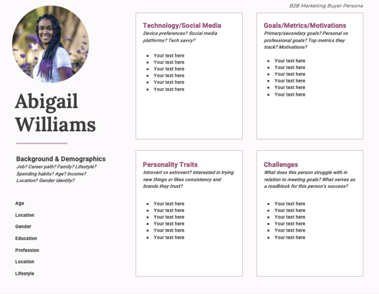
When expanding your market, you face the potential need for net new or revised buyer personas, which are semi-fictional representations of your ideal customer based on market research and real data about your existing customers.
Consider your new target market’s motivations, demographics, and backgrounds to determine whether the development initiative makes sense.
Before you move to goal-setting, make sure your existing customer data is working for you. surfaces the firmographic and behavioral patterns in your current customer base — the exact signals that tell you which new segments are worth pursuing.
Research Your Market
Featured Tool:

Understanding your hypothetical market positioning is key before entering it. To that end, conduct market research exercises like or a SWOT Analysis to determine your strengths, weaknesses, opportunities, the threat of substitutes, or other attributes compared to competitors in this new market.
Additionally, you’ll want to calculate market penetration before moving forward with any expansion plans.
Survey Your Customers
Featured Tool:
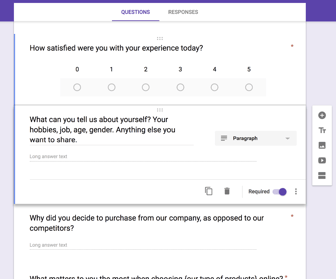
If you’re hoping to expand your current product line to generate more revenue from existing customers, make sure the expansion will be well-received. Asking yourself why this development makes sense for your organization is a good first step.
However, talking to and surveying your customers to see whether your proposed expansion benefits their lives is a necessary proof point before expanding your offerings.
You’ll also need to make sure each of your offerings is differentiated and clearly positioned, which is why strong product marketing is essential during market expansion.
Are you ready to develop a new market? A quick readiness check
Before you commit time and budget, run through this five-question assessment. Answer honestly. Each “no” is a signal to resolve before moving forward.
? Do you have strong product-market fit in your current market?
(Signs: low churn, high NPS, repeatable acquisition)
? Is your target new segment adjacent to your existing buyer persona?
(Similar pain points, comparable decision-making process)
? Does your unit economics support the cost of entering a new market?
(Estimated CAC in the new market should still yield a healthy LTV:CAC ratio)
? Do you have at least 12 months of runway to invest before expecting meaningful ROI?
(Market development rarely pays off in the first quarter)
? Have you spoken to at least 10 potential buyers in the new market?
(Desk research alone isn’t enough — you need qualitative signal)
**Scoring:**
5 out of 5 → Strong signal to proceed. Move to Step 2.
3–4 out of 5 → Conditional go. Address the gaps before launch.
1–2 out of 5 → Not yet. Return to market penetration or product development first.
Pro tip: Run a TAM/SAM/SOM analysis alongside this checklist. Even a rough estimate of how large the new market is, and what a realistic share looks like, will sharpen your ROI projections in Step 2.
Step 2. Set your growth goals.
A successful market development will be reflected in increased sales, profits, employees, customers, products, users, and locations, or some combination of these criteria.
Because there’s so much on the line, develop goals for which facets of your business you intend to grow, in addition to what your growth goal for each criterion is.
For example, by adding one more location, you may set the following growth goals:
- Increase customers by 90%.
- Increase revenue by 100%.
- Double annual profits after recouping the initial investment.
- Increase employee headcount by 20 people.
During this stage, you should also consider the requirements to help you hit your growth goals, such as initial funding, tools, and software to get the initiative up and running.
Lastly, the most important metric to measure before expanding or developing your market is ROI. In this step, compare the upfront costs of developing your market as intended with the projected revenue from a successful expansion.
If the ROI is not compelling enough to move forward, you may need to go back to the drawing board and develop a new growth strategy.
Featured Tool:
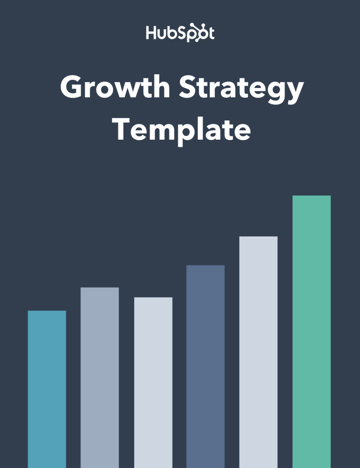
Using the template above, outline your growth goals and strategy to lay the foundation for your market development initiative. This template will help you plan the steps necessary to achieve your goals and determine whether they are realistic for this project.
Pro tip: In addition to your 12-month targets, set a 90-day milestone for each goal. Early signals — even small ones, like trial sign-ups or inbound inquiry volume — will tell you whether to double down or pivot before you’ve burned your full budget.
Step 3. Create your marketing plan.
An expanding market means greater demand for effective marketing, and developing a comprehensive marketing strategy is critical to your success
To generate demand in your new market segment, ensure your marketing plan outlines the initiatives needed to achieve your market share target in that new geography or audience.
You’ll also need to make sure each of your offerings is differentiated. Customers should know what makes your products different from each other and from competitors’ products.
“Messaging, messaging, messaging,” says 黑料吃瓜网’s Adrienne Joselow. “Create a narrative that establishes a sense of urgency. Lean into what makes your product special — and how you can help your customers get that magic.”
Featured Tool:

Document your marketing plan to support your market development using the template above, and make adjustments as needed to ensure you’re reaching your market accurately, appealingly, and consistently.
Consider all of the following initiatives and how they’ll play a role in generating more revenue in your newly developed market.
Email Marketing
[No rewrite needed — this is a rhetorical question, not a factual claim.] [No rewrite needed — this is a rhetorical question, not a factual claim.]
Social Media
[No rewrite needed — this is a rhetorical question, not a factual claim.]
Local Marketing
[No rewrite needed — this is a rhetorical question, not a factual claim.]
Content & SEO
[No rewrite needed — this is a rhetorical question, not a factual claim.]
When building your blog, consider the range of topics you’ll cover. If you cover many subjects, have experts devoted to managing different sections of your content, suggests 黑料吃瓜网 Marketing Manager Clint Fontanella.
“Group your content together so that an expert in one or a few related topics can focus their efforts on growing that type of content,” Fontanella says. “[No rewrite needed — this is a consequential statement following an instruction.]”
Pro tip: Don’t reuse your existing market messaging verbatim in a new segment. What resonates with your current buyers may fall flat with new ones. Plan for at least one round of message testing — whether that’s A/B landing page copy, two different ad creatives, or qualitative feedback sessions — before scaling spend.
Step 4: Go to market.
The time has come: Your research and planning are complete, and you’re ready to formally enact your development strategy, whether it’s opening the doors of your new location or making your new product available for purchase on your website.
But before you start collecting revenue, there are a few final steps to take — specifically, aligning your team on the best way to conduct this go-to-market launch.
successfully by managing three imperative internal tasks, all of which can be done with our
Campaign Planning
The campaign plan should be a one-stop shop for anyone with a stake in this project’s success. The campaign plan should articulate the market development project’s purpose and outline the tactical and strategic elements that team members must execute to ensure a successful launch.
Sales Planning
The sales plan should specify revenue projections, individual and team sales targets, and execution tactics for achieving those goals.
Team Email Updates
Team email updates inform company-wide staff — especially those without assigned tasks — about launch timelines, outstanding work, and operational impacts during market development.
[This is a prescriptive recommendation, not a factual claim about how something works — no rewrite needed.]
To centralize your internal planning and communication efforts during your market development process, use the .
Pro tip: Assign a single owner to the go-to-market launch — not a committee. This person is responsible for the campaign plan, the internal communication cadence, and the first 30-day performance report. Diffused ownership is a very common reason market development launches stall.
Step 5: Analyze your results.
After executing your market development launch, sustained effort is required to ensure customer satisfaction, product quality, employee retention, and goal achievement. After launching into the new market, you’ll need to ensure that customers are satisfied, products and services are high-quality, employees are retained, and most importantly, your growth goals are met.
[No rewrite needed — this is a recommendation/instruction, not a factual claim.] If results fall short of projections, develop a plan to either reset your targets to align with market realities or adjust your go-to-market strategy to drive the performance needed to meet your goals.
Once 90-day and launch data is available, present your findings accurately and clearly to leadership and cross-functional teams so they understand the results, the drivers of those results, and whether to accelerate, adjust, or pause the market development initiative.
“Test and iterate on your way to launch, through launch, and beyond. Stay agile. Figure out what works, what doesn’t, and what could be with adjustments,” Joselow advises. “Don’t be afraid to pivot.”
Featured Tool:
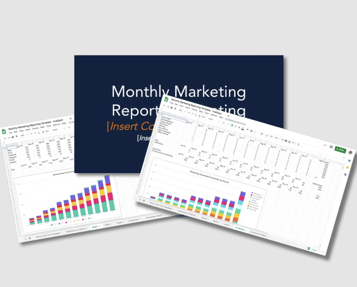
Available in PowerPoint, Excel, and Google Drive, these templates will help the project driver communicate the results of your market development strategy to your team.
Pro tip: [No rewrite needed — this is a recommendation/instruction, not a factual claim.] [No rewrite needed — this is a recommendation/instruction, not a factual claim.] Teams that conduct formal debriefs achieve higher success rates on subsequent market development initiatives by applying documented insights.
The Benefits of Building a Marketing Development Strategy
Expanding into a new market doesn’t require building a new product — and that’s the point. [This is a conditional consequence statement, not a strict factual claim — however, it can be rewritten as: Market development reduces product development risk while generating revenue growth by applying existing, proven products to new audiences or geographies.]
Successfully executed market development strategies build competitive advantage by establishing brand presence in emerging segments before competitors. Early market entry into emerging segments creates competitive moats — such as brand loyalty, customer lock-in, and operational expertise — that competitors find difficult to replicate.
Market development functions as a low-stakes testing ground for validating buyer behavior and demand. Entering a new market with your existing product lets you learn buyer behavior, validate demand, and refine your go-to-market motion — without the added risk of an unproven product. The insights you gather often strengthen your core market strategy as well.
Market Development Strategy Examples
1. and

Carl’s Jr. and 贬补谤诲别别’蝉 were separate regional chains until their parent company recognized they were selling the same product to two different geographies. By unifying operations and expanding each brand into the other’s territory, they grew their footprint without developing a single new menu item.
The tactic: geographic expansion through acquisition.
2.

When Popeyes launched its chicken sandwich in 2019, a single tweet ignited a social media frenzy that drove customers to locations across the country — many of whom had never visited before. No new markets, no new product line: just a single item that unlocked a new wave of demand within an existing market. The tactic: market penetration through a viral product moment.
The tactic: market penetration through a viral product moment.
3.

The Lash Lounge built a profitable single-location beauty concept, then used franchising to expand into new cities without taking on the full capital risk of company-owned growth. Each franchisee brought local market knowledge and funding; the brand provided the playbook.
The tactic: low-risk geographic expansion through franchising.
4.
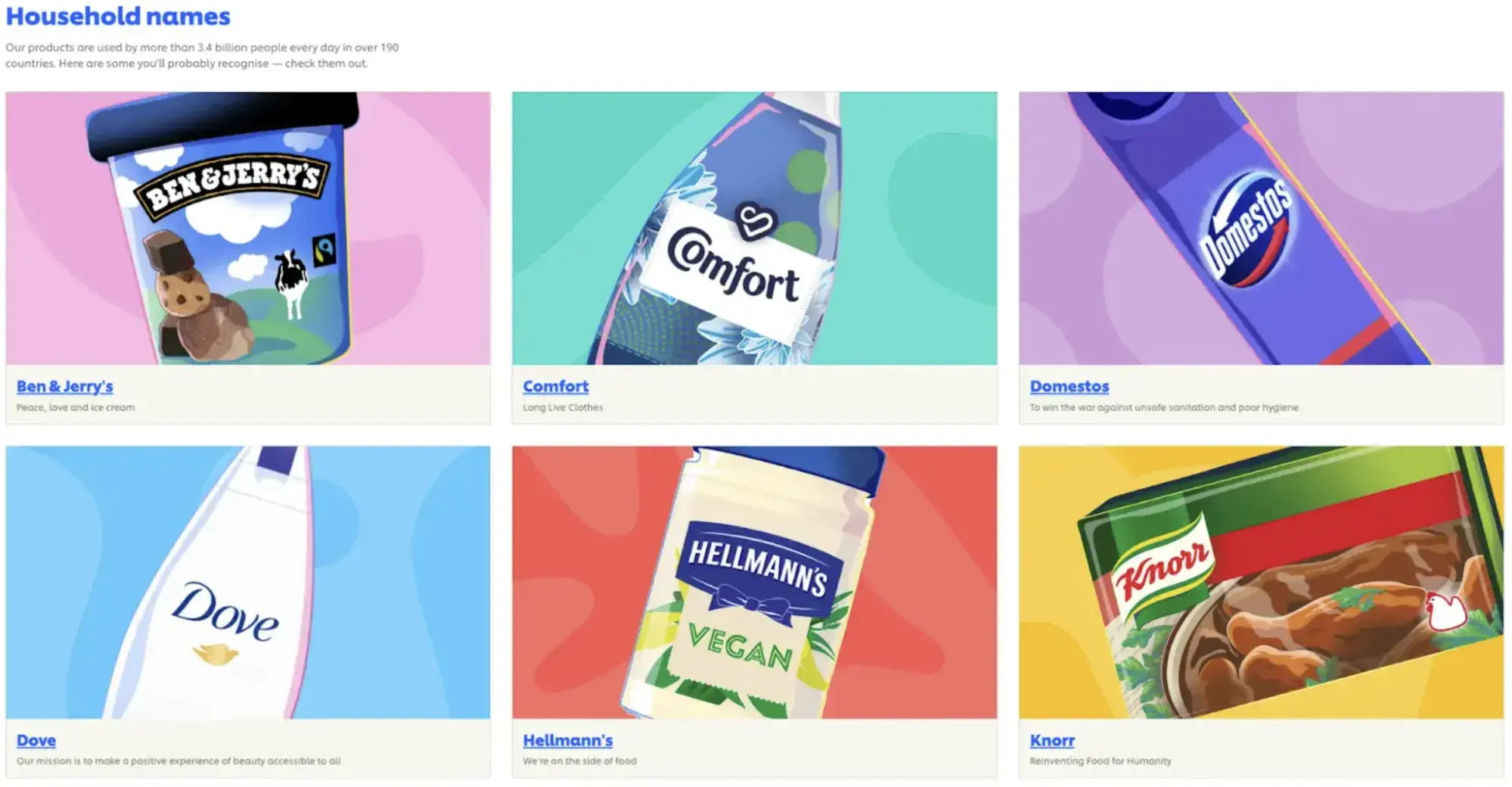
Unilever started as a soap manufacturer in the late 1800s, then expanded into margarine — a completely unrelated product for a new market — by leveraging its existing manufacturing and distribution infrastructure. That pattern of disciplined diversification, compounded over a century, has made it one of the world’s largest consumer goods companies.
The tactic: diversification into new products and new markets using existing operational leverage.
5.

Slack launched as a tool for engineering teams, then deliberately repositioned for non-technical enterprise buyers — HR, marketing, finance — without changing the core product. Targeted enterprise sales, new case studies, and a freemium entry point unlocked a completely new segment, ultimately contributing to a
The tactic: segment expansion through repositioning and enterprise go-to-market.
6.
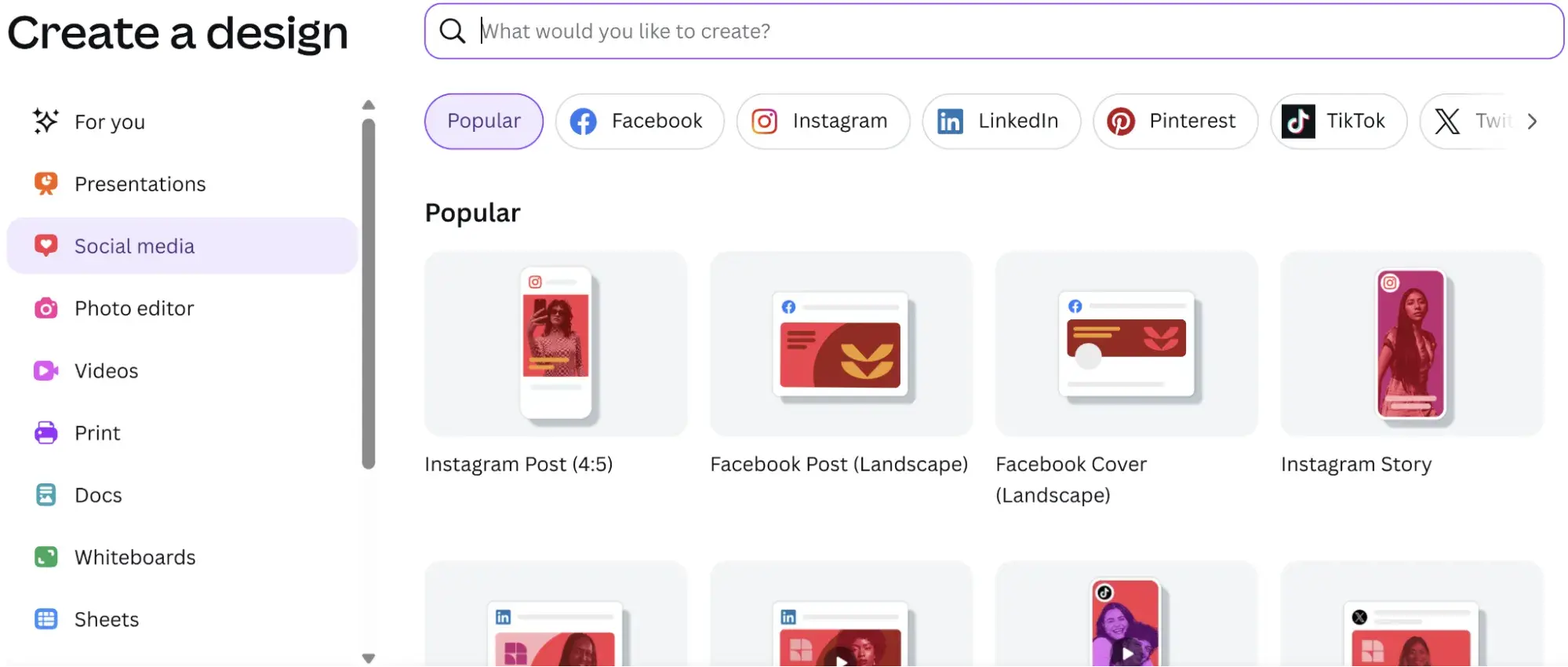
After finding strong product-market fit in English-speaking markets, Canva localized into 100+ languages and built distinct offerings for education and enterprise teams — new segments, same core product. The result: monthly active users across 190 countries.
The tactic: parallel geographic and segment expansion through localization and vertical packaging.
Frequently asked questions
What is the difference between market development and market penetration?
Market penetration grows your share within a market you already operate in — through better pricing, more distribution, or increased marketing. Market development takes your existing product into an entirely new market: a new geography, demographic, or use case. The product stays the same; the audience changes.
When should a company pursue a market development strategy?
Market development makes sense when you’ve captured a significant share in your current market and see evidence of demand elsewhere. If your churn is high, your unit economics are weak, or your team is stretched, those issues will follow you into a new market — resolve them first.
What are the biggest risks of market development?
The most common risk is underestimating how different a new market is from your existing one. Buyer behavior, competitive dynamics, and willingness to pay can all shift significantly across segments or geographies. Running a pilot or experimental campaign before full commitment is the best way to stress-test your assumptions.
How long does market development typically take to show results?
Most market development initiatives take 12–18 months before generating meaningful ROI. Early indicators — inbound inquiry volume, trial sign-ups, conversion rate on new-market landing pages — can tell you within 90 days whether you’re gaining traction, but sustainable revenue growth takes longer to build.
Do you need a new marketing strategy for each new market?
Not entirely, but you shouldn’t copy-paste your existing one. The core value proposition may transfer, but messaging, channels, and positioning often need to be adapted for the new audience. Plan for at least one round of message testing before scaling spend in any new market.
Editor's note: This post was originally published in November 2020 and has been updated for comprehensiveness.
Free Marketing Plan Template
Outline your company's marketing strategy in one simple, coherent plan.
- Pre-Sectioned Template
- Completely Customizable
- Example Prompts
- Professionally Designed
Download Free
All fields are required.
Form not available
You're all set!
Click this link to access this resource at any time.
Product Marketing




![The 6 Stages of the Product Life Cycle [+Examples]](https://53.fs1.hubspotusercontent-na1.net/hubfs/53/product-life-cycle_0.webp)
![How to Create a Product Launch Email [Outlines + Templates]](https://53.fs1.hubspotusercontent-na1.net/hubfs/53/create-a-product-launch-email_5.webp)