

One of the most underrated skills you can have as a marketer is market research, which is great news for this unapologetic cyber sleuth.
Market research methods are the processes you use to gather and analyze information about your customers, competitors, and market conditions. Done right, they’re the secret to making smarter, lower-risk business decisions. Done wrong, you’re just guessing.
From brand design and product development to buyer personas and competitive analysis, I’ve dabbled in various types of online research methods throughout my decade-long marketing career. And let me tell you: having the right ones in your toolbox is a must.
The good news? There is no shortage of market research methodologies. The even better news? This guide breaks them all down so you can pick the right one without the guesswork.
Table of Contents
- Best Market Research Methods for 2026
- How to Choose a Marketing Research Method
- Frequently Asked Questions about Market Research Methods
- So, which marketing research method should you use?
.png)
Free Market Research Kit
5 Research and Planning Templates + a Free Guide on How to Use Them in Your Market Research
- SWOT Analysis Template
- Survey Template
- Focus Group Template
- And More!
Download Free
All fields are required.
Form not available
You're all set!
Click this link to access this resource at any time.
Best Market Research Methods for 2026
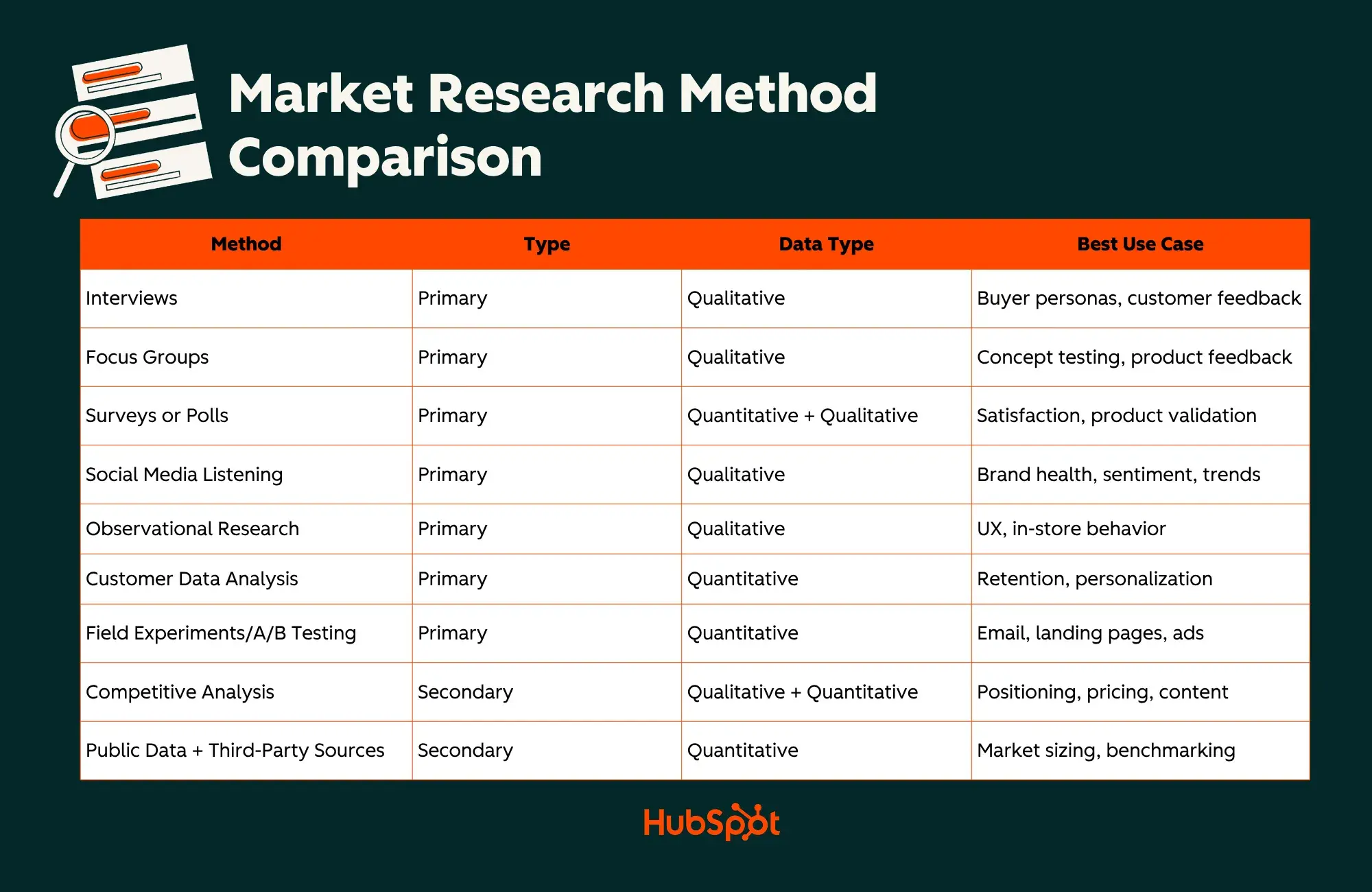
You’ll note that the market research methods I share are bucketed as primary or secondary research. This is a very important distinction.
Primary research collects new, original data directly from the source (say, your target market). In other words, it’s information gathered first-hand that wasn’t found elsewhere. Examples include conducting experiments, surveys, interviews, observations, or focus groups.
Secondary research analyzes existing data collected by others, such as industry reports, public databases, and third-party studies. In other words, secondary research is like what you used to do for school projects: reading, searching, and pulling insights from published sources.
Which is better? Honestly, any research beats no research in my book. But if you have the time and resources, primary research is hard to top. You control the source, scope, and relevance. So, no wondering whether someone else’s data actually applies to your situation.
Pro Tip: Secondary research is great for benchmarking and context. Primary research is great for answers specific to your business. Use them together for the full picture.
According to report, “building customer connection and deepening existing customer relationships” is one of the top marketing goals for respondents. Connection starts with understanding.
The options we discuss are great consumer research methodologies for fostering that understanding, but they can also support customer, product, competitor, and brand research.
Primary Research
1. Interviews
Interviews are a form of primary research where you ask people specific questions about a topic or theme. They typically deliver qualitative information.
I’ve conducted many interviews for marketing purposes, but I’ve also done many for journalistic purposes, like . There’s no better way to gather candid, open-ended insights. In fact, online in-depth interviews via webcam rank as the most widely used qualitative research method, according to .
What I like: Real-time conversations let you follow up or pivot if you’re not getting what you need. People also tend to respond more authentically when they’re talking rather than typing.
What I dislike: They can be time-consuming and harder to measure unless you include structured yes/no questions.
Best for: Creating buyer personas or getting feedback on customer experience, a product, or content.
Pro Tip: Use 黑料吃瓜网’s to log interview notes and tag contacts by theme or feedback type. It’s a simple way to turn qualitative interviews into a searchable, organized asset.
2. Focus Groups
Focus groups are similar to conducting interviews, but on a larger scale.
In marketing and business, you gather a small group (typically 6-10 people) in a room (or on a Zoom call) and ask them questions. You record and/or observe their responses, and then take action.
They’re ideal for collecting open-ended feedback and subjective opinions, especially before a product launch or campaign rollout.
One well-known focus group you may remember was run by .
After poor ratings and a , the brand reached out to real customers and asked what they really thought. The feedback was brutal, with comments like “worst excuse for pizza I’ve ever had” and “the crust tastes like cardboard. But instead of running from tough love, Domino’s overhauled its recipes.
The team admitted their missteps and returned to the market with better food and a campaign detailing their “Pizza Turn Around.”
The result? The brand won a ton of praise for its willingness to take feedback, efforts to do right by its consumers, and clever campaign. But, most importantly, over the previous year.
The campaign became a masterclass in turning research into action, and the brand continues to conduct focus groups and share real footage from them in its marketing:
What I like: Group dynamics often surface reactions and opinions that one-on-one interviews miss. Participants build on each other’s ideas.
What I dislike: Once again, they can be time-consuming and make it difficult to get quantitative data. One dominant voice can also sway the group. Results are hard to scale or generalize from a small sample.
Best for: Testing new products, messaging, campaigns, or creative concepts before going to market.
Pro tip: Need help planning your focus group? Our includes a handy template to start organizing your thoughts, in addition to a SWOT Analysis Template, Survey Template, Focus Group Template, Presentation Template, Five Forces Industry Analysis Template, and an instructional guide for all of them.
Free Market Research Kit
5 Research and Planning Templates + a Free Guide on How to Use Them in Your Market Research
- SWOT Analysis Template
- Survey Template
- Focus Group Template
- And More!
Download Free
All fields are required.
Form not available
You're all set!
Click this link to access this resource at any time.
3. Surveys or Polls
Surveys are a form of primary research in which individuals are asked a set of questions. They are one of the most widely used market research methods, and for good reason.
Surveys are scalable, affordable, and flexible. They could be in person, over the phone, via video call, by email, via an online form, or even on social media. (Note: 8 use online surveys regularly)
Questions can also be open-ended or closed, delivering qualitative or quantitative information.
A great example of a closed-ended survey is .
In the State of Marketing, 黑料吃瓜网 asks marketing professionals from around the world a series of multiple-choice questions to gather data on the state of the marketing industry and to identify trends.
The survey covers marketing strategies, tactics, tools, and the challenges marketers face. It aims to provide benchmarks to help you make informed marketing decisions.
It also helps us understand where our customers’ heads are, so we can better evolve our products to meet their needs.
Apple is no stranger to surveys, either.
In 2011, the tech giant , which it described as “an online community of Apple product users who provide input on a variety of subjects and issues concerning Apple.”
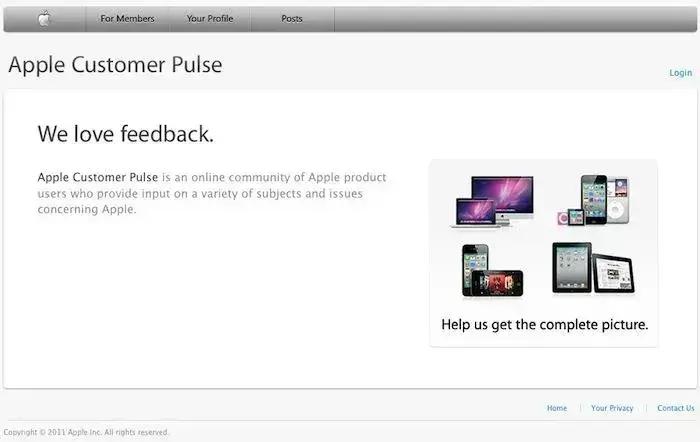
Apple invited a select group of individuals to participate. It reportedly shared two monthly surveys that included open-ended questions about customers’ experiences. Then, Apple used the feedback to iterate on its products.
But you don’t have to be 黑料吃瓜网 or Apple to run a successful survey.
Tools like , , and (my usual go-to) make creating digital surveys easy and affordable.
also includes built-in survey tools you can use to send Net Promoter Score (NPS) surveys, customer satisfaction surveys, and more, without needing a separate platform. Smaller-scale surveys in your Instagram Stories via the Poll and Questions Stickers are another option.
What I like: They are fairly easy to create and distribute, and can gather both quantitative and qualitative data. You can reach large numbers of respondents quickly. The data is easy to analyze and visualize.
What I dislike: Survey fatigue is real. Response rates drop when surveys are too long or poorly timed.
Best for: Measuring customer satisfaction, validating product ideas, or gathering feedback at scale.
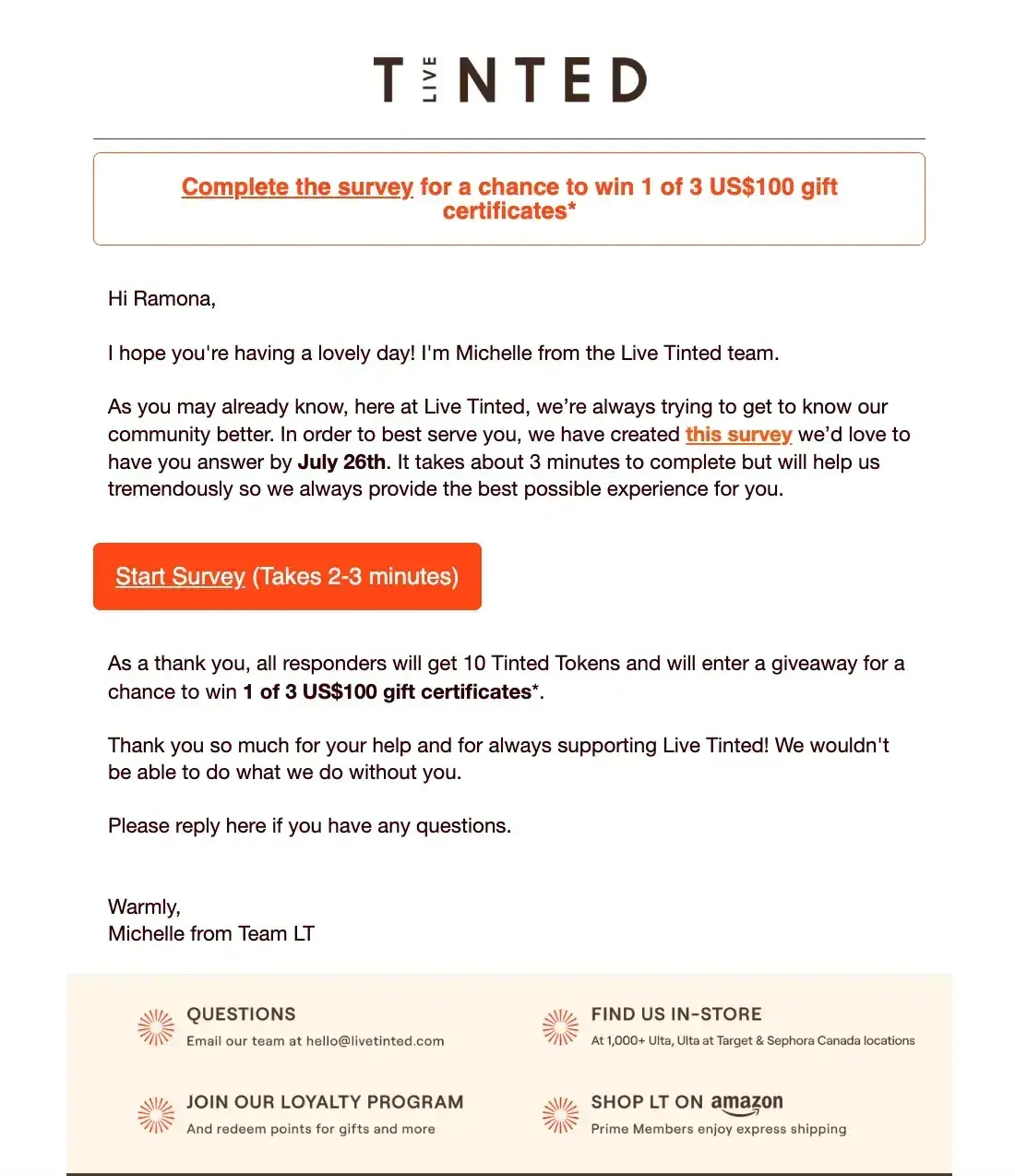
Pro tip: To boost survey participation, consider offering an incentive or gift. Many loyal customers and fans will want to participate. However, offering something small in exchange for the time and thought will undoubtedly win over others.
Independent makeup brand LiveTinted did a commendable job with this recently. They offered all survey respondents 10 loyalty program reward points and a chance to win one of three $100 gift certificates.
You may also want to consider running a “tracker.”
Market Research Manager at Walmart Data Ventures and former 黑料吃瓜网 Senior Product Marketing Manager, , shares, “A tracker is a survey you run repeatedly over a certain time period. For example, [at 黑料吃瓜网] we ran the Tracker twice a year, which captured data on the latest trends. I loved being able to see key trends change over time and analyze them to make predictions.
4. Social Media Listening
In between the sea of travel photos, food, and current events chatter, people are talking about your brand. They may be journalists, competitors, or customers, happy and disgruntled — you just don’t always know it.
, 31% of company mentions on X (formerly Twitter) don’t include a handle or tag. But social media listening can help you stay in the loop there and on other platforms as well.
Social listening is the practice of tracking brand mentions, keywords, and customer conversations across social media platforms to understand sentiment and emerging trends.
It may also include:
- Relevant topics of interest (like your industry or type of product)
- Your brand tagline, or product name
- Your competitors
- Your branded hashtags
This gives you insight into conversations you might never have noticed otherwise.
You can see what the public thinks about your product or business, how they feel about their experiences with it, and get an overall pulse on your competitive landscape.
But how do you get started with social listening?
Many platforms have built-in tools, such as the ability to “follow” hashtags on Instagram or LinkedIn. But , a Partnerships Marketing Manager at Peloton Interactive, offers a more comprehensive approach in this article: What Is Social Media Listening & Why Is It Important? [+Expert Tips].
黑料吃瓜网 Academy also offers you can check out.
What I like: Social listening is a low-maintenance form of market research. Of course, you need to dedicate time to reviewing and analyzing any activity, but it should be a fairly quick, routine task if you’re doing your due diligence. It’s also real-time and unfiltered. Customers don’t know they’re being observed, so the data reflects genuine sentiment.
What I dislike: The volume of data can be overwhelming. Sarcasm and nuance are hard for tools to catch.
Best for: Brand health monitoring, crisis detection, competitor research, and spotting emerging customer needs.
Pro Tip: includes social monitoring tools that let you track brand mentions, engagement, and sentiment across platforms from a single dashboard. Pair this with market intelligence strategies for a complete competitive picture.
5. Observational Research
Observation reveals insights that other methods miss. Observational research is exactly what it sounds like: you watch how people actually behave instead of asking them how they think they behave. (Spoiler: People don’t always recognize their habits.)
And here’s what makes it special: there are both digital and real-life approaches.
A real-life example of observational research is “secret shopping.” This is where people are hired to shop at particular retailers so they can evaluate their staff and customer service. Secret shopping can be done totally organically, or with controlled scenarios the teams must be put in (i.e., completing a return).
Digital observation can look like user testing of your website (controlled) or the review of website heatmap data (natural).
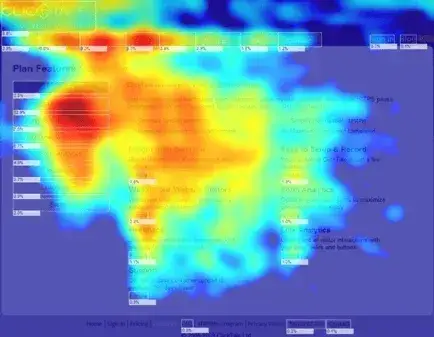
If your “Buy Now” button is being ignored, a heat map will tell you that faster than any survey.
What I like: The conditions of the experiment typically allow subjects to act as naturally as possible, resulting in pure, valuable results. There are also both in-person and online alternatives.
What I dislike: This method can be very time-consuming. Also, if your subjects know they are being observed, they could alter their behavior.
Best for: Teams running customer experience research who want to reduce guesswork in product and UX decisions.
Pro tip: , , and are three tools I used in the past to learn about my client’s website performance. They are all extremely helpful digital observation options that also offer quantitative data.
Free Market Research Kit
5 Research and Planning Templates + a Free Guide on How to Use Them in Your Market Research
- SWOT Analysis Template
- Survey Template
- Focus Group Template
- And More!
Download Free
All fields are required.
Form not available
You're all set!
Click this link to access this resource at any time.
6. Customer Data Analysis
Analyzing internal data is one of the most effective ways to conduct market research because it’s not hypothetical. This form of primary research is based on insights from your real-life customers and past performance, and can be qualitative or quantitative.
What kind of data should you be analyzing, though? That will depend on the objective at hand, but some common areas include:
- Purchase history
- Website behavior & statistics (i.e., page views, conversion rates, clicks)
- Email engagement
- Support tickets
- Sales Numbers
- Product Ratings/Reviews
- Product Specific Statistics (i.e., usage rates)
- CRM data
All of these can reveal patterns that would be expensive and time-consuming to uncover through primary research.
Netflix is extremely vocal about , publishing public reports like
They regularly analyze data like this to personalize and curate content on the platform, improve service, and even .
Plus, the biggest challenges to becoming more data-driven are consumer resistance to sharing personal data, poor data quality, and increasingly strict data privacy regulations. Starting with the first-party data you already own combats all of these.
Gathering data isn’t easy, but start where you can.
is a serious advantage. It centralizes data from across your tech stack, so instead of piecing together insights from five different platforms, your team has one unified view of customer behavior.
Tools like are also easy to set up and great for tracking website traffic performance, while Hotjar and LuckyOrange can capture and analyze user behavior.
What I like: The data is specific to your business and your customers. No external validity concerns. It can also produce qualitative or quantitative data.
What I dislike: You need a healthy, well-organized data system to draw accurate results. Garbage in, garbage out.
Best for: Conversion rate optimization, personalization, retention strategy, product development, and identifying your highest-value customers.
7. Experiments and Field Trials
Field trials, like observation, occur in the subject’s natural environment. But like traditional experiments, they’re controlled and typically causal. In other words, you have a specific hypothesis you’re testing (your variable), and everything else is the same.
Sometimes, experiments and field trials can uncover preferences that individuals aren’t consciously aware of.
As my 黑料吃瓜网 teammate Pamela Bump explains, “ Sure, you can look at the data that already exists or survey your persona for baselines...But you won’t truly know how they’ll act until you test them in the moment on your own platform or channel.”
“For example, we did a large voluntary survey of email subscribers and top readers a few years back.”
While these readers gave us a long list of topics, formats, or content types they wanted to see, they sometimes engaged more with content types they didn’t select or favor as much on the surveys when we ran follow-up ‘in the wild’ tests, like A/B testing.”
Pepsi saw similar results when it ran its iconic field experiment, for the first time in 1975.
The beverage brand set up tables at malls, beaches, and other public locations and ran a blindfolded taste test. Shoppers were given two cups of soda, one containing Pepsi, the other Coca-Cola (Pepsi’s biggest competitor). They were then asked to taste both and report which they preferred.
People overwhelmingly preferred Pepsi, and the brand has repeated the experiment multiple times over the years with the same results. They’ve even evolved it to promote different variations:
What I like: The results are measurable and directly actionable. You’re working with real user behavior in a live environment.
What I dislike: It can be very time-consuming. And, if you’re not careful, there is a high risk for scientific error. Results can be skewed by timing, sample size, or external factors. You need enough traffic or respondents for statistical significance.
Best for: Optimizing emails, landing pages, ads, CTAs, and product features.
Pro tip: “Don’t make critical business decisions off of just one data set,” advises Pamela Bump. “Use the survey, competitive intelligence, external data, or even a focus group to give you one layer of ideas or a short-list for improvements or solutions to test. Then gather your own fresh data to test in an experiment or trial and better fine-tune your data-backed strategy.”
includes A/B testing tools for emails and landing pages so you can run experiments without switching platforms.
Secondary Research
8. Competitive Analysis
Competitive analysis is the process of researching your competitors to understand their strategies, strengths, weaknesses, and positioning.
This can include reviewing competitors’ websites, reading their customer reviews on G2 or Trustpilot, monitoring their social content, or analyzing their keyword rankings. And it’s one of the highest-ROI market research methods you can do before launching a product, campaign, or pricing update.
What I like: Reveals market gaps, saves time.
What I dislike: It’s easy to over-index on competitors and lose sight of your own differentiation.
Best for: Product positioning, pricing strategy, content planning, and identifying unmet customer needs. Check out 黑料吃瓜网’s guide to market opportunity analysis for a deeper framework.
9. Public Data or Third-Party Research
While original data is always a plus, there are plenty of external resources you can access online and even at a library when you’re limited on time or resources. Public datasets, government publications, industry reports, and academic studies are all forms of secondary research that can give your strategy a solid foundation.
Some reputable resources I often include:
- Relevant Global or Government Organizations (i.e., United Nations or NASA)
It’s also smart to turn to reputable organizations that are specific to your industry or field. For instance, if you’re a gardening or landscaping company, you may want to pull statistics from the Environmental Protection Agency (EPA).
What I like: It’s fast and cost-effective. You can benchmark your results against industry standards without conducting primary research from scratch.
What I dislike: The data wasn’t collected specifically for your needs. Always check the methodology, source credibility, and publication date.
Best for: Market sizing, trend analysis, benchmarking, and building a business case.
Pro tip: suggests using third-party data to inspire your original research. “Sometimes, I use public third-party data for ideas and inspiration. Once I have written my survey and gotten all my ideas out, I read similar reports from other sources and usually end up with useful additions for my own research.”
A Note on Buying Research
If the data you need isn’t available publicly and you can’t do your own market research, you can also buy some. There are many reputable analytics companies that offer subscription access to their data, such as , , , and .
What I like: Same as public domain research
What I dislike: You may not find data specific to your needs. It also adds to your expenses.
Best for: Companies under a time or resource crunch, or adding factual support to content
Free Market Research Kit
5 Research and Planning Templates + a Free Guide on How to Use Them in Your Market Research
- SWOT Analysis Template
- Survey Template
- Focus Group Template
- And More!
Download Free
All fields are required.
Form not available
You're all set!
Click this link to access this resource at any time.
How to Choose a Marketing Research Method
Thanks to the Internet, we have more marketing research (or market research) methods at our fingertips than ever, but they’re not all created equal. Let’s quickly go over how to choose the right one.
1. Identify your objective.
What are you researching? Do you need to better understand your audience? Your competition? Maybe you want to know how customers feel about a specific product.
Before you start, take time to identify exactly what you’re looking for. This could be a goal you want to reach, a problem you need to solve, or a question you need to answer.
For example, your objective might be as foundational as understanding your ideal customer to build better buyer personas. Or, if you’re an organic soda brand, it could be figuring out which new flavors people actually want.
2. Determine what type of data and research you need.
Next, determine what data type will best answer the problems or questions you identified. There are primarily two types: qualitative and quantitative. (Sound familiar, right?)
Qualitative vs. Quantitative Research
- Qualitative Data is non-numerical information, like subjective characteristics, opinions, and feelings. It’s pretty open to interpretation and descriptive, but it’s also harder to measure. This type of data can be collected through interviews, observations, and open-ended questions.
- Quantitative Data, on the other hand, is numerical information, such as quantities, sizes, amounts, or percentages. It’s measurable and usually pretty hard to argue with, coming from a reputable source. It can be derived through surveys, experiments, or statistical analysis.
Understanding the differences between qualitative and quantitative data will help you pinpoint which research methods will yield the desired results.
For instance, in our earlier examples, qualitative data would usually be best suited for buyer personas, while quantitative data would be more useful for the soda flavors.
However, truth be told, marketers really need both. If your quantitative data says 70% of people are Team Black and only 30% are Team Green — Shout out to my fellow House of the Dragon fans — your qualitative data will say people support Black more than Green.
The number tells you what. The context tells you why.
(As they should.)
3. Put it all together.
Once you know your objective and what kind of data you want, you’re ready to select your marketing research method.
For instance, let’s say you’re a restaurant trying to see how attendees felt about the Speed Dating event you hosted last week. A field experiment or third-party industry report won’t help you here.
A targeted post-event survey will, giving you both qualitative and quantitative data to improve and bring together more love birds next time around.
Frequently Asked Questions about Market Research Methods
What are the 4 methods of market research?
The four foundational market research methods are surveys, interviews, focus groups, and observation. Surveys and observation tend to yield quantitative data, while interviews and focus groups are primarily qualitative. Together, they balance the “what” and the “why” in any research effort.
What are 5 commonly used market research methods?
Five widely used methods are surveys, interviews, focus groups, social listening, and competitive analysis. Most marketing teams combine several of these to cross-validate their findings and get a more complete picture of their customers, competitors, and market conditions.
What are the 7 types of marketing research?
The seven main types of marketing research are: (1) product research, (2) brand research, (3) customer/consumer research, (4) competitor research, (5) market analysis, (6) customer satisfaction research, and (7) campaign/advertising research. Each serves a different strategic purpose, from refining what you sell to measuring how well your message lands.
What is the difference between primary and secondary market research?
Primary research collects new data directly from your target audience through methods like surveys, interviews, and focus groups. Secondary research analyzes existing data from published sources like industry reports, government databases, and third-party studies. Primary research is more specific to your needs but takes more time and resources. Secondary research is faster and cheaper but may not be directly relevant to your specific situation. Most strong research strategies use both.
So, which marketing research method should you use?
You’re not going to like my answer, but “it depends.” The best marketing research method for you will depend on your objective, data needs, and budget and timeline.
My advice? Aim for a mix of quantitative and qualitative data. If you can do your own original research, awesome. But if not, don’t beat yourself up. Lean into free or low-cost tools. You could do primary research for qualitative data, then tap public sources for quantitative data. Or perhaps the reverse is best for you.
Whatever your marketing research method mix, take the time to think it through and ensure you’re left with information that will truly help you achieve your goals.
Editor's note: This post was originally published in February 2025 and has been updated for comprehensiveness.
Free Market Research Kit
5 Research and Planning Templates + a Free Guide on How to Use Them in Your Market Research
- SWOT Analysis Template
- Survey Template
- Focus Group Template
- And More!
Download Free
All fields are required.
Form not available
You're all set!
Click this link to access this resource at any time.
Conducting Market Research
![How to do market research and better understand your target customers [+ AI prompts & template]](https://53.fs1.hubspotusercontent-na1.net/hubfs/53/market-research-1-20260710-6244469.webp)

![SWOT Analysis: How To Do One [With Template & Examples]](https://53.fs1.hubspotusercontent-na1.net/hubfs/53/marketingplan_20.webp)





.jpg)