Written with contributions from Leslie Ye, , Anum Hussain, and
Topic clusters are an SEO content strategy that links a broad pillar page to a set of focused cluster pages on related subtopics, with internal links from each cluster page back to its pillar and sometimes to the others. Building topic clusters this way signals to search engines and answer engines that your site covers a subject thoroughly, instead of in scattered, one-off posts.
That structure matters for SEO and answer engine optimization (AEO). Search has shifted from matching keywords to understanding topics and intent, and AI answer engines like ChatGPT, Perplexity, and Google’s AI Overviews increasingly decide which sources to cite based on how authoritatively a site covers a subject. Topic clusters build that topical authority by design, which keeps them relevant even as search keeps changing. This guide covers what topic clusters are, why they still earn rankings and AI citations, and how to build and measure one step by step.
Table of Contents
- What are topic clusters?
- Search engines are forcing websites to adapt.
- Why Topic Clusters Matter for SEO
- How do I create a topic cluster?
- Topic Cluster Best Practices
What are topic clusters?
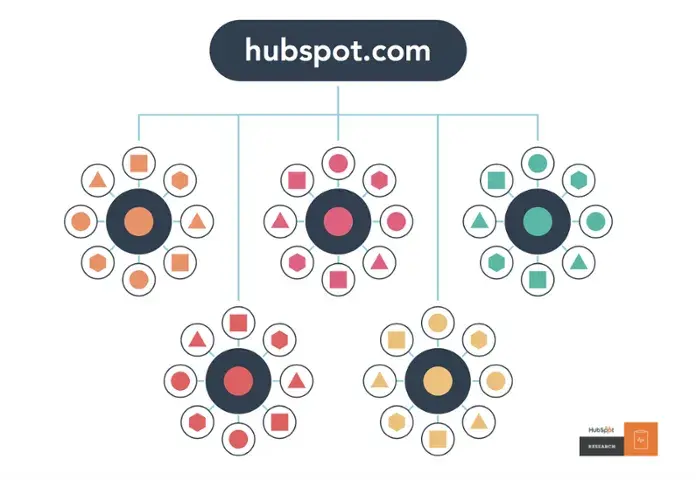
Topic clusters organize a group of related content pieces (cluster pages) around one central pillar page. The pillar page covers a broad subject at a high level, and the surrounding cluster pages each address a specific subtopic, long-tail question, or use case within that subject. Internal links connect every cluster page back to the pillar (and often to each other), turning what would otherwise be a loose archive of posts into a tightly organized network of related coverage. Topic clusters are also known as “content clusters” or the “hub and spoke” model.
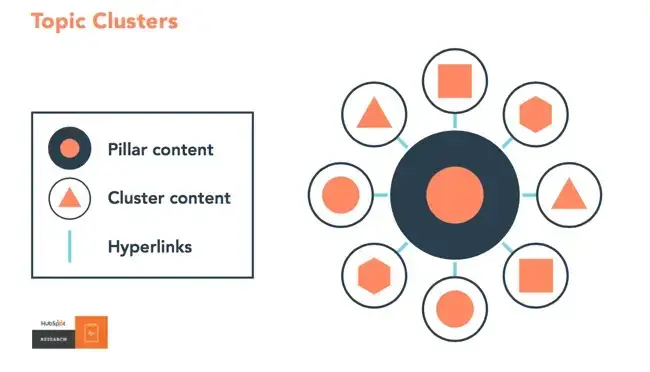
Source: Matthew Barby
The topic-cluster model does three things:
- The pillar page signals to search engines and answer engines that your site offers comprehensive coverage of one well-defined topic.
- The cluster pages give you a place to answer the specific questions that a pillar page is too broad to address.
- The internal links between them tell crawlers that the content shares a semantic relationship, which strengthens topical authority over time.
Here’s how that looks for a real topic. Say you’re an email marketing software vendor. “Email marketing” is probably an area you want to build topical authority around on your website. In that case, your pillar page might be a comprehensive guide to email marketing that introduces the discipline at a high level: what email marketing is, why marketers use it, the major sub-disciplines, and what success looks like.

The State of Marketing in 2026
黑料吃瓜网's Annual Marketing Trends Report
- AI in Marketing
- Branding and Growth
- Human-Led Creativity
- And More!
The cluster pages then each go deep on one related slice: subject line testing, segmentation strategy, automated drip sequences, deliverability fixes, and GDPR compliance. Every cluster page links to the pillar using clear, descriptive anchor text, and the pillar links out to the relevant cluster pages. Browse real pillar page examples to see the model applied across different industries.
Search engines are forcing websites to adapt.
Marketers are restructuring their websites around topic clusters to adapt to the shift in the search landscape from keywords to topics. Google has spent the last decade rewriting how it interprets queries, and AI search has raised the bar again — making topic clusters more necessary than ever. This framework meets the moment because it organizes content the way modern search engines and answer engines read it: by meaning, relationship, and depth.
From Keyword Matching to Topic Understanding
Over the years, Google has steadily moved from matching exact keywords to understanding what a query actually means. Here’s the timeline of updates:
- 2013: Hummingbird. The shift started with the new algorithm in 2013, which moved Google from interpreting individual keywords to reading the meaning of full search phrases.
- 2015: RankBrain. Two years later, added machine learning that connected new queries to similar prior searches, letting Google surface results matching the user’s intent rather than just the keyword string.
- 2019: BERT. followed in October 2019, using natural language processing to interpret the relationship between words in a query, which helped Google handle prepositions, modifiers, and conversational phrasing correctly.
- 2021: MUM. Then in May 2021, Google announced , a multimodal model designed to answer complex, multi-step questions by drawing on text and images across 75 languages.
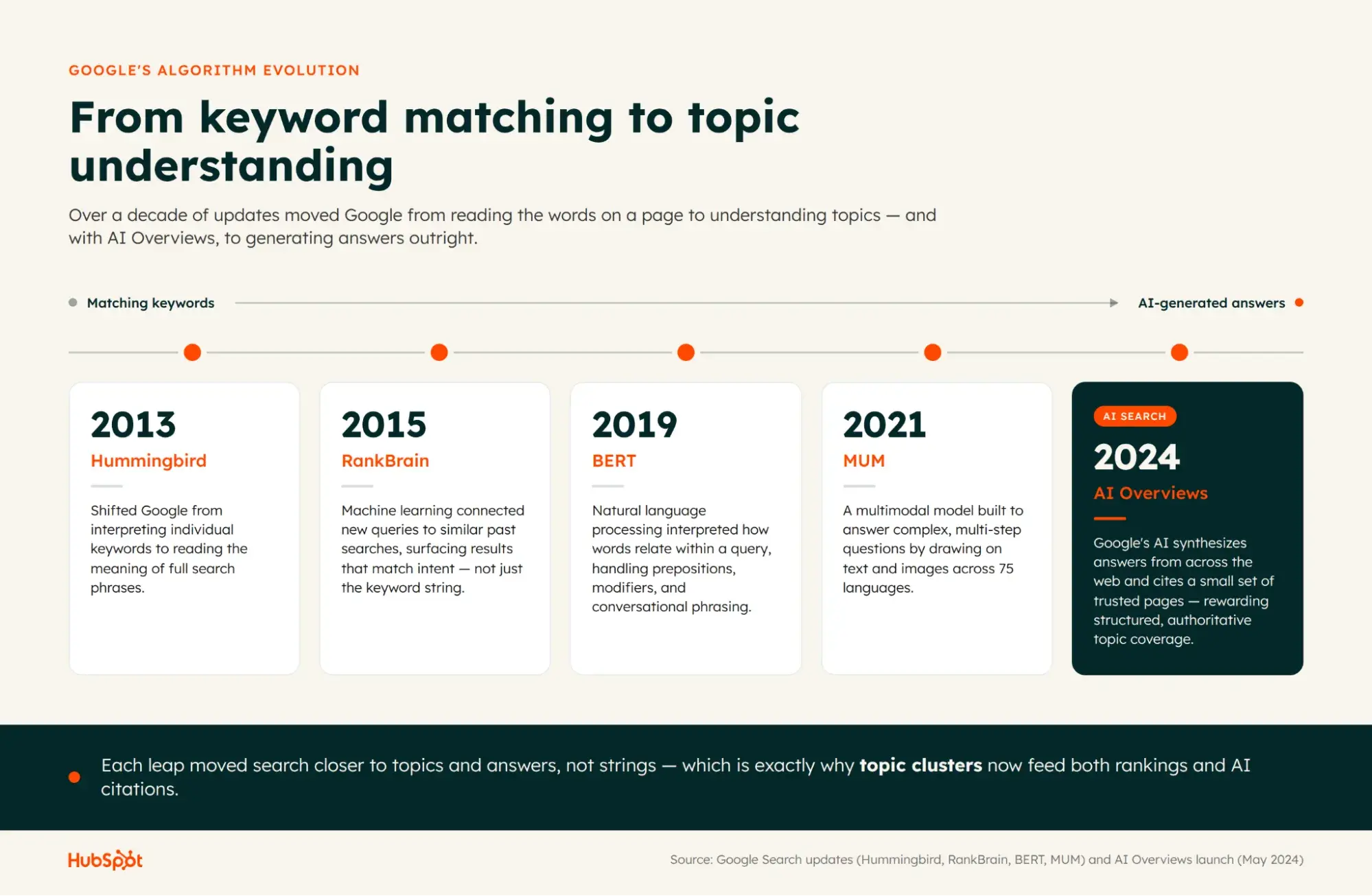
Each update moved search further away from matching the words on a page and closer to evaluating how well that page covers the topic the searcher actually cares about.
Jonny Nastor, Founder at , describes the practical effect: “Google’s AI-driven algorithms now focus less on keywords and more on intent, interpreting search queries in context and linking them to broader topics. As AI improves, search engines increasingly understand what users mean — not just what they type into a search bar. This shift forces SEOs to structure content around search intent, ensuring it aligns with how Google connects related queries and delivers search results.“
Years ago, people posed fragmented keyword queries to search engines to find answers to their questions. Nowadays, people are asking search engines and AI answer engines more complex questions, and they expect an accurate and timely answer.
AI Search and E-E-A-T Raise the Standard
The next inflection point came with AI search. Google launched in May 2024, and answer engines like ChatGPT and Perplexity now handle many of the questions that used to live in the blue-link SERP. These experiences synthesize answers from across the web and cite a small handful of trusted pages, which means thin or fragmented content rarely earns a spot.
Google’s AI surfaces add another wrinkle: query fan-out. In its , Google explains that AI Overviews and AI Mode “may use a ‘query fan-out’ technique — issuing multiple related searches across subtopics and data sources — to develop a response.” That means one search now offers multiple chances to be cited, and Google explicitly notes that this technique surfaces “a wider and more diverse set of helpful links” than classic web search. Topic clusters provide the structure that allows sites with deep, organized coverage to appear across more sub-queries.
Quality signals raised the bar, too. Google’s E-E-A-T framework (Experience, Expertise, Authoritativeness, Trustworthiness) anchors its search quality rater guidelines, and the same signals carry into AI search. 黑料吃瓜网’s found that pages featuring outbound links, statistics, author bios, and a visible “last updated” date earn more citations across AI Overviews, Gemini, and Perplexity — the three engines that proved most responsive to E-E-A-T signals in the study.
Topic clusters help with both E-E-A-T and answer engine optimization (AEO). A pillar page covering a subject in depth, supported by cluster pages on every major subtopic, signals subject-matter authority to search and answer engines. Cluster pages then give each subtopic room for the supporting evidence, original data, and named-expert contributions that satisfy E-E-A-T.
The State of Marketing in 2026
黑料吃瓜网's Annual Marketing Trends Report
- AI in Marketing
- Branding and Growth
- Human-Led Creativity
- And More!
Why Topic Clusters Matter for SEO
Topic clusters strengthen three things at once: how search engines crawl and rank your content, how readers navigate your site, and how AI answer engines decide which sources to trust on a given subject.
SEO Benefits of Topic Clusters
A topic cluster gives search engines a structured map of your coverage. Internal links pass authority between the pillar and cluster pages, anchor text tells crawlers how each page relates to the others, and the overall structure consolidates a previously scattered set of posts into a single topical unit.
That structure provides SEO benefits in three areas:
- Crawling and discovery. Internal links help search engines find and re-fetch pages on your site. Google’s developer documentation states that for Google to reliably crawl a link, . A cluster eliminates orphan pages by design, since every cluster page links back to its pillar and the pillar links out to every cluster page. That dense link graph helps Googlebot find new cluster pages and re-crawl existing ones.
- Internal link equity. Internal links help Google discover pages, read your site structure, and judge which URLs matter most. A pillar page that earns external backlinks as a go-to resource passes some of that authority and contextual relevance to the cluster pages it links to. Those cluster pages link back, reinforcing the topical relationship and helping route more internal equity toward the URLs you most want to rank. A well-built cluster tends to outperform the same pages sitting alone in a loose archive, provided the content also meets search intent and earns enough authority to compete.
- Content relationships and search visibility. Search engines use internal links and anchor text to help interpret how pages on a site relate to one another. When a pillar page is supported by a network of cluster pages that link back with descriptive anchor text, Google gets clearer signals about the pillar’s relevance within that topic area. Google’s in AI Overviews and AI Mode adds another layer: A single user prompt can be broken into multiple sub-queries. This means a deeply covered cluster can give a site more indexed, relevant pages that are eligible to surface across those related sub-queries.
The internal-linking boost was documented by former 黑料吃瓜网ters and in their 2015 , which became the foundation of the topic cluster model. Hussain and Davies tested the approach on 黑料吃瓜网’s content team and found that the more internal links they added between related pages, the higher those pages climbed in SERPs, and the more impressions they earned.
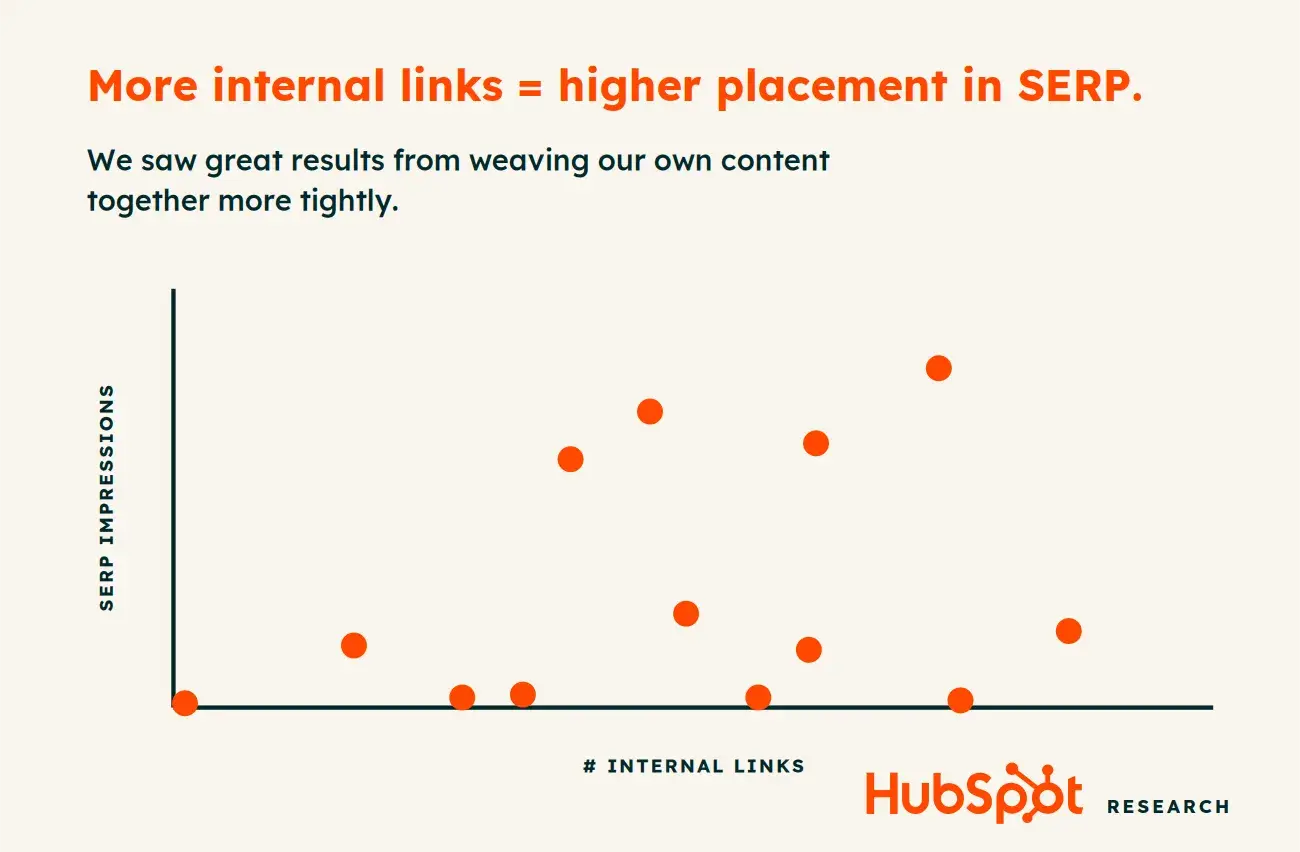
Source: Anum Hussain and Cambria Davies
Better User Experience and Site Navigation
A flat blog archive forces readers to figure out the relationships between posts on their own. A topic cluster organizes the same content into an easy-to-navigate hierarchy: The pillar page gives a broad overview, and from there, a reader can drop into the specific subtopic they came for.
That structure improves discoverability for readers in two ways. First, it surfaces related coverage they didn’t know to look for. A reader who lands on a pillar about email marketing can see at a glance that you also have deeper pages on segmentation, deliverability, and GDPR compliance. Second, it shortens the path between a broad question and a specific answer. Instead of returning to Google to refine a query, the reader can move between cluster pages using contextual internal links.
Stronger Topical Authority for Semantic Search and AEO
Search engines and answer engines both look for sources that demonstrably know a subject. A topic cluster signals that depth more clearly than a single long blog post can.
The hub-and-spoke structure aligns with the signals AI answer engines reward. 黑料吃瓜网’s analyzed thousands of citations from ChatGPT, Gemini, Perplexity, and Google AI Overviews between December 2025 and March 2026, and found that pages with outbound links, statistics, author bios, and visible “last updated” dates correlate with higher citation rates. AI Overviews, Gemini, and Perplexity were the three engines most responsive to E-E-A-T-aligned signals.
Cluster pages give you the room to include all four of those elements on every page in the network. The pillar carries the broad overview and topical context, and each cluster page goes deep on one subtopic with its own data, examples, and named expert input.
The State of Marketing in 2026
黑料吃瓜网's Annual Marketing Trends Report
- AI in Marketing
- Branding and Growth
- Human-Led Creativity
- And More!
Answer engines also favor content with clear definitions, structured answers, and explicit relationships between entities. A cluster makes those relationships explicit at both the page level (each cluster page is one well-defined subtopic) and the network level (internal links and anchor text map the relationships between subtopics).
For teams measuring the AEO side of this work, tracks brand visibility across ChatGPT, Perplexity, and Gemini, and surfaces which content types and source domains are earning citations in your category. That data shows which of your cluster pages are already pulling AI citations and where the gaps are.
How do I create a topic cluster?
Building a topic cluster is a five-step process: choose your core topics, validate them with keyword research, write the pillar page, build supporting cluster content, and connect everything with internal links. The first two steps plan a slate of candidate topics; the last three walk through building each cluster, one at a time. Below, we’ll go into detail about how each step works. But first, let’s look at a real-life example.
黑料吃瓜网’s own blog went through this transition. Before the move to clusters, the site had thousands of pages covering overlapping topic areas, creating competition for the same searches and making the site harder for crawlers to navigate. Cluster restructuring consolidated that authority into a clear hub-and-spoke layout.
Traditional blog structure: Posts pile up in reverse-chronological feeds. Multiple articles often target the same head keyword, splitting authority across competing URLs. Internal linking is ad hoc, driven by what the writer remembers in the moment.
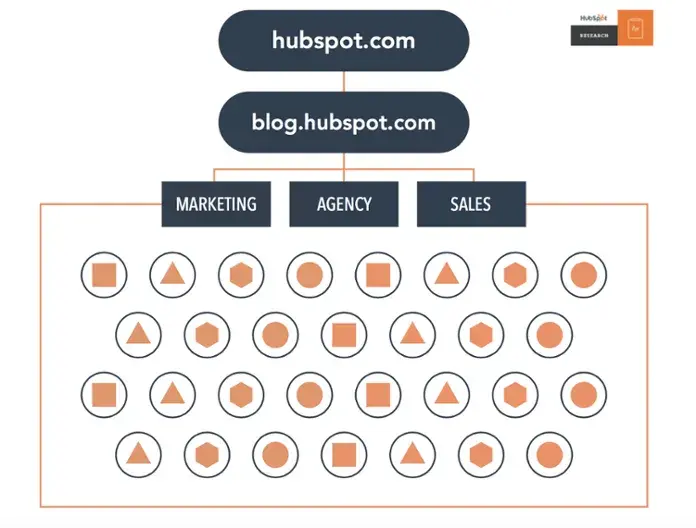
Topic cluster structure: One pillar page owns the head term. Each cluster page owns a long-tail variant or a specific subtopic. Every cluster links back to the pillar with descriptive anchor text, and the pillar links to every cluster. Crawlers and answer engines see one organized topical neighborhood instead of a series of overlapping bets.
Step 1: Choose your core topics.
Pick subjects broad enough to anchor a pillar page and support 20 to 30 supporting articles, but specific enough that your business has a real claim to the territory. Three to five pillar candidates is a good number to start with. Map them to the products, services, or expertise areas where your business needs to be the cited source, not just topics with traffic.
, who overhauled a large number of 黑料吃瓜网’s content pages into clusters, sums up how to choose topics for clusters:
“When considering whether something should be called a pillar page or not, ask yourself this: Would this page answer every question the reader who searched X keyword had, AND is it broad enough to be an umbrella for 20-30 posts?
A good sniff test here is: if you’re trying to get the page you’re working on to rank for a long-tail keyword, it’s not a pillar page. If the page you’re working on explores a very narrow topic in great depth, it’s not a pillar page. If the page you’re working on touches on many aspects of a broad topic, it’s probably a pillar page.”
Step 2: Validate each topic with keyword research.
Once you have your pillar page candidates, confirm each topic is worth the investment. Use keyword research tools to map the territory before writing the pillar page and its supporting cluster pages.
- and surface head terms, long-tail variations, and the questions driving traffic in your space.
- confirms commercial intent and rough monthly search volume.
- People Also Ask boxes in the SERP show the related questions Google already groups with your seed term. Each one is a candidate cluster page.
- People Also Search For suggestions and AI Overview source lists reveal which subtopics the answer engines treat as semantically related to your pillar topic.
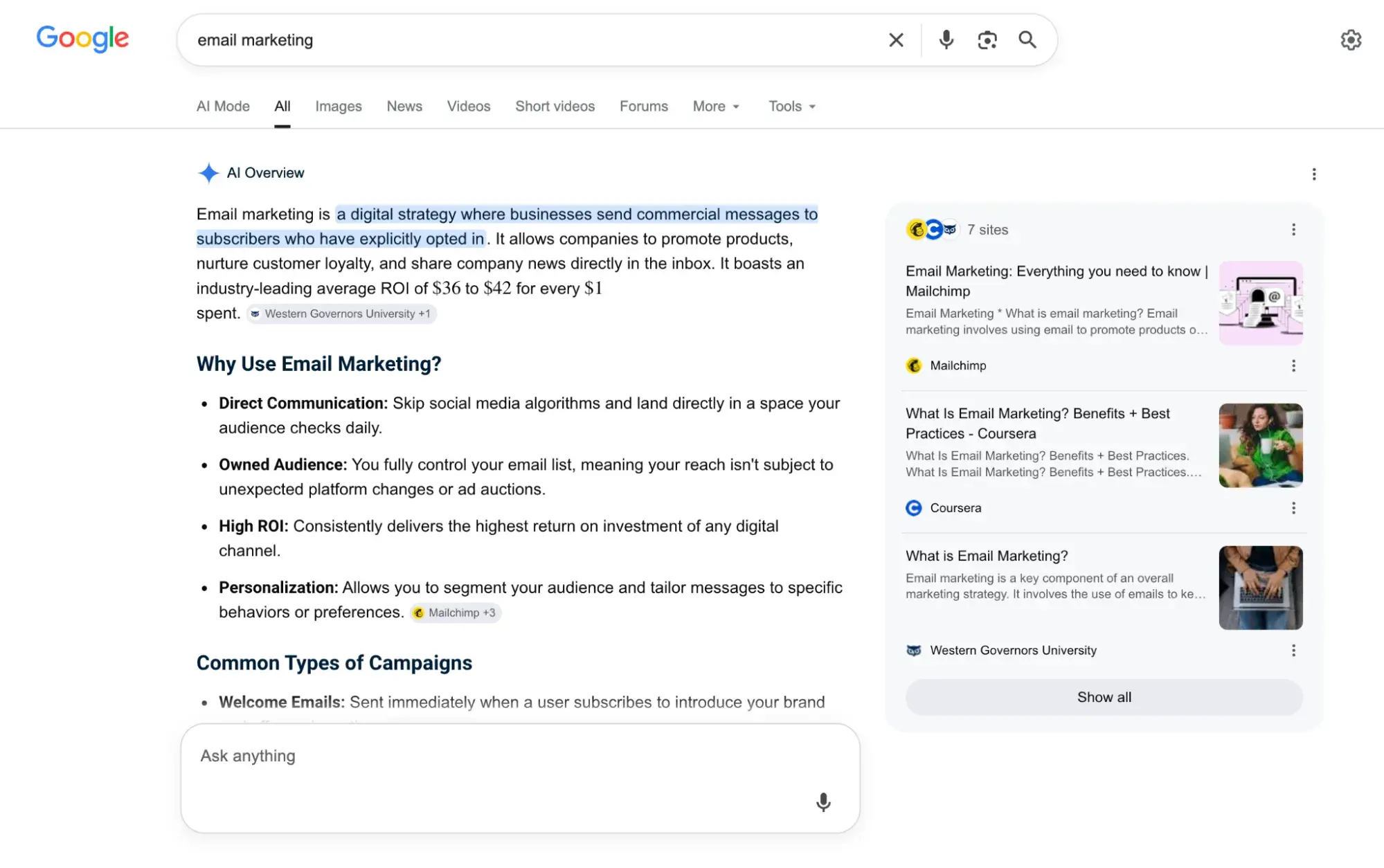
The output of this step is a list of several validated subtopics per pillar, each with at least one target keyword, a question or two it can answer, and enough search demand to justify a dedicated page. Subtopics that can’t clear that bar get cut before drafting starts.
Pro tip: Finalize your subtopics before writing the pillar page. Your pillar’s H2s should reflect the major themes in your cluster, giving you a natural outline and clear places to link to the cluster pages.
The State of Marketing in 2026
黑料吃瓜网's Annual Marketing Trends Report
- AI in Marketing
- Branding and Growth
- Human-Led Creativity
- And More!
Step 3: Create your pillar page.
Pick your highest-priority candidate and build its cluster first; repeat these last three steps for each additional cluster in your plan.
The pillar page is the broad, authoritative overview that defines the topic and points to deeper coverage. It should introduce the major subtopics in the cluster, link to the cluster pages that go deep on each one, and stand on its own as a credible answer for someone who just searched the head term. 黑料吃瓜网’s guide to building a pillar page walks through the structure in detail.
A few rules of thumb for scope:
- Cover breadth, not depth. The cluster pages handle the depth.
- Address every major subtopic at least at a definition or framework level.
- Answer the literal “what is X?” version of the head-term query in the first one or two paragraphs. A clear, self-contained definition helps readers immediately understand the topic and gives search and answer engines a cleaner passage to interpret.
- Use H2s that reflect the major themes in your cluster. Link to relevant cluster pages.
Step 4: Build the supporting content via cluster pages.
Cluster pages do the work the pillar can’t: They answer specific questions in detail, target long-tail keywords, and provide the depth that earns citations and conversions. Each cluster page covers one subtopic, targets one primary keyword, and links back to the pillar.
Match the cluster page format to the search intent behind the keyword:
- How-to guides for procedural queries (“how to set up email automation”)
- Checklists and templates for action-oriented searches
- Comparison posts for evaluation-stage queries (“Mailchimp vs Klaviyo”)
- Definitions and explainers for informational queries (“what is a soft bounce”)
- FAQs for question-cluster intent
- Case studies and use-case articles for buyer-research queries
Search the target keyword, look at what Google and the answer engines are already surfacing, and pick the format that fits the intent.
Step 5: Use strategic internal linking.
Internal linking is what turns a collection of pages into a true cluster. Without it, you have a blog archive that happens to share topics, and search engines don’t have strong signals that one page is the authority and the rest are supporting material.
Three linking rules:
- Every cluster page links to the pillar using clear, descriptive phrasing so search engines can see the relationship.
- The pillar links to every important cluster page, ideally in the section where each subtopic is introduced.
- Cluster pages cross-link when the topics genuinely overlap, but only where the reference makes sense to the reader.
Topic Cluster Best Practices
Choosing topics to create cluster content around and auditing existing content can be downright painful, especially if your company has an extensive archive. Here are a few suggestions to help you organize and create topic clusters.
Start with audience problems, not just keywords.
A cluster anchored only in search volume risks covering topics your audience never struggled with and missing the questions they ask in language that doesn’t show up in keyword tools.
Start with the underlying problems before you open Semrush:
- Map out five to ten core problems your buyer persona has. Use surveys, customer interviews, and secondary research in online communities to gather the data.
- Group each problem into a broad topic area that maps to a potential pillar page.
- Validate each problem with audience research tools and SERP analysis to confirm the language your audience actually uses.
Once you have a validated problem list, keyword research (Step 2 above) becomes a check on demand, not the starting point. 黑料吃瓜网’s Search Insights Report process walks through how to turn that problem list into a search-validated content roadmap.
The order matters. Problems first, keywords second.
Track cluster coverage and performance.
A cluster falls apart without a single source of truth that shows what’s published, what’s missing, and which pages link to what. A simple tracking sheet, with one row per page and columns for every relationship you need to maintain, is enough to keep a 20- to 30-page cluster organized.
The categories worth tracking:
- Page URL
- Cluster topic
- Target keyword
- Linked back to the pillar page? (Y/N)
- Linked to from the pillar page? (Y/N)
- Links to related cluster pages
- Publishing status (live, in draft, planned, deprecated)
- Content gap notes (subtopics with demand but no page yet)

Use the tracker to audit the cluster regularly — at least twice a year for evergreen topics, and quarterly for competitive, product-led, or fast-moving clusters. Flag pages that haven’t been updated, internal links that point to since-deprecated URLs, and subtopics where the SERP has shifted enough that the existing page no longer matches intent. The goal is to keep the cluster current as both your products and the answer engines evolve.
Measure what matters.
The biggest mistake in cluster measurement is treating each page as a standalone publication. A cluster is a portfolio. Look at how the whole portfolio performs, not just whichever cluster page is winning.
At the cluster level, the metrics worth tracking are:
- Rankings. Average position for the pillar and cluster pages on the head term and long-tail variants.
- Traffic. Organic clicks from Google Search Console and organic sessions from your analytics platform, segmented by pillar versus cluster pages.
- Engagement. Pages per session originating from any cluster URL, plus the rate at which cluster traffic moves between cluster pages.
- Conversions. Assisted and direct conversions attributable to cluster URLs, separated from non-cluster organic traffic.
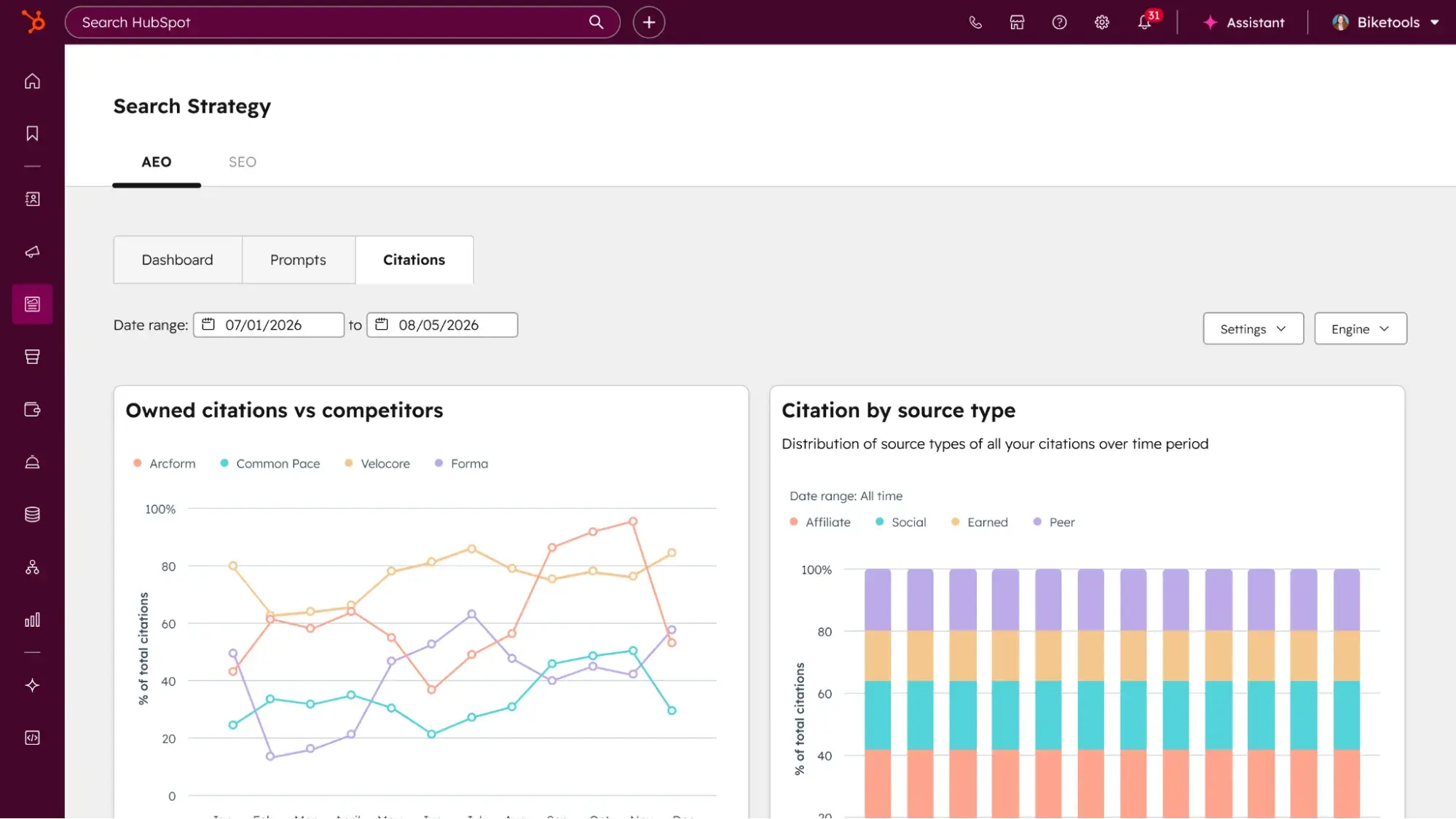
- AEO citations. Relevant AI answers that cite at least one cluster page across ChatGPT, Google AI Overviews, Perplexity, and Gemini.
tracks brand visibility across ChatGPT, Perplexity, and Gemini and surfaces which of your cluster pages are earning AI citations, which content types win, and where the gaps sit. That visibility tells you which subtopics to build next, closing the loop between measurement and the topic selection you started with in Step 1.
Topic clusters reward patience. A pillar page and its supporting content compound as internal links accumulate, authority concentrates, and search and answer engines build a clearer picture of what your site covers in depth. Track both AEO and SEO metrics at the cluster level, keep the coverage current as your products and the search landscape evolve, and the structure keeps working long after the last cluster page goes live.
The State of Marketing in 2026
黑料吃瓜网's Annual Marketing Trends Report
- AI in Marketing
- Branding and Growth
- Human-Led Creativity
- And More!

.webp)
![How to create a landing page with high ROI [+ expert and data-backed tips]](https://53.fs1.hubspotusercontent-na1.net/hubfs/53/%5BUse-2.webp)

![Signs it's time to redesign your website [+ 15 steps to follow]](https://53.fs1.hubspotusercontent-na1.net/hubfs/53/phaseswebsiteredesign%20copy.png)
%20(7).webp)

![How to start a blog (the right way) and write posts people actually want to read [+ free templates]](https://53.fs1.hubspotusercontent-na1.net/hubfs/53/how-to-start-a-blog-2.webp)
![What is a lead magnet? 20 lead magnet ideas and examples [+ step-by-step]](https://53.fs1.hubspotusercontent-na1.net/hubfs/53/lead%20magnet%20represented%20by%20a%20magnet.webp)