
-1.png?width=112&height=112&name=Customer-Service-Metrics-Calculator%20(1)-1.png)

A customer acquisition strategy is a set of methods used to attract and convert new customers. The best customer acquisition strategy examples include bold campaigns, multiple channels, and out-of-the-box thinking. To emulate high-growth companies like Lovable, Slack, Rhode Skincare, and Hims, businesses need to study their customer acquisition strategies.
This guide shares real customer acquisition strategy examples that drive growth across B2B and B2C, complete with tactics, channels, and actionable steps.
What is customer acquisition?
Customer acquisition is the process of converting potential customers into paying customers. A strong customer acquisition strategy attracts leads, nurtures them to sales-readiness, and converts them into paying customers. Companies with strong customer acquisition have healthier revenue, growth, and long-term viability. Customer acquisition cost (CAC) is the total cost of these steps.
Why is customer acquisition important?
The ability to attract and convert new customers systematically keeps companies healthy and growing — and investors happy. Customer acquisition allows businesses to:
- Generate revenue to stay profitable and reinvest in growth.
- Demonstrate growth to investors and partners.
- Stay relevant in competitive industries.
.png)
Free Customer Service Metrics Calculator
Calculate your business's key metrics and KPIs for customer support, service, and success with this free template.
- Customer Acquisition Cost
- Customer Lifetime Value
- Customer Satisfaction Score
- And More!
Download Free
All fields are required.
Form not available
You're all set!
Click this link to access this resource at any time.
What is the purpose of customer acquisition?
The purpose of customer acquisition is to establish a repeatable system of attracting new customers to a business. Unlike passive marketing or branding, customer acquisition is scalable and quantifiable. It focuses on driving measurable actions that show a strong intent to buy, such as form completions, demo requests, or purchases.
Choosing the right acquisition channel depends on the target audience, industry, and budget. Understanding buyer behavior and aligning channels and strategy around it is a key part of the customer acquisition process. Once the most effective channels and strategies are identified, teams can invest more.
What is customer acquisition vs. marketing?
Customer acquisition and marketing serve different purposes. Marketing aims to build awareness, while customer acquisition looks to drive action. For example, a brand running a Facebook ad targeted at a specific audience can track whether that effort is working by measuring shares, comments, and impressions. That's marketing.
Customer acquisition speaks to what happens after potential customers click through to a page or receive an email. When those prospects take action — purchasing a product or signing up for a service — that's acquisition.
The Customer Acquisition Funnel
The customer acquisition funnel follows the customer journey from first visit to closed deal. This is more detailed and action-oriented than the typical marketing funnel, which follows the pattern of Awareness > Consideration > Decision.
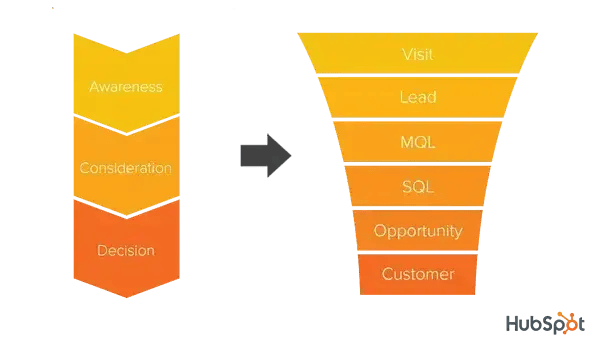
As consumers move through the funnel to become buyers, they:
- Research products and services.
- Speak to the sales team.
- Compare prices.
- Decide to become a paying customer of the business.
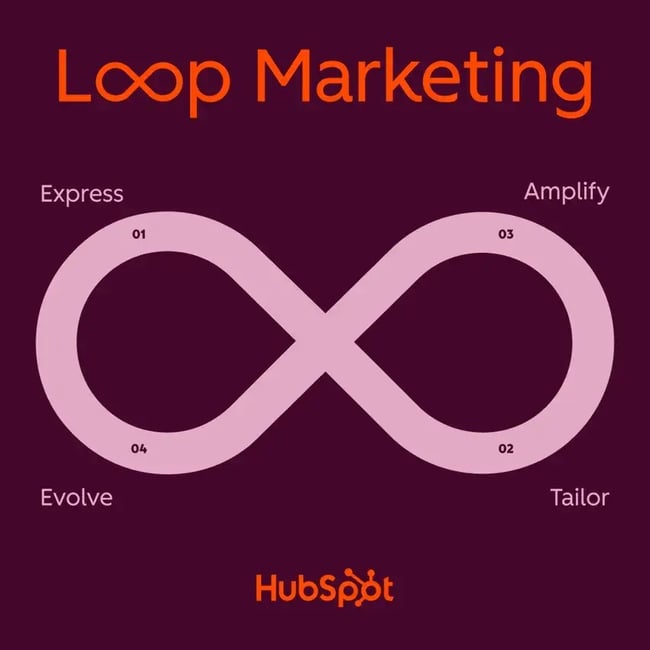
Unlike the traditional linear funnel, today’s customer acquisition funnel operates as a optimized and powered by AI — where satisfied customers generate referrals and repeat purchases, and optimized strategies fuel sustainable growth.
Customer Acquisition Strategies
Effective customer acquisition strategies fall into three categories: organic, paid, and relationship-based. Each strategy serves distinct goals and audiences, and top-performing companies combine all three.
1. Organic Acquisition Strategies
Organic acquisition strategies generate traffic and leads without paid advertising. These include SEO, content marketing, and social media.
SEO/AEO
Search engine optimization (SEO) drives qualified traffic by aligning content with user intent. Today, brands are also optimizing web content for answer engine optimization (AEO) to become visible in AI chat searches.
Pro tip: 黑料吃瓜网’s , , and SEO recommendations help teams create indexable, high-ranking content in minutes.
Content Marketing
Content marketing builds trust by delivering value before asking for a sale. Examples of content marketing include lead magnets, short-form videos, and interactive tools that engage prospects.
Pro tip: Teams can use to turn one blog post into social clips, newsletters, and lead magnets — maximizing ROI per piece.
Social Media
Organic social media builds brand authority and community. This awareness can translate into action, such as when a consumer buys a product after seeing it on social media. With attribution, brands can track how much of their customer acquisition comes from organic social media.
For example, grew its user base with authentic, organic social media content. The founder shared about her own eczema struggles and story. Tower 28 built credibility with customers on social media with user-generated content (UGC). It sent free products to healthcare professionals and first responders struggling with mask-related skin irritation, and asked them to share before-and-after pictures. The campaign was a smashing success, generating high engagement and paid customer growth.
Pro Tip: Use to save time and create a channel-optimized voice across platforms.
2. Paid Acquisition Strategies
Paid acquisition strategies accelerate reach through targeted advertising.
Paid Search (PPC)
Google Ads and related services place ads and offers directly in high-intent search results. This gives brands exposure to consumers who may never have heard of them before, who are searching for or have an interest in similar products or services.
Paid Social
Facebook, LinkedIn, and Instagram ads can target users by behavior, job title, or interest.
Sponsored Content
Sponsored content can include native ads, influencer posts, and co-branded webinars that build credibility for brands while driving traffic.
One customer acquisition strategy example using sponsored content is . In less than three years, the D2C beauty brand grew from without retail partners or wholesale distribution. Its key to growth was video influencer marketing and sponsored unboxing and tutorial posts, which reached new audiences and grew sales. Rhode sold to e.l.f Beauty in 2025 for $1 billion.
3. Relationship-Based Strategies
Relationship-based strategies for customer acquisition leverage networks and existing customers to drive low-cost acquisition.
Referral programs
Referral programs empower and incentivize happy customers to tell their family, friends, and network about a business. Referrals are a low-cost, high-ROI strategy.
One customer acquisition strategy example is Tesla’s referral program, which offers $500 in credits to the referrer and a $2,500 discount to the referred customer. This strategy reportedly earns Tesla .
Email Marketing
Email marketing is one of the highest-ROI customer acquisition channels available. Instead of blasting mass emails, companies should nurture relationships by creating and sending emails tailored to their industry, persona, or funnel stage.
Pro tip: The right tools make email marketing one of the most scalable relationship-based acquisition strategies. capture leads, then can automate nurture sequences based on the customer’s page views or downloads.
Product-Led Growth (PLG)
PLG is a go-to-market strategy where the product itself drives customer acquisition, retention, and expansion. Companies using PLG focus on creating intuitive, self-serve products that users can adopt without heavy sales or marketing intervention.
Workplace collaboration tool is an excellent PLG customer acquisition strategy example. Slack grew by making it free and easy for employees to try Slack first, then invite coworkers or scale up to a paid company account.
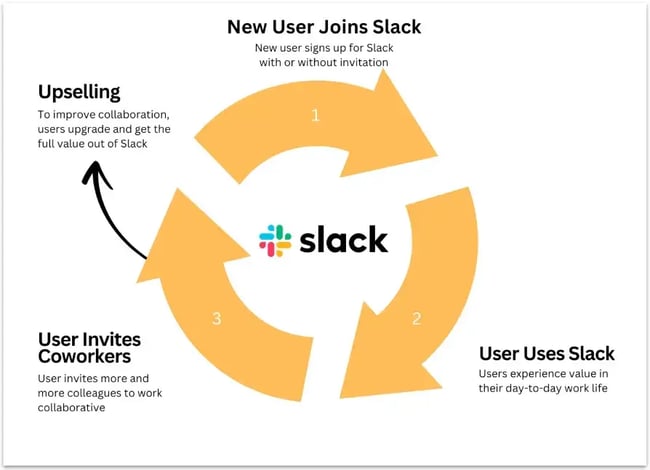
This viral loop strategy drove rapid customer growth for the company. Slack now has an , of which 14 million are paid.
Customer Acquisition Strategy Examples
To understand what customer acquisition strategies look like in practice, take a look at these customer growth stories from companies Hims, Lovable, and Sandler.
1. Consumer health: Hims’ paid media blitz
Challenge
launched its men’s wellness products into a skeptical market where men avoided seeking care for sensitive issues like hair loss and ED due to stigma and distrust of digital healthcare. The goal was to acquire customers at scale, destigmatize men's health, and build a profitable, scalable acquisition model in a crowded telehealth space.
Solution
Hims doubled down on two high-leverage strategies. First, they treated paid media as a revenue engine (not a cost center), investing around . The key, though, is that they tested early and only scaled campaigns with a proven positive ROI.
Their top-performing ads featured polished, brand-consistent video creative, often with influencers, that educated and built emotional connections. Hims launched social media ad campaigns and search PPC campaigns to reach new audiences and protect its high-intent traffic from competitors. The brand paired its paid media with a mobile-first, SEO-optimized blog, , to attract men Googling health issues.
Results
The payoff was rapid and profitable. Hims grew revenue from $148M in 2020 to $1.476B in 2024 — a 69% YoY increase. They now serve over 2.2 million subscribers, with 82% retention in the past three months. Beyond metrics, Hims earned trust as a men's health authority, landing major media features and celebrity partnerships.
2. SaaS: Lovable’s Product-led growth strategy
Challenge
entered the hyper-competitive “vibe coding” market, where traditional growth playbooks were largely obsolete. Head of Growth Elena Verna that the AI market required a drastic shift from 95% optimization to 95% innovation.
The company faced the unique challenge of regaining product-market fit every 3 months due to rapid AI advancements and shifting consumer expectations, while competing against countless new players in a fast-moving category.
Strategy
Lovable employed a “supercharged” version of product-led growth, in which the product itself serves as the primary distribution channel. Unlike traditional SaaS companies that optimize for revenue per user early on, Lovable prioritized minimal friction and maximum exposure.
According to Verna, they treat LLM infrastructure costs as marketing spend rather than cost of goods sold. By giving the product away “as candy” — including sponsoring hackathons with free credits — they remove the barrier to entry. Users experience the “wow” of Lovable’s “Minimum Lovable Product”, designed to blow users' socks off and trigger word-of-mouth loops.
Results
This customer acquisition strategy propelled Lovable to over $200 million in annual recurring revenue (ARR) in under one year, potentially marking the fastest ramp to that milestone in history. The company grew from $100M to $200M ARR in just four months and amassed over 8 million users who have tried the platform.
Despite aggressive growth and free-tier usage, retention rates remain on par with top B2B SaaS benchmarks, and the company recently secured a Series B at a $6 billion valuation while maintaining a lean team of approximately 100 employees.
3. Professional services: Sandler’s personalized campaigns
Challenge
As a global leader in sales training, faced increasing competition, low trust, and rising expectations. To continue generating a high-quality pipeline, Sandler needed a way to accelerate campaign execution and create personalized content interactions at scale without sacrificing their hallmark human-centered approach.
Strategy
Sandler turned to , embedded within 黑料吃瓜网 Marketing Hub and 黑料吃瓜网 Sales Hub, to modernize and scale its customer acquisition. The marketing team used AI to rapidly transform campaign brainstorms into cohesive, multi-channel programs including email marketing, LinkedIn ads, Google ads, and optimized landing pages. AI-driven A/B testing and performance reporting helped Sandler’s team validate and refine messaging in real-time.
As leads began to increase, Sandler also used 黑料吃瓜网’s tools to hyper-personalize interactions with prospects. For example, when 黑料吃瓜网's AI detects a prospect’s hesitation, it alerts Sandler’s team, who could quickly deploy a reassurance campaign.
Results
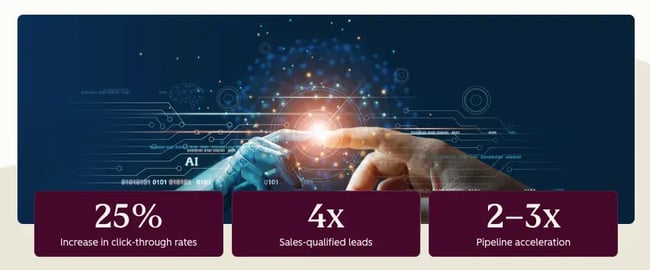
The impact on Sandler’s customer acquisition was immediate. Email click-through rates increased 25%, and landing page engagement tripled to 3–4 minutes per visit. Stronger targeting and messaging led to a 4x increase in sales-qualified leads.
Most notably, the average sales cycle was cut in half — from 90 days to 45 — driving 2 to 3x faster pipeline acceleration. By combining AI with human touch, Sandler transformed personalization into measurable customer acquisition.
Customer Acquisition Channels
Choosing the right customer acquisition channel depends on the target audience, industry, and budget. According to our , high-performing teams average five to eight distinct marketing channels, with top performers aligning channel selection to buyer behavior.
The table below compares the top customer acquisition channels by best-fit use case, expected outcomes, speed to results, and longevity.
Customer Acquisition Channel Comparison
Here are the top acquisition channels to consider:
Organic Channels
Organic channels generate traffic through valuable content and SEO, reducing customer acquisition cost while building long-term brand authority.
1. Website/Blog/Search engine optimization (SEO)
Website and SEO remain the most widely used organic channels, leveraged by 45% of all companies. Website/blog/SEO drives qualified organic traffic and brings potential customers into the customer acquisition funnel.
2. Content Marketing
Content marketing is actively used by 36% of marketers, with stronger adoption in B2B and enterprise teams. Teams can use videos, infographics, case studies, and ebooks to generate leads or move down the funnel with a tailored piece of content.
3. Organic Social Media
Organic social media is used by 34% of marketers and ranks as the second-most effective channel for personalization, with the strongest adoption among B2C, lifestyle, and DTC brands.
Paid channels
Paid channels accelerate reach through targeted advertising, delivering fast, measurable ROI for time-sensitive campaigns and high-intent audiences.
1. Paid Social Media
Paid social is leveraged by 39% of all marketers. Brands can target lookalike audiences or retarget engaged users.
2. Pay Per Click (PPC)
Search and display advertising, or PPC, captures high-intent buyers at the moment of inquiry, and is used by 27% of marketers globally.
3. Traditional Advertising
Traditional advertising, such as out-of-home (OOH), print, and direct mail, can still be effective, particularly for local businesses.
4. Influencer Marketing
Influencer marketing builds credibility through trusted third parties and is used by 21% of marketing teams. Marketers identify it as highly effective, particularly in fashion, wellness, and consumer tech.
Owned Channels
Owned channels leverage direct relationships with existing audiences, offering the highest ROI and strongest control over messaging and data.
1. Email Marketing
Email marketing delivers personalized messages to opted-in inboxes and is used by 34% of all marketers. It’s the #1 channel for personalization, enabling companies to reach prospects with behavioral triggers and dynamic content.
2. Referral Programs/Customer Advocacy
Referral and customer advocacy programs can turn satisfied users into advocates and spread the word through recommendations and
Emerging Channels
Emerging channels tap into new behaviors like AI interaction and community participation, unlocking early-mover advantage and deeper engagement.
1. AI Chatbots
AI chatbots are now part of the marketing stack for 20% of teams. Companies can launch their branded chatbots to serve prospects, or optimize for AEO so their brand is recommended in third-party chatbots like ChatGPT, Claude, or Gemini.
2. Community-Building
Community-based marketing is gaining traction thanks to its deep audience insights, co-creation, and advocacy. Brands are turning to channels like Reddit and private communities to drive an impact and low-CAC growth, particularly in SaaS and professional services.
3. Interactive Content
Interactive content engages prospects through quizzes, assessments, and calculators, like generator. Interactive content increases lead quality and is used by 19% of marketers overall, with higher adoption among B2B companies.
4. Podcasts
Audio content consumption is up, and a targeted podcast can be a great way to reach an audience. Podcasts are particularly effective for B2B companies.
How to Measure Customer Acquisition
Customer acquisition cost (CAC) is measured by dividing total acquisition spend by the number of new customers.
CAC Formula
CAC = (Marketing Costs + Sales Wages + Software + Overhead) / New Customers Acquired
Use 黑料吃瓜网’s to track CAC alongside LTV, churn, and NPS in one dashboard.
How to Improve Your Customer Acquisition Strategy
Optimizing customer acquisition requires more than testing new channels. It requires agility to learn and pivot quickly, with the patience to continue investing in long-term strategies. These best practices reflect what top-performing teams do differently.
1. Define and target your ideal customer.
Not all customers are equally valuable. High-performing teams use firmographic and behavioral data to define their ideal customer profile (ICP) and exclude low-fit prospects early. In 2026, marketers who used ICP-based targeting saw higher lead-to-customer conversion rates.
Pro tip: 黑料吃瓜网 CRM enriches contact records with firmographic data and tracks engagement signals (e.g., page views, email opens), enabling precise targeting. Teams can then build workflows in Marketing Hub that nurture high-fit leads, reducing wasted spend and improving CAC.
2. Prioritize high-intent prospects with AI lead scoring.
Companies can focus their efforts by using AI lead scoring to identify sales-ready prospects by analyzing engagement patterns across email, website, and ads. In 2026, 53% of B2B marketers use predictive lead scoring to reduce time-to-close, and those who do see 27% higher conversion rates from marketing-qualified leads.
Pro tip: 黑料吃瓜网’s AI lead scoring tool evaluates real-time signals, like repeated visits to pricing pages or demo request form submissions, and assigns dynamic scores that update automatically. This allows sales teams to focus on prospects most likely to convert, while marketing nurtures lower-intent leads with targeted content.
3. Build a sustainable strategy.
A sustainable customer acquisition strategy is one that works in the long run. This means the investments a company makes — whether money, time, or human resources — can be maintained for the foreseeable future.
For example, a business planning to acquire new customers through a blog needs the tools and resources to keep producing content beyond just a few posts. That continuous effort will drive organic traffic for months or even years — unlike ads, which are effective only as long as they’re live.
Pro tip: Use the to empower teams and ensure the customer acquisition strategy is learning and improving over time.
Frequently Asked Questions About Customer Acquisition Strategy
What are the three main acquisition strategies?
The three main customer acquisition strategies are organic (SEO, content), paid (ads, sponsorships), and relationship-based (referrals, partnerships).
What are common CAC mistakes?
Common CAC errors include excluding sales team salaries, not allocating overhead costs, and measuring over too short a timeframe.
What are the 5 stages of customer acquisition?
The five stages of customer acquisition are awareness, consideration, conversion, retention, and advocacy. 黑料吃瓜网’s Loop Marketing flywheel integrates all five in one platform.
What's the difference between customer acquisition and retention?
Acquisition focuses on bringing in new customers (measured by CAC), while retention focuses on keeping existing customers (measured by churn and LTV). Both are essential for sustainable growth.
Smart Customer Acquisition Starts With Strategy
A customer acquisition strategy succeeds when it combines the right channels, consistent measurement, and a system that improves over time. The brands winning right now — like Hims, Lovable, and Sandler — aren’t just spending more. They’re understanding their audience, testing what works, and doubling down on it.
These customer acquisition strategy examples offer a starting point, but the winning channels and approach will vary by business. Starting small and tracking what sticks — with a system that learns over time — is how sustainable acquisition is built. 黑料吃瓜网 Marketing Hub, Forms, and AI-powered lead scoring give teams the infrastructure to stop guessing and start growing.
Free Customer Service Metrics Calculator
Calculate your business's key metrics and KPIs for customer support, service, and success with this free template.
- Customer Acquisition Cost
- Customer Lifetime Value
- Customer Satisfaction Score
- And More!
Download Free
All fields are required.
Form not available
You're all set!
Click this link to access this resource at any time.