


If you’re looking for strategies to reduce customer churn, you’re not alone. In 2026, many service and customer success teams are working to reduce customer churn amid tighter budgets, rising customer expectations, and faster competitor comparisons.
According to , 71% of companies say price increases are the top reason customers leave. But price is rarely the only factor. In my experience editing and reporting on customer experience topics, churn usually builds over time through onboarding gaps, poor product fit, weak communication, and missed warning signs.
In this guide, I’ll break down what customer churn is, what causes it, how to identify it early, and 12 practical strategies to reduce churn rate before it hurts revenue.
What is customer churn?
Customer churn is the percentage of customers who stop using your product or service during a given period. You can calculate it by dividing the number of customers lost during that period by the number you started with.
That formula may be simple, but the business impact isn’t. Even a modest churn rate can quietly drag down recurring revenue, customer lifetime value, and growth projections over time.
Take a look at the graph below for how impactful churn is:
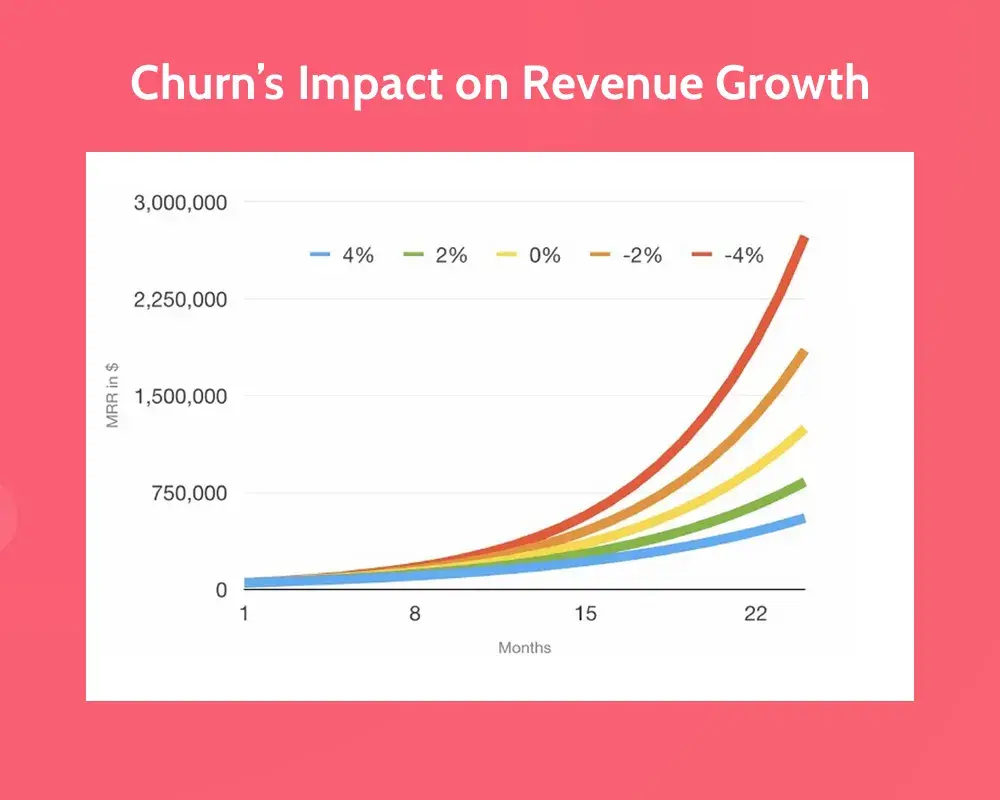
To spell it out, let’s look at a business generating $150/month/customer and the impact at 1% customer churn versus 5%, assuming they had 500 customers at the start of the period:
Why Customer Churn Is Costing You Money
While some customer churn is inevitable, a high churn rate can affect your bottom line.
Your business’s profitability largely depends on your ability to retain existing customers. Even a small increase in customer retention can increase profits by 25%.
That’s why it’s important to keep an eye on churn and take steps to stop it from escalating.
In the video below, learn more about why churn matters and how you can strategically approach churn reduction.
The first step to stop churn is to identify the underlying cause. We’ll discuss some common causes next.
Calculating Customer Churn Rate
Here’s an example of how to calculate churn rate. The image below outlines the formula.
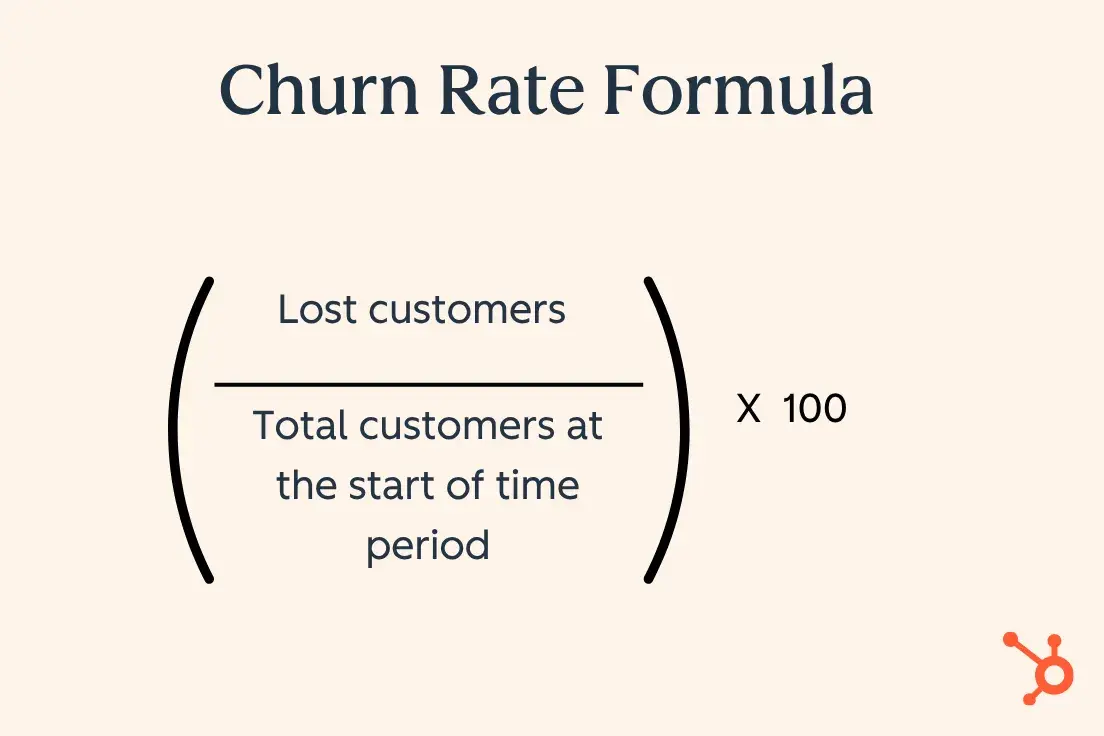
Let’s say you started last quarter with 500 customers and ended the quarter with 475. That means you lost 25 customers.
To find your churn rate for the quarter, divide the number of customers you lost (25) by the number of customers you started with (500). Then, multiply the result by 100.
25 ÷ 500 = 0.05
0.05 x 100 = 5%
Your churn rate for the quarter is 5%.
.png)
100 Customer Success, Service, and Support Interview Questions
Hire the best customer-facing employees with this set of interview questions.
- Customer Support Questions
- Customer Service Questions
- Customer Success Questions
- Customer Success Manager Questions
Download Free
All fields are required.
Form not available
You're all set!
Click this link to access this resource at any time.
Causes of Customer Churn
The reasons customers churn can be personal to each customer, but they usually fall into a few common categories.
We’ll explore each below.
Price
Price is a common objection for salespeople and customer success managers alike.
If customers find a more cost-effective solution to the problem they want to solve, they may churn.
That’s why it’s important to establish value early through onboarding and education, so customers feel the purchase is worth the cost.
Disappointment around price is a challenge in modern-day marketing. In his article, “,” Constantine von Hoffman explains how AI is accelerating complex B2B purchasing decisions. Hoffman highlights an example shared by Chris Penn, who used Gemini Deep Research to quickly identify five alternative SaaS providers after his existing vendor raised prices. Within minutes, AI-generated summaries surfaced viable options, enabling him to switch vendors immediately.
Price-sensitive customers can now churn when comparisons are frictionless.
Product/Market Fit
Poor product or market fit is another common reason for customer churn, underscoring the need for close alignment between sales and customer service.
If salespeople are hustling to hit quota and don’t feel incentivized to sell to good-fit customers, the result will be churn within a few months of purchase, when customers realize they can’t achieve their goals with your solution. What you want instead is repeat customers who keep coming back, and this happens when you meet your ideal customer.
The good news for sales is that 93% of marketers are focused on higher-quality leads, according to .
User Experience
Good user experience (UX) is the difference between a customer using your product long-term and quietly disengaging. When software is buggy, unintuitive, or slow to deliver value, customers don’t just get frustrated; they stop building habits around it. Churn happens when users feel they’re spending more time figuring out a product than benefiting from it.
Even well-priced products with strong feature sets can lose customers if key workflows are hard to find, onboarding is unclear, or performance issues disrupt day-to-day use. Over time, friction compounds, usage drops, and customers begin evaluating alternatives that feel easier to adopt—even if they offer fewer features. Poor UX also amplifies other churn drivers.
A survey found that 14% of respondents cited a difficult user experience as a reason for churn.
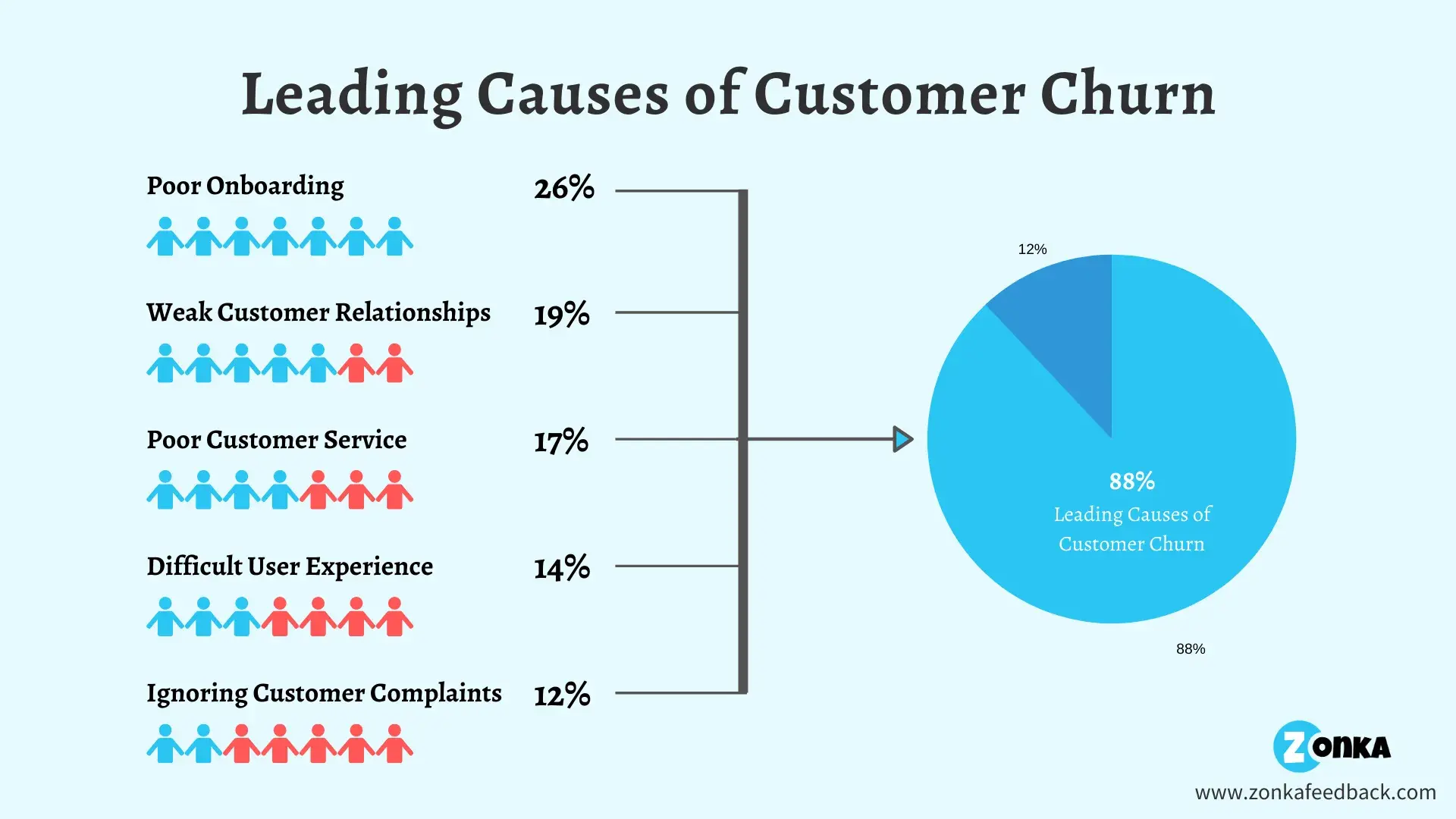
Even scarier, customers have little patience for poor UX. states that 72% of people switch to a competitor after just one negative experience.
Customer Experience
Finally, if a customer’s experience connecting with other aspects of your brand — such as your marketing content or customer support team — isn’t positive, they may be more likely to churn.
Customers want to feel welcomed and valued by the companies they support. If their interactions with your brand are consistently frustrating or impersonal, they’re less likely to stay.
While these factors typically cause customer churn, there are a few different types of churn you should be aware of as well.
In fact, you might be surprised to find that some churn is actually good for your business.
Types of Customer Churn
Here are seven of the most common types of customer churn across industries.
1. Revenue Churn
Revenue churn is slightly different from customer churn, but it’s still important to consider when analyzing this metric.
Revenue churn is the amount of revenue that’s lost within a given period. That doesn’t necessarily mean you’re losing customers, but rather, you’re not making as much money from your customer base as you did before.
That can happen if customers downgrade to a cheaper subscription or version of your product. While they’re still shopping at your business, they’re spending less money than they did before.
2. Competitor Intervention
Every business has its competitors, and there’s always going to be some customers who will leave you for another company. It’s not ideal, but it happens, and you can’t spend all of your time worrying about it.
It’s more important to focus on why these customers are leaving you for your competition. Are they a bad fit for your business? Or, is it something you’re doing that’s pushing them away?
Once you can figure out the cause, you’ll know which customers you should work to keep, and which ones are going to leave your business anyway.
3. Unsuccessful Onboarding
For some businesses, customer churn is common early in the customer journey.
That’s because these companies typically don’t offer an onboarding program to teach the customer how to use their products or services.
That means it’s up to the customer to figure out how the product works and how it can meet their needs.
If you’re purchasing rice, you’ll probably just need a set of directions printed on the side of the box.
But if you’re paying thousands of dollars for software that runs your business, you might expect a bit more in terms of support and resources from your software provider.
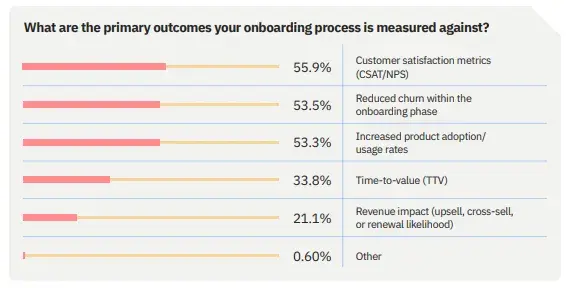
Optimizing your onboarding pays off. According to , respondents said that a smooth onboarding process contributed to retention. Customers are 53.5% less likely to churn when onboarding goes well, highlighting how early experiences directly influence long-term retention.
4. Desired Feature or Functionality
Consumers crave personalization, according to a , 84% of customers prefer companies that offer personalized experiences. Your customer base will expect you to create new features or products that solve their needs.
If you have a diverse customer base, some may be disappointed when you roll out a new product or feature that feels irrelevant to their goals. While this new product may be great for most of your target audience, there may be a lingering segment that feels your brand is going in a different direction than they expected.
This type of customer churn isn’t always a bad thing.
If your brand is, in fact, going in a new direction, then that may come at the expense of some customer churn. Just be sure to actively monitor your churn rate to keep it from getting too high.
5. Company Closure
If you’re a B2B business, then you may have customers that go out of business or merge with another company.
Most of the time, these instances are unavoidable and are part of working in a B2B environment. That’s where your customer acquisition strategy becomes important, as it balances out your customer churn rate.
6. Underappreciated Brand Values
Similar to a “bad fit” customer, some people may not align with your brand values.
For example, if your company prides itself on providing eco-friendly products, you may encounter some people who don’t value the manufacturing process.
Instead, these customers are more focused on a lower price point and a fast delivery process than on buying “green” products.
So, do you give in and conform to these customers? Or, stand strong with your brand values?
Customers power your flywheel, but just like a car, it’s important to put the right fuel into your engine. If you conform too much to the wrong segment of your target audience, your brand will suffer in the long run.
Instead, lean into feedback from your most loyal customers, as they’ll share a vision that aligns with your brand’s values.
7. Plateaued Growth
As your company grows, it changes, too. As your customer base grows, you hire more employees and can offer more products and services that appeal to a larger audience.
This type of change is great for your business, but it can sometimes increase customer churn.
For instance, let’s say you originally offered a free product but later realized customers would be willing to pay for it if it’s bundled with another set of products.
While this change will increase revenue, you may lose customers who only wanted the free product. Now that they’ll have to pay for it, they’ll move on to another company that doesn’t charge them.
That’s another example of natural customer churn. Yes, you’re losing customers at first, but you’re ultimately replacing them with new ones who will pay more for your product or service.
How to Identify Customer Churn
With churn coming in many shapes and sizes, it can be difficult to recognize what’s natural churn, what’s negative churn, and what isn’t churn at all.
To make sure you’re aware of all types happening at your business, read on to learn how you can predict customer churn by identifying patterns.
Establish customer churn metrics.
The first step in identifying customer churn is to determine what churn means for your company.
Depending on your business model, churn may mean a customer cancels a subscription, uninstalls your app, or doesn’t return to purchase your product after a certain period.
You’ll need a set of metrics to monitor customers who are at risk of leaving your company. That way, you can set clear benchmarks for when you think a customer is about to churn.
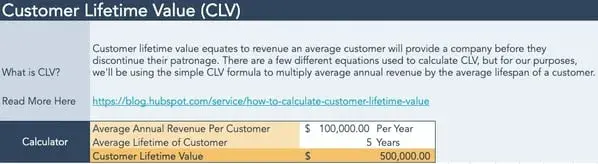
Pro tip: You can document and track these metrics with , which helps you identify when your churn rate is approaching an unacceptable level so your company can course-correct.
Gather customer feedback.
Sometimes customers will tell you directly when they’re unhappy. In all other instances, it’s helpful to give your customers a nudge using customer feedback surveys.
Surveys can help you collect both quantitative and qualitative feedback, so you can easily identify which customers are upset with your business and see why they feel that way.
Pro tip: Send your customers an NPS survey after a customer service case to get immediate feedback on their experience with your brand.
Check in with your customer success team.
Rather than waiting for customers to tell you how they feel, you can dispatch your customer success team to find out.
Your CS team should be monitoring individual accounts and reach out to users who are unhappy with your product or service.
That way, you can immediately clear any roadblocks for customers rather than having them reach out to your support team.
Pro tip: Most customer success teams set up regular check-in schedules with their customers. Even if they don’t have a problem to solve, these meetings are great ways to gather up-to-date information on how the user is feeling.
100 Customer Success, Service, and Support Interview Questions
Hire the best customer-facing employees with this set of interview questions.
- Customer Support Questions
- Customer Service Questions
- Customer Success Questions
- Customer Success Manager Questions
Download Free
All fields are required.
Form not available
You're all set!
Click this link to access this resource at any time.
Prioritize proactive customer service.
Proactive customer service means your business actively identifies and solves problems before they affect the customer experience.
During this process, it’s common to uncover points of friction that you may not have been aware of before.
By correcting these issues, you can see how they influence your churn metrics and whether they were a significant cause of customer churn.
Pro tip: Resources like knowledge bases and automated chat features can help you implement proactive customer service without putting all of the pressure on your support team.
Monitor community forums and third-party review sites.
Another set of resources you can leverage is your community forum and third-party review sites.
Community forums are where your customers come together to talk about your products and services. If you notice the same users repeatedly bashing your products, you know they are at higher risk of churn.
The same goes for third-party reviews. The people who give your company the lowest ratings are the ones who are most likely to leave your business.
Pro tip: If you can, reply to third-party reviews to see whether you connect with these customers and solve pending issues before churn occurs.
Now that you know what churn looks like, let’s talk about what you can do to reduce customer churn rate at your business.

How to Reduce Customer Churn
- Start with churn analysis (your foundation for everything else).
- Lean into your best customers.
- Be proactive with communication.
- Define a roadmap for your new customers.
- Offer incentives.
- Ask for feedback often.
- Stay competitive.
- Provide excellent customer service.
- Create a community around your customers.
- Dedicate CSMs to your most valuable customers.
- Focus on attracting the right customers.
- Make it easy for customers to stay long-term.
Let’s review each tip in more detail.
1. Start with churn analysis (your foundation for everything else).
If you’re waiting until a customer leaves your business, you’re already too late to do anything about it. Instead, you should use data from customers who have not yet churned to build strategies that proactively prevent churn.
No matter how much effort you put in, churn is a part of any business, and it will happen.
The key is to use your churned customers (and your happy customers) to predict key signs of customer happiness and customer dissatisfaction so you can engage with customers and salvage the relationship before they churn.
First, start with a churn analysis to figure out when churn typically occurs.
- When are customers most frequently churning?
- Is it 30, 60, or 90 days after they first start using your product or service?
- Does churn happen if customers go a specific number of days without using the product or service?
Once you understand when churn occurs, the next step is to identify the signals and systems that help you act early.
Here are effective churn analysis techniques that combine tactics like CRM tracking, clear churn signals, and timely human outreach:
- Usage-based churn signals: Declining logins, reduced feature adoption, or inactivity over a defined period.
- Customer feedback indicators: declines in net promoter scores (NPS), negative survey responses, or unresolved support tickets
- Engagement red flags: Missed check-ins, unanswered emails, or decreased participation in training or onboarding sessions
Track these signals centrally in your CRM so that customer success, support, and sales teams work from the same data. Tools like automated health scores, lifecycle stages, and task alerts make it easier to trigger timely outreach — whether that’s a direct call, targeted education, or an incentive to re-engage.
In 黑料吃瓜网 Smart CRM, there are several ways to surface early signs of churn, prioritize at-risk customers, and intervene before cancellation occurs. And everything is centralized, so you’re spotting churn across every metric from one tool.
For example, 黑料吃瓜网 Smart CRM reduces churn with the following features:
- : By combining signals such as product usage, support volume, NPS or Customer Satisfaction (CSAT) responses, onboarding completion, and renewal proximity, 黑料吃瓜网 lets you build custom health scores that clearly flag which customers are healthy, at risk, or critical.
- : Support data is one of the strongest predictors of churn. 黑料吃瓜网 centralizes ticket volume, resolution time, and sentiment, helping teams catch repeated issues, unresolved tickets, or post-onboarding spikes that often precede cancellation.
- Lifecycle stage analysis: 黑料吃瓜网’s lifecycle stages help teams see exactly where churn occurs — whether before activation, shortly after onboarding, or near renewal — making it easier to fix root causes rather than guess.
- : 黑料吃瓜网 allows teams to automate alerts, tasks, and workflows when churn signals appear, ensuring customer success teams step in at the right moment with proactive outreach rather than reactive damage control.
- : 黑料吃瓜网 makes it easy to spot changes in customer behavior — such as declining logins, reduced feature usage, skipped onboarding calls, or long gaps since last activity — so teams can act before churn becomes inevitable. The video below explains more.
When done well, churn analysis shifts your team from reacting to cancellations to intervening while there’s still time to save the relationship.
Make getting additional customer feedback part of your customer retention strategy to understand why churn typically occurs.
For example, here’s an email that Airfocus sends when you haven’t logged into your account for a while.
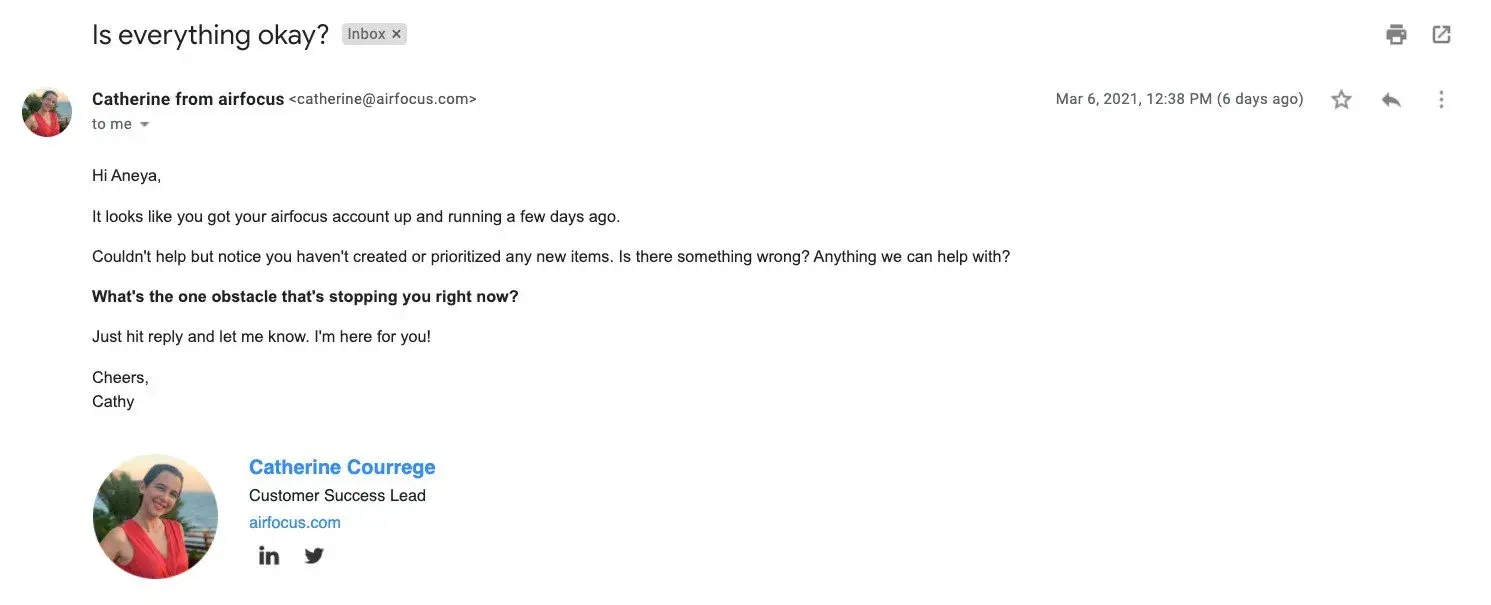
Airfocus most likely determined that fewer logins signaled churn, so they attempted to re-engage the user.
Why I like it: This email also serves as an opportunity to collect feedback on low engagement by asking, “What’s the one obstacle that’s topping you right now?”
2. Lean into your best customers.
For many businesses, solving for churn means identifying the pool of customers most likely to cancel and refocusing your efforts to keep them on board.
However, some proactive customer retention strategies might prevent customers from reaching the point of nearly churning.
A few ways to create loyal customers:
- Build a strong onboarding program and consider reonboarding when introducing new features.
- Make it easy to see ROI so your customers can see the benefits of your product.
- Implement a customer feedback loop to keep customer service in touch with customer needs.
- Create a customer communication strategy to prevent leaving customers without contact.
- Start a customer education program to keep customers knowledgeable and up to date about your product and how it helps them.
- Reward customers for their loyalty and advocacy to keep them engaged.
100 Customer Success, Service, and Support Interview Questions
Hire the best customer-facing employees with this set of interview questions.
- Customer Support Questions
- Customer Service Questions
- Customer Success Questions
- Customer Success Manager Questions
Download Free
All fields are required.
Form not available
You're all set!
Click this link to access this resource at any time.
3. Be proactive with communication.
By reaching out to your customers before they need you, you’re demonstrating your investment in helping them get the most out of your product or service.
But not any old outreach will do. The type of message or resource you send should directly relate to the use of the product or service.
For example, Grammarly sends an email promoting new features and offering the chance to upgrade.
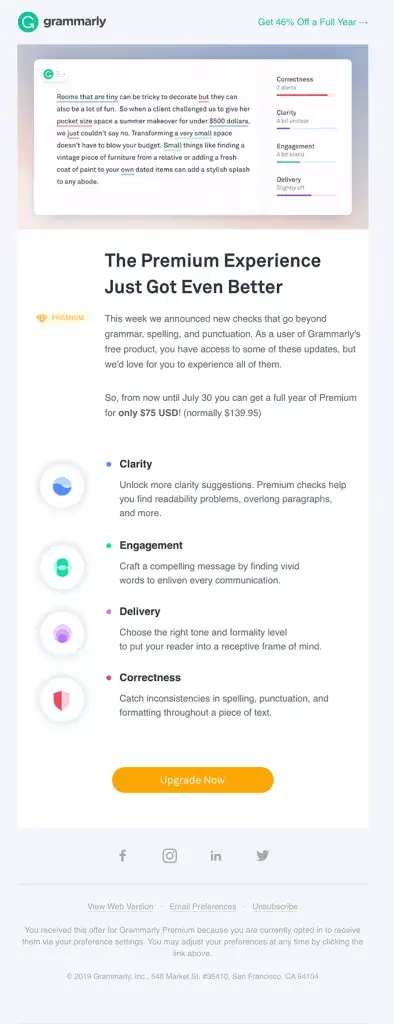
Why I like it: The upgrade email is effective because it includes a discount and a new feature alert. The pricing is upfront, and this transparency may help increase upgrades.
4. Define a roadmap for your new customers.
Getting started with a new product or service can be overwhelming.
And if a customer can’t figure out how to navigate your product or service right out of the gate, they’ll likely lose interest — fast.
To ease the transition, it’s helpful to set up a new customer onboarding process or roadmap to guide them through your product or service’s features, functionality, and processes.
Customers who feel empowered to achieve success with the help of your business are less likely to leave.
So you must be constantly monitoring and iterating on your onboarding process and keeping an eye out for snags or blockers.
Looking for inspiration? Here’s the onboarding email I received from Grammarly after signing up:

Notice how the welcome email introduces a bunch of popular features to help warm me up to the tool.
5. Offer incentives.
Give customers a reason to stick around by offering them something special, like a promo, discount, or loyalty program.
This small effort can go a long way toward showing your existing customers how much you value their business.
When determining when to surface these incentives, there are a few things to consider.
For one, you’ll want to consider the customer’s timeline: If they are approaching the end of their contract and you’re worried they might not renew, offering a discounted renewal rate could be the push they need to stick around.
Another thing to consider is the customer’s needs. Baremetrics used the following strategy after receiving feedback from customers who were ready to cancel due to a lack of features.
“We’d offer a discount on their next month of service to tide them over while we finished up what it was they were looking for,” explains
The impact? This small effort helped them save 15% of the accounts that were ready to cancel.
6. Ask for feedback often.
Customer frustration, which can ultimately lead to churn, arises when there is confusion about a product or when support for a particular issue is lacking.
But those concepts are vague. And getting to the root of the specific issues plaguing your business requires you to take the time to collect feedback early and often.
Depending on your business needs, creating a loop can be as easy as setting up a survey or feedback form and sending an email. Here’s a great example from PayPal.
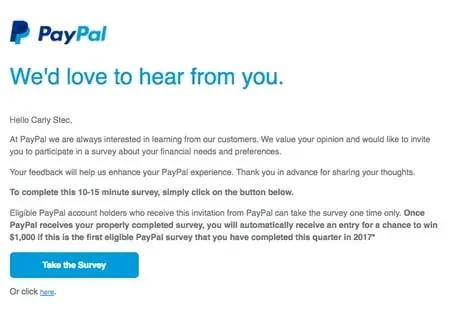
Surveys and rating requests show the customer that you’re committed to getting better ?— and that you’re always interested in improving.
7. Stay competitive.
Market conditions are constantly changing. And as new software and technologies enter the space, your customers’ needs and demands will inevitably shift.
Businesses focused on what’s next ?— trends, technology, and product advancements ?— position themselves in a good spot in terms of avoiding disruption or “the next big thing.”
And while keeping your product or service on the cutting edge is important, it’s also important that your customer success and support efforts remain relevant.
To ensure your competitors aren’t lapping you, make note of their customer success initiatives.
- Are they responsive to questions on social media?
- Do they have live chat enabled on their website?
- Do they have an extensive ?
Taking cues from their strategy can help your business better serve customers and retain their loyalty.
8. Provide excellent customer service.
Of course, a great way to reduce churn is to provide excellent customer service.
Empower service reps to solve for the customer while they’re fixing an issue or answering a question. That might mean that they have to spend money to make things right with a customer.
Many of the big companies that you think about, like Amazon or Zappos, are huge because they focused on customer service from the beginning.
Offering excellent customer service is a great way to stand out among competitors and reduce customer churn.
9. Create a community around your customers.
Customers are loyal to brands that have built a community around their products and services.
That means your marketing team can work on community management by engaging with customers, creating a Facebook group, or even planning events for valuable customers.
When you create a community, customers tend to stay more loyal, reducing the likelihood that they’ll churn when something goes wrong.
10. Dedicate customer success managers (CSMs) to your most valuable customers.
Another great way to reduce customer churn is to employ customer success managers who ensure your most valuable customers are taken care of.
Customer success managers will give customers tips on how to get the most out of their product or service.
Additionally, they’re the main point of contact for your valuable customers, so they can reach out to someone directly instead of waiting on hold for a frontline customer service rep.
11. Focus on attracting the right customers.
Retaining customers is much easier when you’ve engaged the right type of customers in the first place.
As we’ve discussed, a major cause of churn is when your product or service isn’t a good fit for consumers.
Develop customer profiles to clarify the demographic characteristics and purchase behaviors of your target consumers.
During the sales stage, make sure you’re clear about the customer’s goals and confident that your product can help them reach them.
The right customers are people who engage with your products within your target market and are well-informed about how to work with you.
12. Make it easy for customers to stay long term.
Preventing churn comes down to giving your customers a reason to stay.
And sometimes, that reason can be as simple as giving them long-term subscription options for your service or extended access to your product.
What does this look like?
Try offering annual or multi-year sign-up options in addition to month-to-month contracts. Or you could give your customers unlimited access to your product specialists for a set period.
Whatever it is, just make sure your business structure encourages customers to hang around.
Frequently Asked Questions About Reducing Customer Churn
What are the three most impactful techniques for reducing churn?
The three most impactful techniques for reducing churn include strong onboarding, early churn detection through data, and proactive customer engagement. Onboarding has the most significant impact, according to Rocketlane’s . Customers who experience smooth onboarding are 53.5% less likely to churn during the onboarding phase.
Churn prevention also depends on spotting risk before cancellation. Tracking signals like declining usage, negative NPS or CSAT responses, and rising support tickets allows teams to intervene early. Pair that with proactive communication — such as direct check-ins when engagement drops — and churn becomes manageable. Even a 5% improvement in retention can increase profits by 25%, making these strategies some of the highest-ROI investments a business can make.
How can you identify upsell opportunities while reducing churn?
Churn signals often highlight upsell opportunities when viewed in context. Customers who are highly engaged, nearing usage limits, or repeatedly asking about advanced features are usually candidates for expansion. Analyze usage trends alongside support interactions and surface these moments clearly, before it’s too late.
The key is relevance and timing. When growth signals appear alongside early churn indicators, positioning an upgrade or add-on as a solution can increase both retention and revenue.
What’s the difference between churn reduction and customer retention strategies?
Churn reduction is reactive. It focuses on intervening when customers show signs of leaving, such as declining usage or negative feedback. Tactics include targeted outreach, incentives, or issue resolution to stop immediate loss.
Customer retention strategies are proactive. It’s about preventing churn through onboarding, value reinforcement, and long-term relationship building. High-performing teams use churn reduction to address risk and retention strategies to minimize that risk over time.
Stop churn in its tracks.
Churn can really take a toll on your business — but only if you let it. Reroute your company’s trajectory today by applying the tips outlined above.
Editor's note: This post was originally published in August 2017 and has been updated for comprehensiveness.
100 Customer Success, Service, and Support Interview Questions
Hire the best customer-facing employees with this set of interview questions.
- Customer Support Questions
- Customer Service Questions
- Customer Success Questions
- Customer Success Manager Questions
Download Free
All fields are required.
Form not available
You're all set!
Click this link to access this resource at any time.