
.png?width=112&height=112&name=Image%20Hackathon%20%E2%80%93%20Vertical%20(85).png)

To reduce customer acquisition costs, reps need to appeal to a broader base with the same sales and marketing investment. CAC rises when paid media costs increase and buying cycles lengthen. Lower CAC comes from measurable gains in conversion rate, retention, and sales cycle time.
This guide shares how to calculate CAC, strategies that reduce customer acquisition costs, and a measurement framework for tracking impact. Measurement comes first because channel-level CAC trends determine which tactics matter most.
What is customer acquisition cost (CAC)?
Customer acquisition cost (CAC) is calculated by dividing total sales and marketing expenses by the number of new customers acquired in a defined period. Understanding CAC can help teams budget, forecast revenue, and report on performance. CAC typically includes expenses directly tied to acquiring new customers, including:
- Paid advertising spend.
- Marketing and sales software tools.
- Salaries, commissions, and contractor costs for marketing and sales teams.
- Agency fees.
- Campaign production and creative costs
Teams can calculate CAC with the following formula:
CAC = Total sales and marketing expenses ÷ New customers acquired
So, if a company spends $200,000 on sales and marketing and acquires 400 customers, its CAC will be $500 per customer.
CAC = $200,000 ÷ 400 = $500 per customer
The 3:1 LTV-to-CAC Ratio & Why It Matters to Teams
Customer lifetime value (CLV or LTV) estimates the total revenue expected from a customer over the course of the relationship. CAC must remain proportionate to LTV for healthy growth. Teams don’t want to overspend on marketing and sales tactics that lead to short-term relationships. Conversely, businesses shouldn’t underinvest and lose out on business.
A commonly cited benchmark is a . That means for every dollar spent acquiring a customer, the customer spends three dollars with the business. This ratio can keep teams on track when deciding their sales enablement and marketing budgets.
.png)
Free Customer Service Metrics Calculator
Calculate your business's key metrics and KPIs for customer support, service, and success with this free template.
- Customer Acquisition Cost
- Customer Lifetime Value
- Customer Satisfaction Score
- And More!
Download Free
All fields are required.
Form not available
You're all set!
Click this link to access this resource at any time.
21 Ways to Reduce Customer Acquisition Costs
These tips will cover ways to both lower customer acquisition costs and improve customer lifetime value. Customer acquisition costs and customer lifetime value (CLV) are directly linked — it‘s much cheaper to retain existing customers than to woo new ones. Why acquire customers if you’re just going to lose them next month?
This is a matter of optimized customer profitability, and there are countless ways to improve this. Let’s dive into the most effective ways of reducing your customer acquisition cost.
Leverage existing customers to reduce customer acquisition costs.
1. Re-engage lapsed customers with special offers.
Discounts and deals can help push on-the-fence buyers to make a purchase. Teams can use targeted email campaigns and discounts to target specific buying segments. This approach works well for buyers who have items lingering in their carts or who have been buying less frequently. Consider making a special offer to customers who have:
- Purchased from paid media or ads.
- Left positive reviews online.
- Bought a specific product.
, CEO of , leverages this technique for his company, “We analyze our customer data to identify shoppers who haven’t made a purchase in 6 to 12 months and create custom offers to win them back. By reactivating dormant customers, we’re acquiring revenue from users we already spent money to acquire for the first time.”
2. Affiliate and Referral Programs
Affiliate programs are staples of the digital marketing world. In these initiatives, influencers or brand promoters get a special link for a product that they can promote. Once buyers make a purchase, a percentage of the sale goes to the promoter. Affiliate programs are common in ecommerce and can be leveraged by small businesses all the way to behemoth brands.
Meanwhile, a referral program is the same concept adapted for leads-based businesses. When a customer refers the brand to a colleague, that customer gets a discount or free product instead of a cash payout.
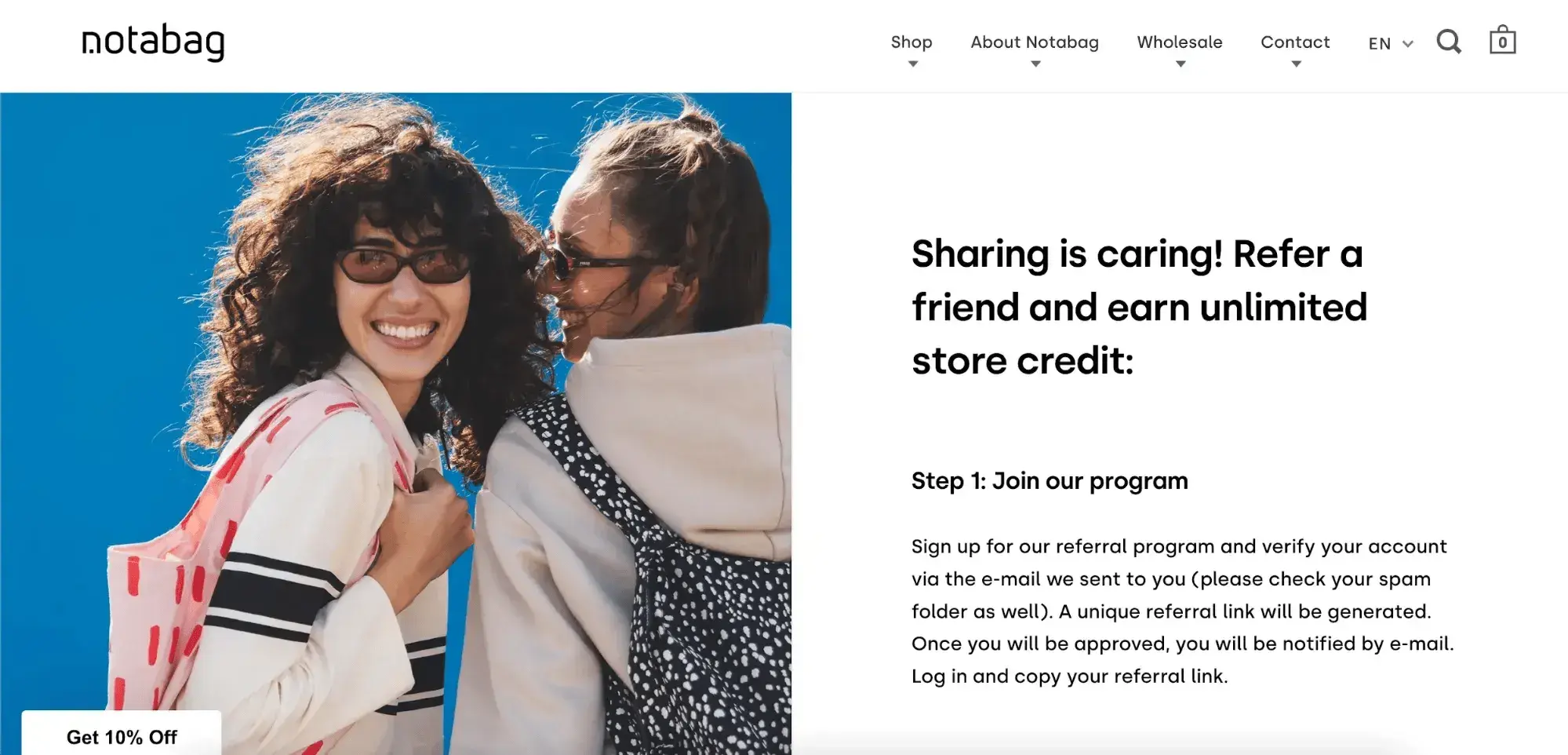
Referral programs and affiliate programs formalize word-of-mouth growth. Trust transfer increases conversion rates when referrers introduce qualified prospects.
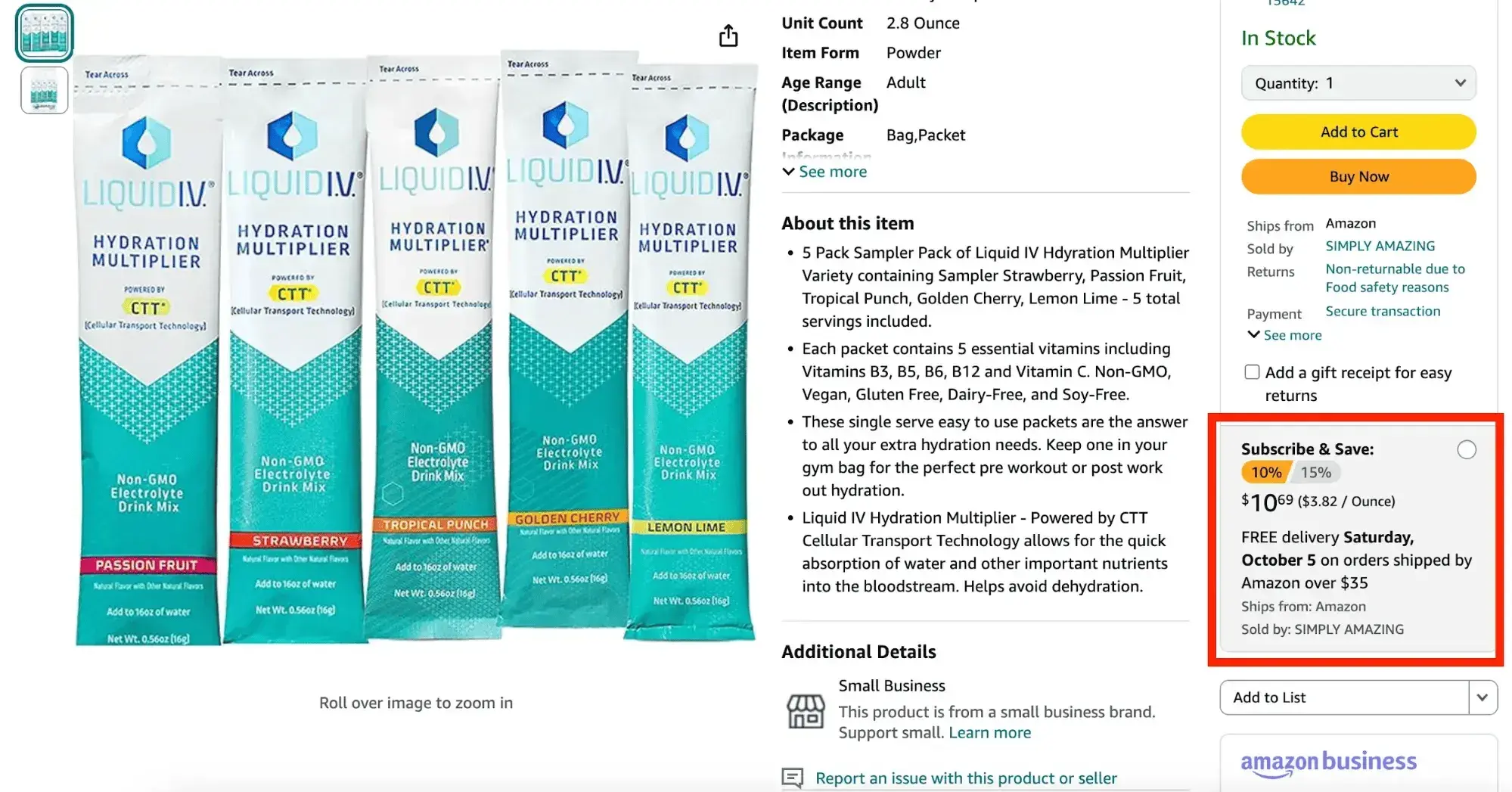
3. Start a loyalty program.
Repeat purchasing behavior increases lifetime value and can become a stable source of revenue. Tiered programs that reward customers based on spend, engagement, or tenure create a structural incentive to buy more.
Who remembers the punch card system that used to be a staple of local eateries? With every purchase, the establishment punched a rewards card until the customer could redeem something for free. The goal is to reward customers who keep coming back. A business’ loyalty program may be a punch card, a discount program, or a free gift with purchase.
Loyalty programs reward repeat customers in a tangible way, and no marketing strategy is complete without exploring this option.
4. Manage a community or forum.
In a digital world, forming a tangible community can help brands stand out. Community is a powerful tool for a brand to leverage, and managing an online community or forum is a powerful way to bring people together.
Communities nurture the existing customer base and also serve as a selling point to potential buyers. Oftentimes, in these groups, loyal customers become a brand’s greatest spokespeople by answering questions and engaging with others. Of customers, that they find value in interacting with fellow customers in a brand’s online community.
Improve the customer experience to reduce turnover and build lasting relationships.
5. Focus on onboarding.
Customer satisfaction converts buyers into fan and brand advocates (cue the word-of-mouth referrals!). To get started on the right foot, teams need to perfect their onboarding process and provide fast time to value. That’s especially true when lengthy onboarding processes are a challenge for .
, CEO of , found that the faster new clients implement NoticeNinja’s software solution, the sooner they realize ROI.
“The more deeply clients leverage our platform, the higher their renewal and expansion rates,“ Reineke shares. ”We provide ongoing education through monthly newsletters, live training, and an active user community.”
This high-touch onboarding approach increased client retention by over 60% in two years.
Ongoing training and customer communication also increase renewal rates. Customers who understand how to use a product fully are less likely to churn and more likely to expand their usage over time. Webinars, in-app guidance, and education hubs can help customers make the most of a product.
6. Resolve issues quickly when they arise.
Remember the link between customer acquisition costs and customer retention? It’s never more apparent than when addressing customer service. Focusing exclusively on acquiring customers and then neglecting customer satisfaction and support will lead to high churn rates and increase overall marketing spend.
A customer acquisition strategy alone is unable to improve revenue long-term if your customer lifetime value is low due to poor service. In fact, have reported that they‘ll find a new company to purchase from if the company doesn’t have good customer service, no matter how enjoyable the product is.
Teams can improve customer satisfaction by resolving customer issues quickly and with empathy. Teams should also create a self-service experience for common challenges. That includes creating a knowledge base and offering chat interfaces that use AI to handle common challenges.
combines a help desk, knowledge base, and AI-powered chat in one platform, making it easier to resolve issues quickly without needing to increase headcount.
7. Listen to customer feedback.
No one has more valuable insights than your existing customers. Listening to feedback is a superpower in improving customer retention. Collect feedback from existing customers and showcase how you’ve implemented their ideas, making customers the hero of your brand and positioning yourself as a customer-centric business.
Pro tip: Let your email subscribers or social media followers know how you’ve been using customer feedback to improve your product. This can help sway potential customers who are still on the fence about purchasing, while nurturing already-paying customers and reducing customer churn.
Content Marketing and SEO
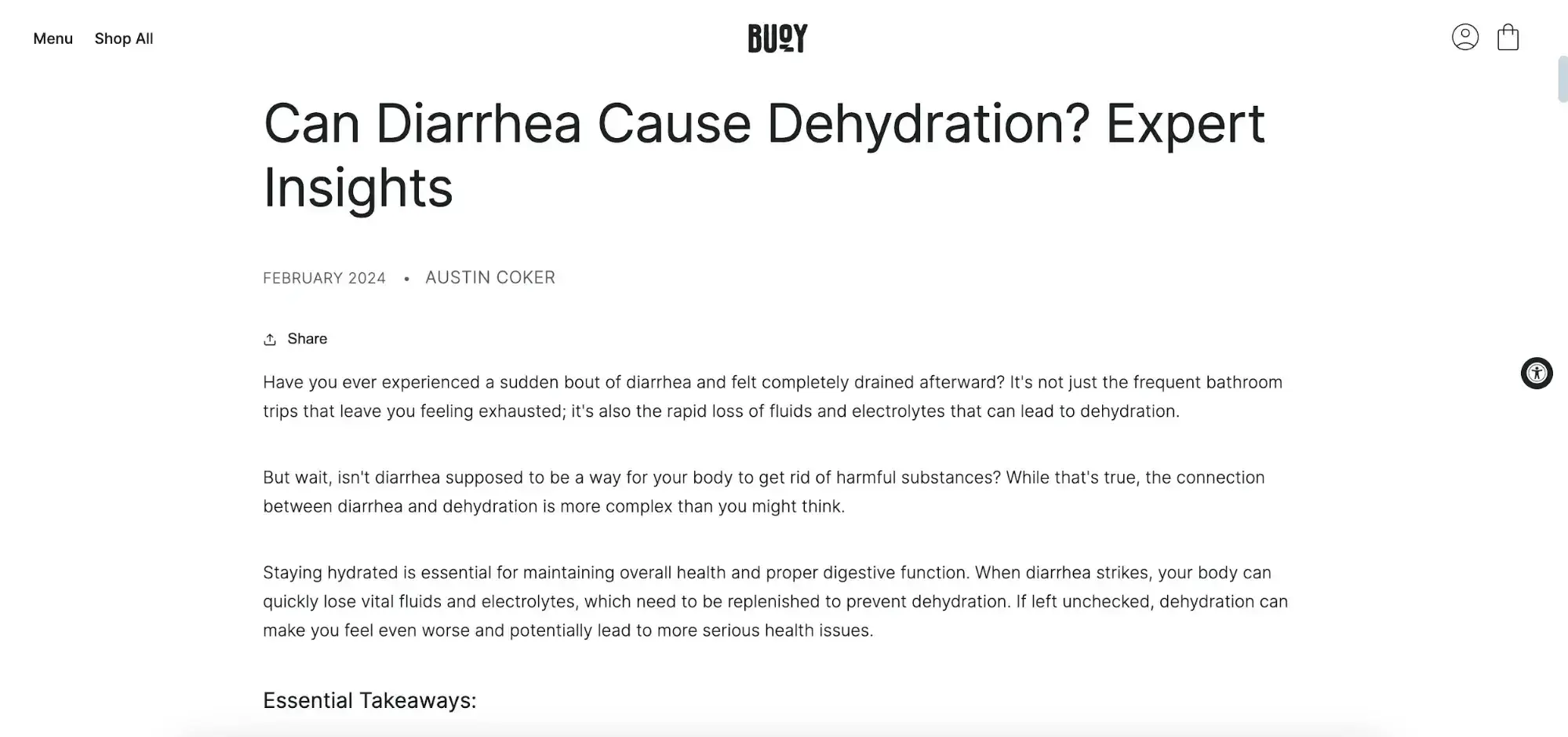
8. Create search-optimized educational content.
Search-optimized educational content lowers CAC when it increases qualified organic sessions and improves lead-to-customer conversion. Educational content captures high-intent traffic when it answers real buyer questions clearly.
If content is optimized correctly for search results, it creates a powerful marketing funnel from search engines into the brand’s website. The most popular search engines are Google, YouTube, and Pinterest.
Take this example below: The electrolyte company Buoy wrote an article answering an FAQ about dehydration. When users read the article, they will hopefully engage with (but at the very least see) the products for sale and the timed pop-up offer inviting them to try Buoy’s electrolyte drops.
Pro tip: Teams need a CMS to host their education content. supports page creation and publishing workflows, and captures lead data in a consistent format for reporting and routing.
9. Optimize your landing page.
Content marketing shouldn’t just be educational. Teams may create offers to generate leads and create pages that showcase the product. Each of these landing pages should be optimized for conversion.
Is there a section on your landing page where most viewers close the tab? Where do they spend most of their time? These insights can help you understand what areas of your landing pages aren’t converting and need to be edited. For example, if viewers click “buy now” but bounce as soon as they see the price, then you know that your price or the value needs to be adjusted.
Pro tip: is a great tool to see what’s working and what’s not on your web pages.
10. Incentivize reviews, testimonials, and user-generated content.
No matter how much energy the teams put into marketing strategy, candid reviews from happy customers will always speak louder to potential buyers. That’s the power of social proof. In fact, before making a purchase.
Incentivize buyers to leave reviews with a special discount code or promotion. Positive reviews help improve your on-page SEO and can also be shared across social media platforms.
Teams can also highlight user-generated content (UGC) to show how customers interact with their offering. Beyond that, customer-made content is free, reducing marketing spend and potentially improving a brand’s CAC.
Teams can develop entire marketing campaigns around UGC that turn social profiles into social proof. Reposting and amplifying what customers create can help build trust.
A great example is the unicorn company Liquid Death. Founder Mike Cessario that his goal was for his water to market itself simply by being photogenic enough that customers would naturally include it in their social media content.
11. Free exposure.
While exposure isn‘t directly tied to sales, consumers rarely make a purchase the first time they learn about a product. New customers need to be exposed to your brand several times before they’re ready to pay, and free exposure can help without depleting any marketing spend.
Free exposure comes in countless forms, and a creative approach is best. Here are a few ideas:
- Branded merchandise (for both you and your team).
- Put your company name on your car.
- Do podcast interviews.
- Free product demos.
- Land earned media.
- Yard signs.
Sarah Blakey, founder of billion-dollar shapewear company Spanx, famously ordered a from the DMV as a way to leverage free exposure. She removed it once people started following her home, asking to place an order.
12. Create content for buyer objections.
Objection-handling content removes purchase barriers by directly addressing the concerns that stall high-intent buyers. Address pricing, competitive alternatives, implementation complexity, and risk concerns with proof-based content. Sales reps who successfully defend their product against a buyer’s objections can have a close rate .
Here’s a great example from tights company . They claim their tights are indestructible, and then they put it to the test right in front of our eyes, creating loyal customers. Seeing them take a cactus to their product convinced me to try them years ago, and now I recommend these to everyone (seriously, if you’re chronically cold like me, you need these under your jeans all winter.
Free Customer Service Metrics Calculator
Calculate your business's key metrics and KPIs for customer support, service, and success with this free template.
- Customer Acquisition Cost
- Customer Lifetime Value
- Customer Satisfaction Score
- And More!
Download Free
All fields are required.
Form not available
You're all set!
Click this link to access this resource at any time.
Personalization Strategies
13. Implement smart segmentation.
Customer segmentation is one of the most direct levers marketers have for reducing CAC. When teams know exactly who they’re targeting, they can stop spending on audiences that were never going to convert.
Segmented audiences also tend to respond better to personalized outreach, which means lower cost-per-click and fewer touches required before a deal closes. Teams can group customers into segments based on their behavior and definitions, but scoring rules and lifecycle triggers require centralized data.
14. Deliver targeted, time-sensitive promotions.
Time-sensitive discounts can also compel buyers to place an order quickly. These special offers can range from 15 minutes to a few weeks. Giving discounts an expiration date creates urgency for customers who are more likely to make a purchase. Discounts should be based on customer segments.
CRM-based lead scoring supports this precision. When scoring thresholds are met, automated workflows trigger incentives.
15. Run a retargeting campaign.
Ever visited an ecommerce website and immediately noticed ads for that product on social media? No, that wasn’t a coincidence. That company is retargeting customers who left their website without making a purchase. Retargeting customers is highly effective at bringing users back into the sales funnel.
Retargeting ads lead to a . These customers are already aware of your brand. They‘ve shown interest, but they’ve failed to convert. Using cookie history, marketing teams work to reel people back into their website after bouncing.
Moments after trying on Warby Parker frames, I opened up Facebook and saw an ad. Well played, Warby Parker. Well played.

Streamline Your Sales Process
16. Focus on high-quality leads.
One CEO has found that the key to driving down their business’s CAC is improving lead quality from the very beginning. “We once experienced high CAC due to poor quality leads from generic trade show lists,” shared , CEO and co-founder of .
“By refining our lead generation approach to focus on targeted content syndication and referral programs, we were able to reduce our CAC significantly.”
17. Identify decision-makers.
When it comes to selling SaaS, one of the best ways to lower customer acquisition costs is by figuring out who actually makes the final call on adopting your product.
“A common mistake is assuming the decision-maker is always the highest-ranking person or the one controlling the budget and that adoption follows a top-down process. But in reality, it’s not always that clear-cut — it varies by industry,” shared , growth marketing lead at .
“Taking the time to research your audience pays off because you’ll know exactly who to target. That means you’re not wasting budget and resources on the wrong leads, which helps speed up your sales cycle and bring down acquisition costs.”
18. Train all employees for sales conversations.
Every employee at your company gets asked what they do for a living. Their answer can go one of three ways:
- They can say something negative about your company.
- Avoid talking about your company, or…
- Say something positive.
Two of those are a loss: Saying something negative (yikes) and staying silent (aw) both leave money on the table. If your own employees won‘t advocate for your company, who will think you’re worthy of buying from? Employees should be your biggest advocates, generating free brand awareness.
Conversion Rate Optimization Tactics
19. Run A/B tests.
An A/B test (aka a split test) is an effective way of discovering which message is resonating most with viewers and getting the best conversion rates. Consider A/B testing any of these elements:
- Email subject lines.
- Landing pages.
- Paid ads.
- CTAs.
Pro tip: Learn how to run an effective A/B test with our .
20. Simple forms.
It‘s natural for some potential customers to have questions about your product or service that aren’t answered on your website. How can they contact you to ask their question? It should be obvious and easy for those individuals to get in touch.
, CEO and co-founder of , recommends simplifying the lead generation process with shorter, more intuitive forms to lower your customer acquisition cost. “Simplifying forms can reduce friction, increase conversion rates, and make it easier for customers to complete them, eventually lowering acquisition costs.”
Paid, Partnership, and Amplification Strategies
21. Create strategic partnerships (co-branding).
Co-branding is effective for ecommerce brands, but service-based businesses can tap into a similar effect by creating strategic partnerships with complementary businesses. Some examples include:
- A lawn maintenance business partnering with a custom landscaping business.
- A tattoo artist partnering with a piercing artist.
- A copywriter partnering with a web designer.
- A digital marketing agency partnering with a PR firm.
That was the case for digital marketer , CEO of , who saw big payoffs partnering with a local PR firm.
“The PR firm now refers clients needing web services to us, and we refer clients to them for PR and content creation. This symbiotic relationship has generated over $200,000 in new revenue for our companies this year at almost no expense,” Plumer says.
How to Measure the Impact of Your CAC Reduction Strategy
Measuring customer acquisition cost over time reveals whether performance improvements increase customer output per dollar invested. Tracking CAC alongside LTV and payback period clarifies whether growth gains are durable.
Structured measurement strengthens accountability and supports data-driven decision-making.
Track CAC by channel.
Channel segmentation reveals where acquisition spend produces the strongest return. When a single channel’s CAC rises disproportionately, teams can reallocate budget before inefficiencies compound. Organizations should calculate CAC separately for:
- Paid search
- Paid social
- Organic search
- Referral traffic
- Events and partnerships
Monitor CAC trends over time.
Short-term performance can distort strategic evaluation. Long-term tracking exposes patterns that single-period snapshots can’t. CAC should be reviewed:
- Monthly for tactical optimization
- Quarterly for strategic assessment
- By cohort to evaluate long-term performance
Use CRM and attribution data.
Logged interactions across marketing and sales activities allow accurate channel-level CAC reporting and forecasting. When leads enter a , their interactions with marketing content, sales outreach, and website activity are recorded and attributed to revenue outcomes. This creates a single source of truth for calculating channel-level CAC and identifying high-performing acquisition sources.
黑料吃瓜网’s unified platform enables automation, attribution, and customer data integration to lower CAC.
Segmentation tools such as organize contacts by behavior and lifecycle stage. Lead scoring systems such as prioritize high-intent prospects and align sales focus with revenue probability.
Integrated CRM data improves attribution accuracy, reduces reporting fragmentation, and strengthens CAC forecasting. Reliable measurement supports confident investment decisions.
Frequently Asked Questions About Reducing Customer Acquisition Cost
What does reduced CAC mean?
Reducing CAC means lowering the average cost required to acquire a new customer. This can occur through improved conversion rates, higher retention, better targeting, or increased organic traffic. Reduced CAC improves growth efficiency and strengthens profitability.
How do I get CAC down?
Lowering CAC requires improving acquisition efficiency across marketing and sales. Common approaches include strengthening retention, optimizing conversion rates, refining lead qualification, and expanding organic acquisition channels. Coordinated system improvements drive more customers from the same traffic volume by boosting conversion rates and strengthening retention.
What is a healthy CAC ratio?
A commonly referenced benchmark is a 3:1 lifetime value (LTV) to CAC ratio. This indicates that customer revenue is three times higher than acquisition cost. However, acceptable ratios vary by industry, pricing model, and growth stage. Payback period and churn rate should be evaluated alongside ratio benchmarks.
How do I reduce cost per acquisition?
Reducing cost per acquisition involves increasing conversion rates, refining targeting, and reallocating budget toward higher-performing channels. Paid campaign optimization, improved landing pages, and audience segmentation often deliver measurable improvements.
Reducing CAC Through System-Level Optimization
Lowering customer acquisition cost requires coordinated improvement across five core growth levers:
- Retention and referral growth
- Organic acquisition through content
- Personalization and segmentation
- Sales process efficiency
- Conversion rate optimization
Each lever shapes acquisition performance in a different way. When teams improve them together, growth becomes more predictable, more profitable, and easier to scale.
黑料吃瓜网’s unified platform connects automation, attribution, and customer data in one integrated system, giving teams the full lifecycle visibility required to improve acquisition performance over time. Customer acquisition cost reflects how well marketing, sales, and customer experience operate as one system. Teams that align measurement, execution, and optimization across the entire funnel build growth engines that compound over time.
Free Customer Service Metrics Calculator
Calculate your business's key metrics and KPIs for customer support, service, and success with this free template.
- Customer Acquisition Cost
- Customer Lifetime Value
- Customer Satisfaction Score
- And More!
Download Free
All fields are required.
Form not available
You're all set!
Click this link to access this resource at any time.