
.png?width=112&height=112&name=Image%20Hackathon%20%E2%80%93%20Vertical%20(85).png)

A customer health score is a data-driven metric that helps customer success teams assess how likely a customer is to retain, expand, or churn. By aggregating signals like product usage, engagement, support activity, and renewal behavior, customer health scores give teams an early, actionable view of account risk and opportunity.

For SaaS and subscription businesses, customer health scores shift teams from reactive support to proactive account management — helping them prioritize outreach, trigger workflows, and align sales, success, and support around a shared view of accounts. The result: less time reacting to churn, more time preventing it.
This guide walks through exactly how to get there.
What is a customer health score?
A customer health score is a composite metric that combines behavioral, engagement, and outcome signals to help organizations predict retention risk, identify expansion opportunities, and prioritize customer success efforts across accounts.
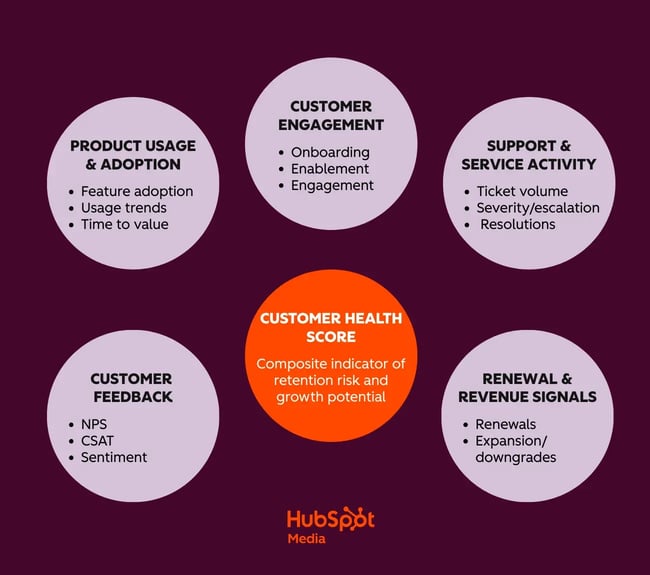
Unlike single metrics such as NPS or product usage, a customer health score combines multiple data points into a unified view of account health. Common inputs include:
- Product adoption and usage
- Customer engagement
- Support interactions
- Website and lifecycle activity
- Product upgrades and renewals
- Community participation
Customer health scores aren’t universal or static. What “healthy” means varies by business model, product complexity, customer segment, and lifecycle stage. That’s why effective scoring systems are tailored to specific customer outcomes and updated as products, markets, and customer expectations change.
Why is customer health score important?
Customer health scores are important because they give customer success teams a standardized, real-time view of which customers are thriving, which are at risk, and where to focus next. Teams shift from lagging indicators like churned accounts and missed renewals to early signals they can actually act on.
Aggregating usage, engagement, support, and revenue signals into a single metric moves teams from gut-based decisions to data-driven customer management. That’s especially important in SaaS and subscription businesses, where retention and expansion depend on sustained product value over time.
How Teams Use Health Scores
Customer success teams use customer health scores to operationalize retention and growth strategies across the customer lifecycle. Common use cases include:
- Identifying at-risk accounts early by flagging declining usage, negative feedback, or increased support activity before renewal risk escalates
- Prioritizing proactive outreach so customer success managers focus time and effort on accounts that need intervention most
- Triggering automated workflows and alerts when health scores cross defined thresholds
- Supporting renewal and expansion conversations with objective data that reflects customer outcomes and engagement
- Aligning sales, success, and support teams around a shared view of account health
- Standardizing account reviews and forecasting risk using consistent, repeatable health indicators
When embedded into dashboards and workflows, customer health scores become a daily operating signal — not a static report that teams check once a quarter.
.png)
Free Customer Service Metrics Calculator
Calculate your business's key metrics and KPIs for customer support, service, and success with this free template.
- Customer Acquisition Cost
- Customer Lifetime Value
- Customer Satisfaction Score
- And More!
Download Free
All fields are required.
Form not available
You're all set!
Click this link to access this resource at any time.
The ROI of Customer Health Scoring
Customer health scoring directly impacts business performance by reducing churn, increasing expansion revenue, and improving customer experience consistency. Organizations that actively monitor and act on customer health signals can intervene earlier, protect recurring revenue, and identify growth-ready accounts.
Health scores also surface patterns across the customer base, such as onboarding gaps, product adoption challenges, or recurring support issues. These insights inform product, service, and enablement improvements that extend beyond individual accounts. Over time, that feedback loop extends customer health scoring’s impact well beyond retention — into brand reputation, customer advocacy, and more accurate revenue forecasting.
Pro Tip: Organizations can use customer health scores to identify and nurture loyal customers. This group is more likely to spend more, provide high-quality leads, and share positive reviews.
Customer Health Score Metrics
Customer health score metrics are the individual signals used to evaluate the strength and stability of a customer relationship. The most effective health scoring models combine multiple metric categories to reflect both how customers interact with a product and whether they’re achieving meaningful outcomes.
Relying on a single indicator creates blind spots. Health scores aggregate usage, engagement, service, feedback, and revenue signals to build a more complete picture of account health.
The table below outlines common customer health score metric categories and the types of signals each typically includes.
Product Usage and Adoption Metrics
Product usage metrics measure whether customers are actively using the product and realizing value from its core features. These signals are often the strongest predictors of long-term retention in SaaS environments.
Common product usage and adoption metrics include:
- Feature adoption and breadth of use
- Usage frequency and consistency
- Time to value and onboarding completion
- Trends in usage over time (growth, plateau, or decline)
These metrics help teams identify customers who may appear satisfied but are underutilizing the product.
Customer Engagement Metrics
Customer engagement metrics reflect how involved customers are beyond basic product usage. These signals indicate commitment, learning, and relationship depth.
Typical engagement metrics include:
- Onboarding milestones completed
- Training or enablement participation
- Attendance at webinars or customer programs
- Lifecycle or in-app engagement signals
Engagement metrics are particularly useful for identifying early disengagement during onboarding and adoption phases.
Support and Service Activity Metrics
Support metrics highlight friction and operational risk within the customer experience. While support activity alone does not indicate poor health, patterns and trends often signal emerging issues.
Key support and service metrics include:
- Support ticket volume and frequency
- Ticket severity and escalation rates
- Resolution time and backlog trends
- Repeat or unresolved issues
When combined with usage and engagement data, support metrics help distinguish healthy customers from those masking frustration.
Customer Feedback Metrics
Customer feedback metrics capture sentiment and perception, providing important qualitative context for behavioral data.
Common feedback metrics include:
- Net Promoter Score (NPS)
- Customer Satisfaction (CSAT)
- Survey responses and qualitative feedback trends
Customer feedback metrics are most effective when paired with behavioral data. A high NPS from a low-usage account, for example, is a signal worth investigating.
Renewal and Revenue Metrics
Renewal and revenue metrics connect customer health directly to business outcomes. These signals indicate whether customers are likely to continue, expand, or contract their relationship.
Typical renewal and revenue metrics include:
- Renewal likelihood or renewal status
- Expansion, downgrade, or contraction activity
- Contract changes and renewal timelines
These metrics help teams prioritize accounts approaching critical renewal or expansion moments.
Contextual and Lifecycle Metrics
Contextual metrics add interpretation and accuracy to customer health scores by accounting for differences across customer segments and lifecycle stages.
Common contextual signals include:
- Customer tenure and lifecycle stage
- Plan type or account tier
- Customer segment or use case
Without context, identical behaviors lead to different conclusions — a new account with low usage reads very differently from a mature account with the same pattern.
Best Practice: Combine Metrics, Don’t Isolate Them
High-performing customer success teams avoid relying on any single metric to determine customer health. Instead, they balance leading indicators (such as usage and engagement) with lagging indicators (such as renewal outcomes and feedback) to create a more resilient and predictive health score.
This multi-metric approach ensures customer health scores remain actionable, adaptable, and aligned with real customer outcomes.
→ Make Data-Driven Decisions: Download 贬耻产厂辫辞迟’蝉 for insights on retention and loyalty metrics.
How to Calculate Customer Health Score
Calculating a customer health score involves defining what success looks like for your customers, selecting predictive metrics, and combining those signals into a consistent, repeatable scoring model. The exact formula varies by organization, but most effective health scoring systems follow the same core process.
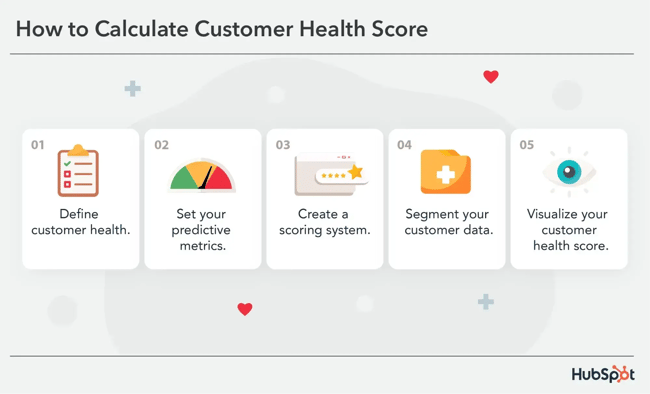
Step 1: Define What “Healthy” Means for Your Customers
Start by defining what a healthy customer looks like for your business and anchor that definition to customer outcomes, not just activity levels.
A healthy customer is typically one who:
- Actively uses key product features
- Progresses through onboarding and adoption milestones
- Experiences minimal friction or unresolved support issues
- Demonstrates renewal or expansion readiness
Because customer needs vary by segment, plan type, and lifecycle stage, many teams define health benchmarks differently for new, growing, and mature accounts.
Pro tip: Talk to your customer success and support teams to learn about your healthiest and unhealthiest customers. As a former support rep at 黑料吃瓜网 I can attest that service teams have a valuable pulse on customer health since they work directly with them on the front lines.
Step 2: Select Predictive Customer Health Score Metrics
Once customer health is defined, the next step is selecting metrics that reliably indicate retention risk or growth potential. The most effective metrics are predictive, not purely descriptive.
Predictive customer health score metrics often include:
- Product usage and adoption trends
- Engagement with onboarding and enablement programs
- Support ticket frequency and severity
- Customer feedback and sentiment
- Renewal timing and revenue signals
Choose metrics based on their correlation with actual customer outcomes — not just what's easy to pull from your data stack.
Pro tip: Be proactive in encouraging customer health by implementing customer success strategies, including a customer loyalty program.
Step 3: Assign Weights and Scoring Ranges
After selecting metrics, each signal is assigned a relative weight based on its importance. Not all metrics contribute equally to customer health, and weighting helps reflect that reality.
For example:
- Core product usage may carry more weight than marketing engagement
- Severe support issues may subtract more points than minor fluctuations
- Renewal-related signals may increase in importance as contract dates approach
Scoring ranges are then defined to determine what constitutes healthy, at-risk, or critical status.
Pro tip: Analyze the behavior of your loyal customers and power users to determine the behaviors most correlated with customer success in your business.
Step 4: Segment Customer Health Scores
With scores calculated, group customers into health segments to guide action. Common segmentation approaches include:
- Healthy (low risk, high engagement)
- Monitor (emerging risk or inconsistent signals)
- At risk (declining usage, negative feedback, or renewal concerns)
Segmenting scores ensures customer success teams can focus efforts where they are most needed.
Pro Tip: Proactive organizations often designate teams to connect with customers in the at-risk category to improve the relationship and rebuild loyalty.
Step 5: Review and Refine the Model Over Time
Customer health scoring is not a one-time setup. Effective models are reviewed and adjusted regularly to account for changes in products, customer behavior, and business priorities.
Teams typically refine health scores by:
- Validating which metrics correlate most strongly with churn or expansion
- Adjusting weights based on lifecycle stage or customer segment
- Incorporating new data sources as they become available
This ongoing refinement helps keep customer health scores accurate, actionable, and aligned with real-world outcomes.
Pro Tip: Don’t treat your customer health model as set-and-forget. Regularly revisiting the data and outcomes to compare with current engagement channels is critical for truly understanding your customers.
give customer service teams a real-time view of account health, usage trends, and renewal risk in a single dashboard.

Customer Health Score Examples
Customer health scores can be represented in several formats depending on how teams prioritize visibility, actionability, and reporting. The format teams choose influences how they interpret risk and decide where to act — even when the underlying metrics are identical.
Here’s a quick comparison of the four most common formats.
The sections below provide additional detail on each customer health score model, including when teams typically use them and what to consider when implementing each approach.
Percentage-Based Health Scores
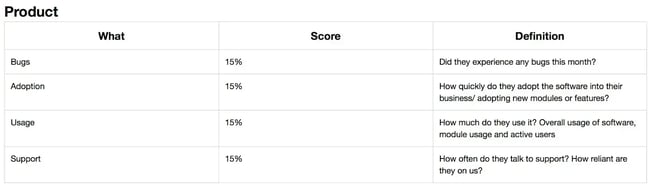
Percentage-based customer health scores roll multiple weighted metric categories into a single numerical score, typically displayed on a 0–100 scale. Each category — such as usage, engagement, support, and renewal signals — contributes to the final score based on its relative importance.
Key strengths
- Provides a precise, quantitative view of account health
- Makes it easier to compare health across accounts and segments
- Works well for trend analysis and reporting over time
Best for
- Data-mature customer success teams
- Organizations with well-defined metric weighting
- Health scoring models tied to forecasting and executive reporting
Watch out for
- Over-precision can obscure underlying issues if teams focus only on the final number
- Requires ongoing validation to ensure weights remain predictive
Color-Coded Health Scores
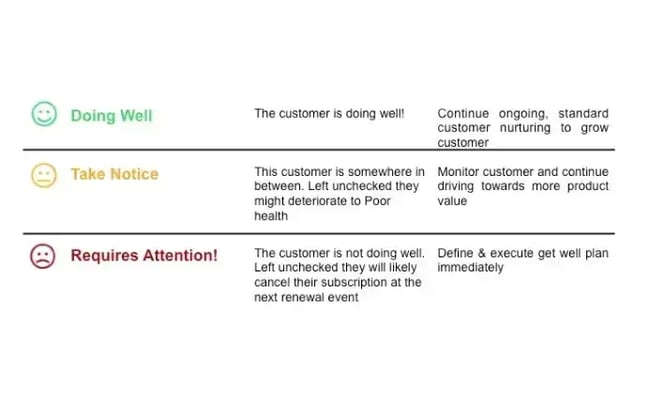
Color-coded health scores categorize accounts into visual segments — commonly green, yellow, and red — based on defined score thresholds or percentiles. This model emphasizes quick prioritization rather than numeric detail.
Key strengths
- Instantly highlights which accounts need attention
- Easy for cross-functional teams to understand
- Scales well across dashboards, alerts, and workflows
Best for
- Customer success teams managing large account volumes
- Playbook-driven outreach and escalation workflows
- SLA-based prioritization and alerting
Watch out for
- Broad categories can oversimplify nuanced health signals
- Thresholds must be reviewed regularly to avoid false positives or blind spots
Alphabetical Health Scores
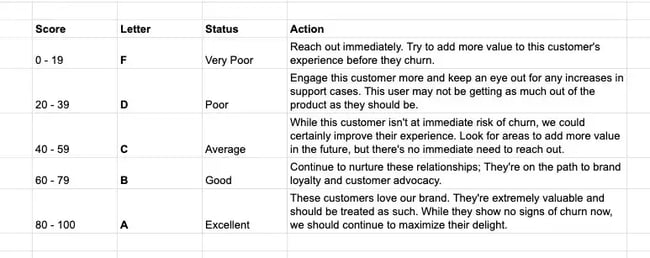
Alphabetical health scores assign letter grades (such as A–F) to represent account health based on defined scoring ranges. This approach mirrors familiar grading systems and emphasizes relative performance.
Key strengths
- Simple and intuitive interpretation
- Reduces fixation on exact numbers
- Useful for internal alignment and reviews
Best for
- Internal account reviews and summaries
- Teams transitioning from qualitative to quantitative health scoring
- Executive-level or stakeholder-facing reporting
Watch out for
- Limited granularity compared to percentage-based models
- Requires clear definitions to avoid subjective interpretation
Ranking-Based Health Scores
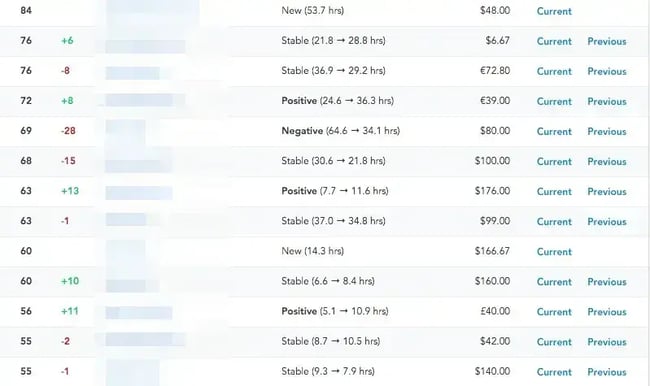
Ranking-based customer health scores order accounts relative to one another, highlighting the healthiest and most at-risk customers within a defined group. Rather than focusing on absolute scores, this model emphasizes prioritization.
Key strengths
- Makes it easy to identify top- and bottom-performing accounts
- Supports resource allocation and outreach planning
- Highlights the relative risk within specific segments
Best for
- Portfolio-based account management
- Customer success teams balancing high-touch and scaled motions
- Identifying candidates for expansion or intervention
Watch out for
- Rankings alone may lack context without underlying score visibility
- Can shift frequently as account populations change
贬耻产厂辫辞迟’蝉 display account health scores, usage trends, and renewal status through built-in dashboards and visualizations.

Choosing the Right Customer Health Score Model
No single customer health score format works for every organization. Many teams use multiple representations — such as percentage scores paired with color-coded segments — to balance precision with actionability. The most effective model is the one your team will actually use every day.
How to Improve Your Customer Health Score
Improving a customer health score t goes beyond tweaking individual metrics. It requires aligning health signals to actual customer outcomes, acting on early behavioral signals, and embedding health scoring into daily workflows.
The framework below outlines five core practices that help teams strengthen customer health scores over time while keeping scoring models accurate, actionable, and aligned with evolving customer needs.
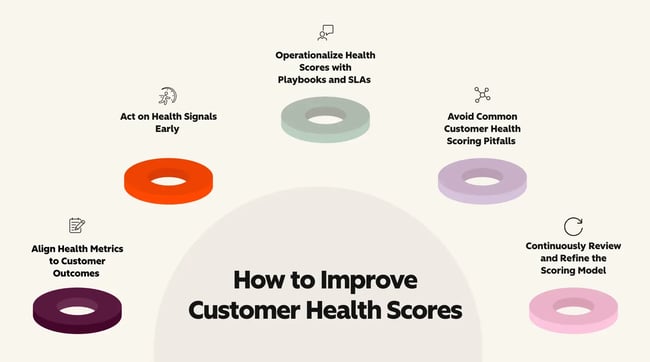
The sections below offer more details on using these strategies effectively to improve health scores.
Align Health Metrics to Customer Outcomes
Customer health scores improve when metrics reflect meaningful progress toward customer value rather than surface-level activity. To get there:
- Tie usage and engagement metrics to adoption milestones and time-to-value indicators
- Evaluate metrics based on correlation with retention, renewal, and expansion outcomes
- Adjust metric relevance by customer segment, plan type, or lifecycle stage
Act on Health Signals Early
Health scores are most effective when used as early-warning indicators rather than retrospective diagnostics. Here's how to act on them:
- Trigger proactive outreach when usage, engagement, or sentiment begins to decline
- Escalate support trends that consistently correlate with negative health changes
- Deploy enablement or onboarding interventions before renewal risk emerges
Operationalize Health Scores with Playbooks and SLAs
Customer health scores deliver the most value when tied directly to defined actions and response standards. To operationalize this:
- Assign outreach timelines and ownership based on health score segments
- Standardize escalation paths for accounts flagged as at risk
- Use health scores as a shared input for account reviews and prioritization
Pro tip: Tools like 黑料吃瓜网's centralize health signals, automate customer service workflows, and keep customer success, sales, and support teams aligned around shared account data.
Avoid Common Customer Health Scoring Pitfalls
Certain practices can undermine the accuracy and usefulness of customer health scores if not addressed. Watch out for:
- Overweighting a single metric, such as product usage or NPS
- Relying on static thresholds that no longer reflect customer behavior
- Treating health scores as reports instead of triggers for action
Continuously Review and Refine the Scoring Model
Customer health scoring improves over time through regular validation and adjustment. Teams that treat health scoring as a living system — not a static report — are consistently better positioned to reduce churn, drive expansion, and deliver customer value that lasts. Ways to build that habit include:
- Review which metrics most strongly align with churn and expansion outcomes
- Adjust weights and thresholds as products, pricing, or customer behavior change
- Incorporate new data sources as customer interactions evolve
Frequently Asked Questions About Customer Health Scores
What are customer health scores?
Customer health scores are composite metrics that combine signals like product usage, engagement, support activity, feedback, and renewal data into a single view of account health — helping teams evaluate retention risk and growth potential.
Unlike standalone metrics, customer health scores are designed to be predictive and actionable. They surface early signals that customer success teams can use to prioritize outreach, trigger workflows, and guide account strategy.
How do I build a customer health score?
Building a customer health score starts with defining what a “healthy” customer looks like for a specific business and customer segment. Teams then select predictive metrics, assign relative weights, and group customers into health ranges that support action.
Effective health scores are never static. Teams regularly validate metrics against churn and expansion outcomes, refine thresholds by lifecycle stage, and adjust weighting as products and customer behavior change.
What are the four key customer service metrics?
Four metrics appear consistently across health scoring models: product usage, customer engagement, support activity, and customer feedback. Together, these signals provide insight into both customer behavior and experience quality.
On their own, these metrics offer limited context. When combined into a customer health score, they help teams identify patterns, predict risk, and act consistently across accounts.
How do I track customer health over time?
Customer health is typically tracked through dashboards that display current health scores alongside trends and contributing signals. Ongoing tracking helps teams identify changes early and measure the impact of interventions over time.
The most effective tracking systems pull from product usage, support, feedback, and revenue data — ensuring health scores reflect the full customer lifecycle, not just one slice of it.
Turning Customer Health Insights Into Action
Customer health scores provide a structured, repeatable way to understand which customers are thriving, which are at risk, and where to focus next. When built on meaningful metrics and reviewed regularly, they're one of the clearest paths from reactive support to proactive account management.
The value isn‘t in the number — it’s in what teams do with it. Organizations that align health scoring with workflows, playbooks, and a habit of continuous refinement are better positioned to reduce churn, drive expansion, and deliver customer value that lasts.
Editor's note: This post was originally published in June 2020 and has been updated for comprehensiveness.
Free Customer Service Metrics Calculator
Calculate your business's key metrics and KPIs for customer support, service, and success with this free template.
- Customer Acquisition Cost
- Customer Lifetime Value
- Customer Satisfaction Score
- And More!
Download Free
All fields are required.
Form not available
You're all set!
Click this link to access this resource at any time.